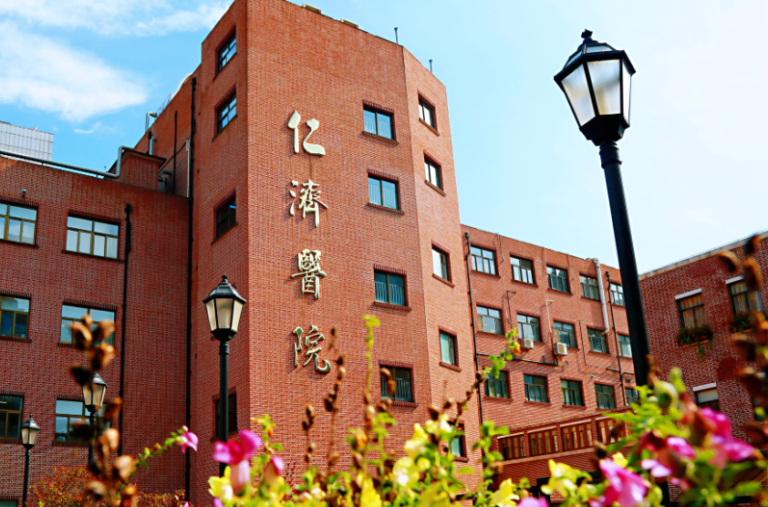

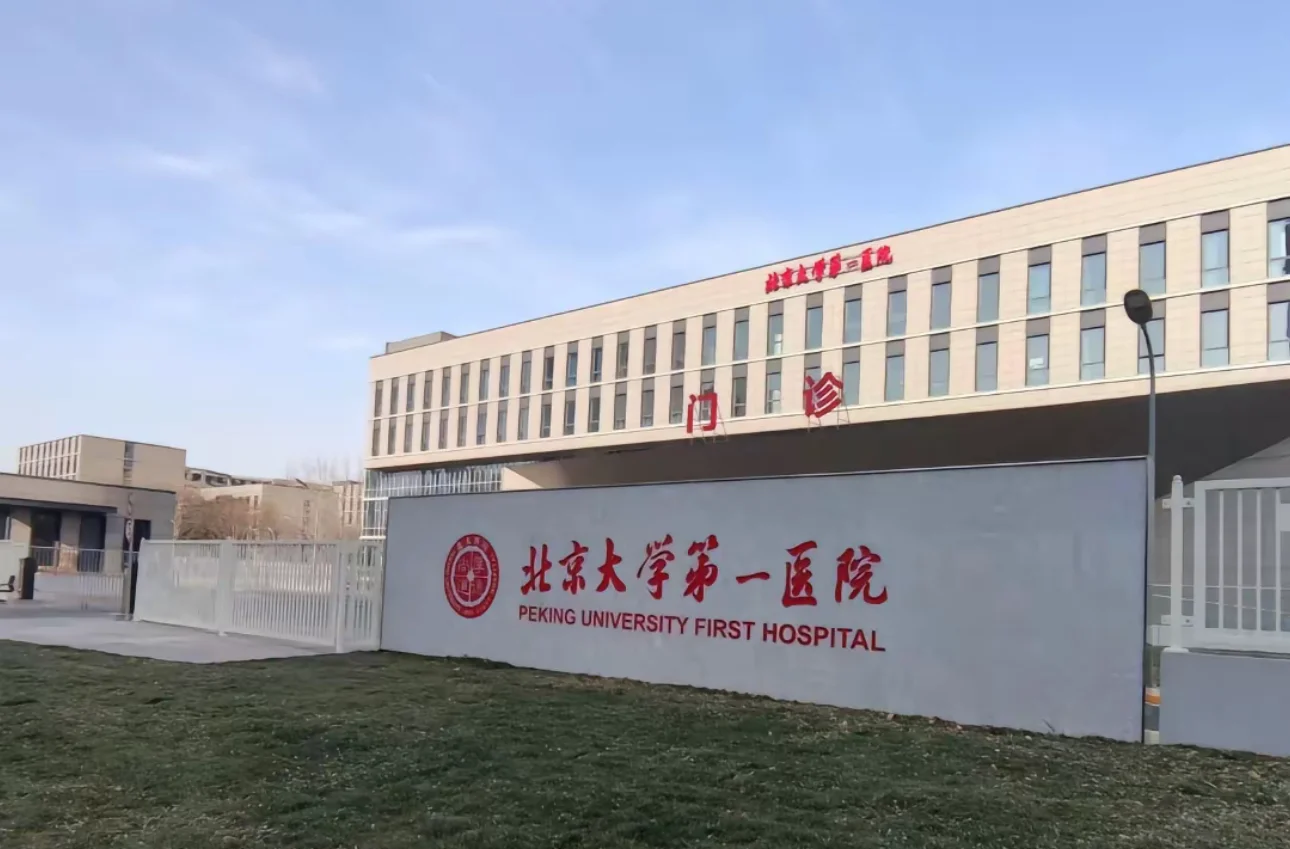
Peking University First Hospital
I. A Century of Peking University Hospital: The Origin and Pioneer of Medical Excellence
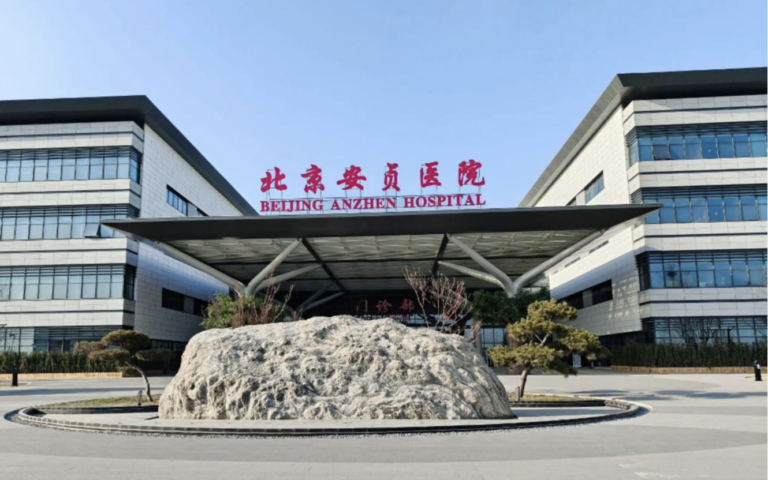
Peking University First Hospital (referred to as “PKU First Hospital”) was founded in 1915. Originally known as the Clinic Affiliated with the Beijing Medical College, it is located in the heart of the capital, adjacent to Beihai Park. It is a large-scale Grade A Level III general hospital that integrates medical care, teaching, research, prevention, and public health. Upholding the spirit of its motto, “Integrity and Virtue, Respect for the Way,” and guided by the vision of “Serving as the benchmark for healthcare services,” the hospital has pioneered numerous medical advancements in China over the past century—including establishing the country’s first cardiovascular ward in a general hospital, being the first to perform interventional treatments for coronary heart disease, and developing China’s first autologous blood recovery machine—laying a crucial foundation for the development of China’s medical field.
Today, Peking University Hospital’s clinical medicine discipline has been selected as a national “Double First-Class” discipline. The hospital boasts 25 National Key Clinical Specialties and leads four Ministry of Education Key Disciplines, bringing together over 40 high-level national talents, including members of the Chinese Academy of Engineering and recipients of the National Natural Science Foundation of China’s Outstanding Young Scientist Award. The hospital has 2,259 open beds (including 1,200 at the Daxing Campus). In 2023, it handled 3.24 million outpatient and emergency visits and discharged 112,000 patients. nearly 46,000 surgeries were performed, with an average length of stay of just 5.4 days. The hospital has established 53 multidisciplinary teams (MDTs) and conducts over 2,000 annual consultations for complex cases. Its comprehensive strength consistently ranks among the top domestically and is internationally renowned, having secured top-ten rankings in multiple disciplines on national hospital reputation rankings for consecutive years.
II. Department of Cardiology: Guideline Developers and a Leading Center for Cardiovascular Disease Diagnosis and Treatment
As one of the earliest cardiovascular departments established in China (officially designated in 1983), the Department of Cardiology at Peking University Hospital has consistently ranked among the top ten in Fudan University’s China Hospital Specialty Rankings for many years. It has also been listed on the Chinese Academy of Medical Sciences’ Specialty Rankings for Scientific and Technological Influence for the past five years. As the National Quality Control Center for Coronary Artery Disease Intervention, it is widely regarded as a “pioneer” in the diagnosis, treatment, and standardization of cardiovascular diseases in China. The department’s development has consistently kept pace with national medical progress, from pioneering interventional treatments for coronary heart disease (in 1986) to leading the formulation of 38 domestic and international clinical guidelines and consensus documents, providing a core foundation for the standardized diagnosis and treatment of cardiovascular diseases in China.
Currently, the Department of Cardiology has established a comprehensive diagnostic and treatment system covering nine major subspecialties, including coronary heart disease, hypertension, heart failure, arrhythmias, structural heart disease, pulmonary arterial hypertension, and cardiac oncology. It brings together a group of top experts, such as Li Jianping, Zhang Yan, and Gong Yanjun, and operates master’s and doctoral degree programs and a training base for cardiovascular medicine specialists. The department has trained thousands of graduate students and resident physicians and serves as the chair unit of the Expert Committee on Cardiovascular Medicine for the Standardized Training of Specialists under the Chinese Medical Doctor Association. The department handles over 80,000 outpatient visits annually and admits more than 3,000 inpatients per year, demonstrating distinct strengths in the diagnosis and treatment of complex and critical cases as well as in scientific research and innovation.
Core Strengths and Specialized Treatments:
- Guideline-Driven Standardized Diagnosis and Treatment: Since 2009, we have led the development of 38 domestic and international clinical guidelines and consensus statements covering multiple fields, including hypertension, coronary heart disease, and cardioembolic stroke. We have established the core conclusion that “hypertension combined with elevated homocysteine levels is a major cause of high stroke incidence in China,” thereby providing a standard framework for cardiovascular diagnosis and treatment nationwide.
- Precision Breakthroughs in Complex and Critical Conditions: The hospital leads the nation in the diagnosis and treatment of pulmonary arterial hypertension, complex arrhythmias, and critical cardiovascular conditions. Leveraging a comprehensive cardiac imaging subspecialty, it provides full-process coverage from precise diagnosis to personalized treatment. The “green channel” for myocardial infarction treatment ensures a 24-hour response, and the success rate of interventional procedures consistently ranks among the highest in the country.
- Deep Integration of Research and Clinical Practice: Since the 11th Five-Year Plan period, the department has consistently led national-level projects such as the National Science and Technology Support Program and the National Key Research and Development Program. Over the past decade, it has won three Second Prizes in the National Science and Technology Progress Awards and two First Prizes at the provincial and ministerial levels (all as the lead investigator). The department has spearheaded and participated in numerous clinical trials for new drugs and medical devices, with its research capabilities ranking among the top in the nation’s cardiovascular discipline.
III. Cardiac Surgery: A Model of Collaboration in Treating Complex and Critical Cases and a Pioneer in Blood-Saving Techniques
Leveraging the hospital’s comprehensive strengths, the Department of Cardiovascular Surgery at Peking University Hospital has established “treatment of complex cases + technological innovation + multidisciplinary collaboration” as its core strengths. It has developed unique expertise in areas such as cardiovascular diseases complicated by multi-organ pathology, surgeries for patients with rare blood types, and diseases of the great vessels. The department is a pioneer in China in combined surgery for retroperitoneal tumors and inferior vena cava thromboembolism, boasting the highest number of treated cases and the highest perioperative safety record in the country. Led by current Department Director Wang Jin, the team has pioneered a series of blood-saving innovations during the “blood shortage era,” reducing patients’ intraoperative allogeneic blood usage by over 50%, demonstrating both medical compassion and technical excellence.
The department routinely performs a full range of cardiac surgeries, including congenital heart defect repairs, valve replacement/repair, coronary artery bypass grafting, aortic aneurysm surgery, and left ventricular assist device (LVAD) implantation. With an annual surgical volume exceeding 600 cases—over 90% of which are Level IV procedures—the department continues to make breakthroughs in optimizing cardiopulmonary bypass techniques and minimally invasive cardiac surgery. Leveraging the hospital’s multidisciplinary team (MDT) mechanism, the department has established routine collaboration with departments such as Urology, Anesthesiology, and Transfusion Medicine. This collaboration has enabled the successful resolution of numerous medical challenges, building a lifeline of protection for high-risk patients.
Core Strengths and Specialized Treatments:
- Collaborative Treatment of Complex and Critical Cases: As a national leader in combined surgery for retroperitoneal tumors with inferior vena cava thrombi, we pioneered the “transabdominal single-incision approach with diaphragmatic incision and cardiopulmonary bypass” technique, which eliminates the need for thoracotomy or femoral artery incision, resulting in less trauma and faster recovery. In 2025, we successfully performed a combined resection of left renal cancer and inferior vena cava thrombus in an RH-negative “panda blood” patient, completing extracorporeal circulation in just 20 minutes, with the patient transferred out of the intensive care unit one day post-surgery.
- World-Leading Blood-Saving Technology: Addressing the challenge of scarce blood resources, we have implemented a “pre-fill revolution” in extracorporeal circulation— — reducing total pre-priming fluid volume from 1,750 ml to 1,250 ml. By integrating membrane-to-lung machines, applying negative-pressure-assisted venous drainage, and implementing 100% blood recovery and precise ultrafiltration, the annual average use of allogeneic red blood cells was reduced from 325 ml to 150 ml, a reduction of over 50%, conserving precious blood resources while ensuring surgical safety.
- Minimally Invasive and Cutting-Edge Technologies: We routinely perform minimally invasive procedures such as thoracoscopic cardiac surgery and transcatheter aortic valve replacement (TAVR). For patients with end-stage heart failure, we implant left ventricular assist devices, offering patients diverse treatment options and shortening the postoperative recovery period by more than 30% compared to traditional surgery.
IV. Collaborative Progress: Comprehensive Care for Cardiovascular Health
The close collaboration between the Department of Cardiology and the Department of Cardiac Surgery is the core strength of Peking University Hospital’s cardiovascular disease diagnosis and treatment. The two departments share world-class equipment, including a 3.0T MRI scanner and state-of-the-art hybrid operating rooms, and have established interdisciplinary case discussion and referral mechanisms. In the diagnosis and treatment of conditions such as structural heart disease (e.g., severe aortic stenosis), end-stage heart failure, and complex coronary artery disease, they achieve precise complementarity and seamless integration between “interventional cardiology and surgical procedures.”
From emergency interventional rescue for acute myocardial infarction to multidisciplinary team (MDT) collaborative curative treatment for complex tumors complicated by vascular lesions; from standardized prevention of cardiovascular diseases to the clinical translation of cutting-edge technologies, the Peking University Hospital cardiovascular team remains patient-centered. Leveraging a century of accumulated medical expertise and a philosophy of continuous technological innovation, the team has built a comprehensive health care system covering the entire chain of “prevention – diagnosis – treatment – rehabilitation.”
Today, with the opening of the Daxing Campus in 2023, Peking University Hospital’s cardiovascular department will further expand its service capacity. Guided by the philosophy of “specialized excellence within a comprehensive framework,” it will establish core platforms such as the Interventional Therapy Center and the Critical Care and Emergency Rescue Center. The department will continue to lead the standardized, precise, and innovative development of cardiovascular medicine in China, safeguarding the cardiovascular health of the general public.
Hospital Address:
- Xishiku Campus: No. 8 Xishiku Street, Xicheng District, Beijing (100034)
- Daxing Campus: No. 1 Xinghe Street, Daxing District, Beijing (102600)