Why Home Blood Pressure Readings Vary
Review date: 2026-10-21 · Credential: 1105*********91
Abstract
Why Home Blood Pressure Readings Vary
Why Home Blood Pressure Readings Vary
When your home blood pressure monitor gives different readings in a row, do not immediately assume that the device is faulty or that your health has changed. A more useful approach is to gather information about the device, your measurement process, how you felt at the time, and all of your readings for a professional to review.
This guide helps you review how you measure blood pressure at home. It does not provide diagnostic criteria, personal blood pressure targets, or instructions for adjusting medication. Follow the instructions for your specific device model and the guidance of a qualified professional.
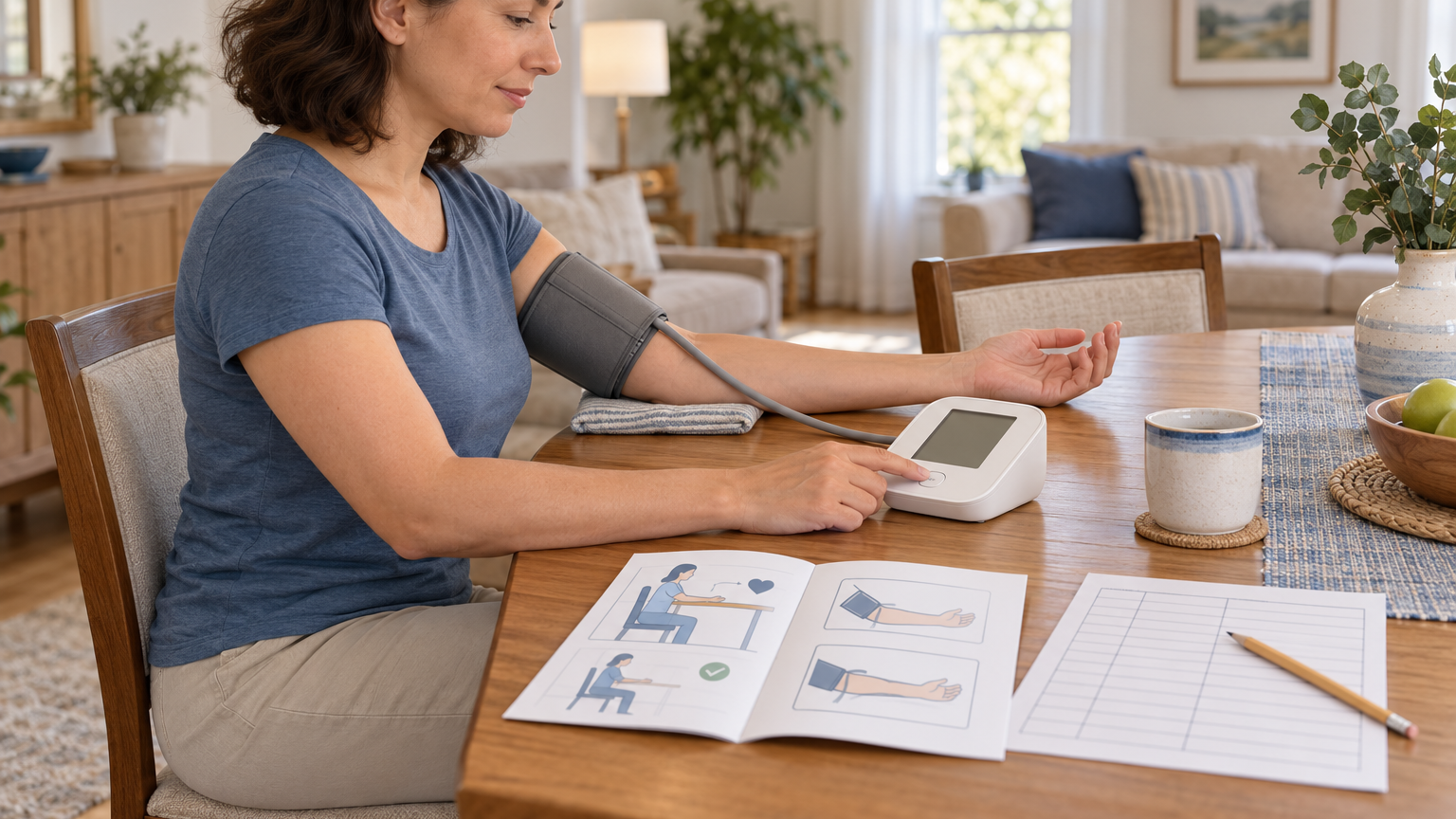
The illustration explains the topic of this article. It is not clinical evidence of device accuracy or your health status.
First, distinguish fluctuating readings from symptoms you are experiencing now
Before troubleshooting, check whether you have any significant symptoms. If you experience chest pain, severe difficulty breathing, fainting, or sudden slurred speech or limb weakness, contact local emergency services or a medical professional immediately. Do not delay getting help while trying to obtain a "satisfactory" reading, and do not rule out danger based on a single reading that looks normal.
If you have no acute symptoms, save the readings you already have, then review your measurement process step by step. Do not diagnose yourself simply because a reading is higher or lower than the previous one.
If your doctor has given you a plan for responding to abnormal readings, follow it. If you are unsure when to contact your doctor or seek emergency care, make these questions a priority at your next follow-up visit.
Start by checking the device model and cuff fit
Find your monitor's brand, full model number, and matching instruction manual. Devices that look similar may require different operating procedures. In particular, confirm that the manual matches the model you have.
Check the following information in order:
Where on the body is the device intended to measure blood pressure, and are you using it as instructed?
What size range is listed on the cuff, and have you checked your arm size as directed?
Is the cuff approved for use with this device, and did you confirm compatibility when replacing it?
Are there any visible problems with the cuff, tubing, connectors, or power supply components?
Does the screen show an error code, a power alert, or any other information that requires checking the manual?
If you find damaged accessories, connection problems, or repeated errors, document the issue and contact the manufacturer's support team or a qualified professional for guidance. Do not try to "calibrate" readings by taking the device apart, changing settings, or swapping accessories without guidance.
If the manual is missing, you cannot identify the model, or you cannot determine whether the cuff fits properly, treat these as unresolved questions rather than assuming that you are using the device correctly.
What to check about activity, rest, and your surroundings before measuring
Reviewing what you did before each measurement can help describe the situation more clearly than comparing two numbers alone. You can record whether you had just finished an activity, consumed a caffeinated drink, or smoked, and whether you were in pain, anxious, or experiencing other symptoms. This information helps professionals understand the circumstances of the measurement, but it cannot establish why a reading changed on its own.
Next, consult the manual or the home blood pressure measurement guidance you have received to check the preparation requirements:
Did you complete the required rest period?
Did you talk, make or answer phone calls, or handle other tasks while preparing or measuring?
Did the setting allow you to sit quietly, and were you interrupted?
Were there noticeable differences in measurement times or preparation from one day to another?
Follow reliable device instructions or your healthcare professional's specific guidance on how long to rest and which activities to avoid beforehand. Do not change your scheduled medication time just to improve the numbers, and do not assume that one result obtained after changing the measurement conditions proves the cause.
Check your seated position, arm support, and operating steps against the device instructions
Keep the manual nearby and follow it step by step, from putting on the cuff to the end of the reading. This makes it easier to identify missed steps than repeatedly measuring from memory.
Pay particular attention to how you should position your back, feet, and arm, where the measurement site should be, and how to put on the cuff. Follow the instructions for your specific model regarding cuff orientation, placement, and tightness. Comfort alone does not tell you whether the cuff is positioned correctly.
You can also ask a family member to observe and record the following:
Whether the cuff is applied as instructed and whether clothing is in the way or constricting the area.
Whether your arm is supported as directed and whether you change position during the measurement.
Whether you talk, move, or use your phone during the measurement.
Whether you move the cuff or interrupt the device before the measurement is complete.
Whether you follow the required intervals and number of readings when repeating measurements.
If you do not understand a step, note the relevant page in the manual and ask a healthcare professional or the manufacturer. Do not assume that a demonstration for another model applies to yours.
How to keep all readings instead of selecting only satisfactory results
The purpose of keeping records is to help a professional see what actually happened, not to produce a neat set of numbers. If you are unhappy with a reading, do not delete it or keep measuring until you get the result you want.
Each record can include:
The date, time, and side of the body used for the measurement.
The systolic pressure, diastolic pressure, and pulse value displayed by the device.
The order of readings within the same session and any errors or interruptions.
Symptoms at the time and any preparation or operating steps that differed from your usual routine.
Medication timing and any other information your doctor has asked you to record.
For example, you might note, "Answered a phone call during the first measurement" or "Reapplied the cuff before the second measurement." These describe the process. They should not be turned into conclusions such as "The first reading was definitely inaccurate" or "Only the second reading reflects my true blood pressure."
If your device stores previous readings, keep the original records or clear photos. Ask the professional overseeing your follow-up care whether to calculate an average, which readings to include, and how long to keep recording. Retain the original results as well.
Home troubleshooting cannot confirm device accuracy or replace a diagnosis
Completing these checks only shows which parts of the process you reviewed. It does not prove that the device is accurate or establish a specific cause for the changes in your readings.
Two similar results do not, by themselves, prove that a device is accurate. Likewise, if two devices give different readings, the numbers alone cannot tell you which device has a problem. A qualified professional or the manufacturer should use an appropriate process to assess whether the device needs further testing.
Reviewing your measurement process also cannot determine whether you have high blood pressure, whether treatment is meeting your goals, or whether your medication needs to change. Do not stop, increase, reduce, or switch medications based on home readings you have selected yourself.
If your readings repeatedly concern you, contact the healthcare professional overseeing your follow-up care, even if you currently have no significant symptoms. Share your complete records and explain which parts of the process you have checked. Your specific targets and thresholds for action need to be determined based on your circumstances. This guide does not set a single numerical standard for everyone.
Bring your device and records so a professional can check your technique in person
Before an appointment or follow-up visit, ask whether you can bring your blood pressure monitor for an in-person review. Prepare the device, the cuff you normally use, model information, the manual, and your complete records. Also mention whether the device was recently dropped, repaired, or fitted with replacement accessories.
During the review, demonstrate how you normally take a measurement at home so the professional can observe cuff fit, body position, arm support, and operating steps. If readings need to be compared or the device needs to be checked, let the professional arrange the appropriate process.
Before leaving, confirm the following:
Which measurement method to use going forward and whether to consistently use the same side.
When to measure, how many readings to take each time, and how long to wait between readings.
How to save your records and what information to provide at follow-up visits.
Which readings or symptoms require contacting your doctor and which situations require immediate help.
Whether the device or cuff needs further inspection, replacement, or attention from the manufacturer.
Put these instructions into a brief personal guide for measuring your blood pressure and follow the agreed plan. Keeping complete results, describing the measurement conditions, and raising questions promptly can make follow-up discussions more useful than repeatedly trying to obtain a particular number.
Frequently asked health questions
1. If your blood pressure follow-up goals are unclear, how can you confirm a management plan with your doctor through Heart Alliance?
At your Heart Alliance follow-up visit, ask your doctor about a monitoring frequency suited to you, individualized targets, follow-up arrangements, whom to contact about abnormal readings, and which symptoms require immediate emergency care. Your age, pregnancy status, other medical conditions, and current medications may all affect the plan. Do not adopt someone else's targets or change treatment on your own.
2. How can Heart Alliance patients with cardiovascular disease get individualized guidance if they are concerned about exercise risks?
Tell your treating physician at Heart Alliance about your current symptoms, previous cardiovascular events, test results, medications, and the type of exercise you plan to do. Ask whether you need further evaluation or rehabilitation guidance. Do not copy someone else's exercise intensity. If you develop chest pain, significant shortness of breath, dizziness, or a feeling that you may faint during exercise, stop immediately and seek help according to the severity of your symptoms.
3. If tests related to high blood pressure are scheduled on the same day at Heart Alliance, how can you check for conflicting times or preparation requirements?
Provide all appointment times, locations, and preparation instructions to the testing department or outpatient clinic at Heart Alliance for review. Ask about the order of tests, expected intervals, and any preparation requirements that cannot be met together. If the instructions conflict, have the relevant departments clarify a coordinated plan before following them. Do not piece together a preparation plan on your own.