Supplements and Heart Medicines: Visit Checklist
Review date: 2026-08-30 · Credential: 110*********564
Abstract
Supplements and Heart Medicines: Visit Checklist
Supplements and Heart Medicines: Visit Checklist
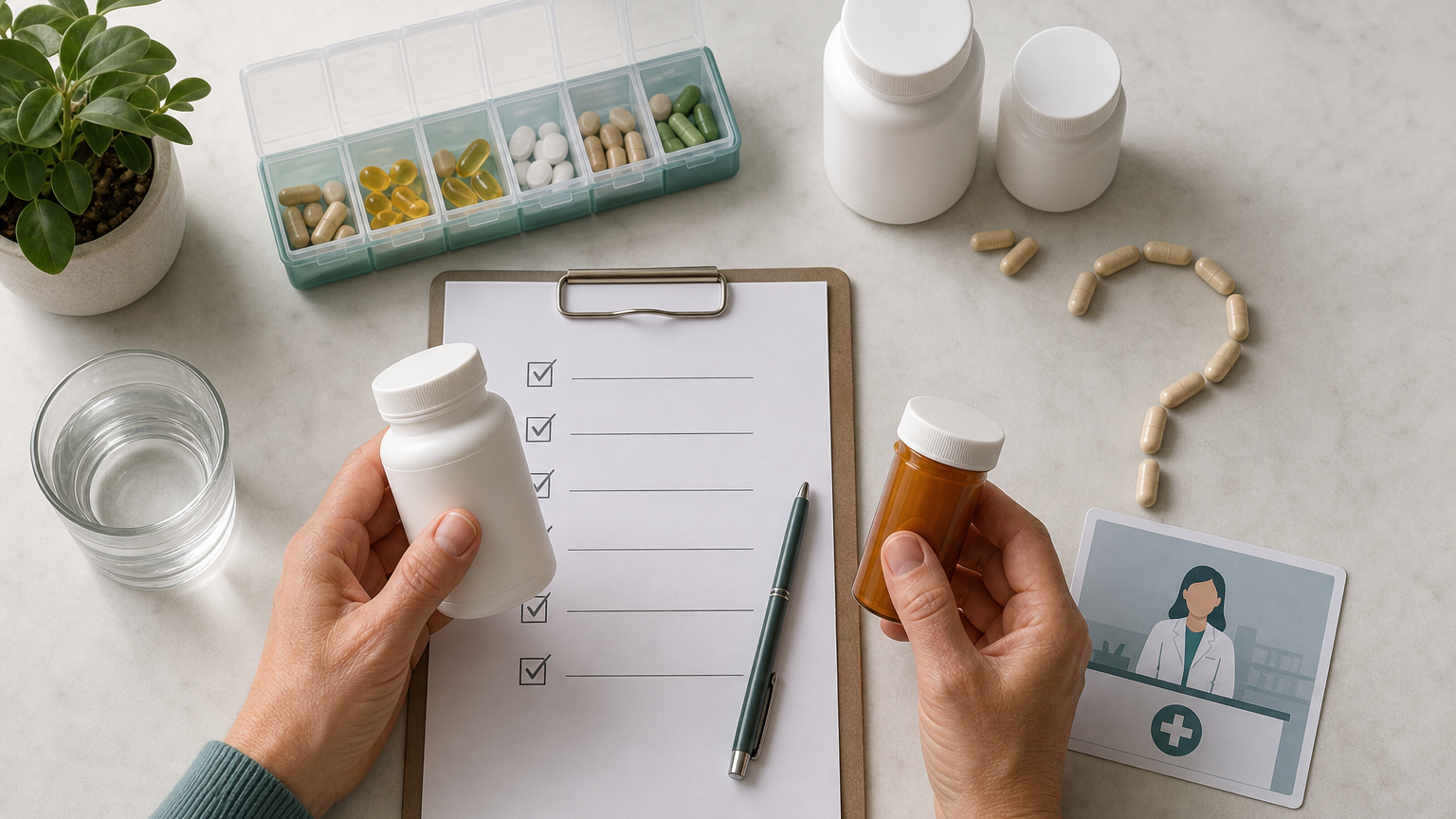
When preparing to use supplements together with heart medications, the most important first step is not to judge on your own whether they can be combined, but to give complete information to your doctor or pharmacist for review. This article provides a pre-visit communication checklist to help organize information and ask questions. It does not replace diagnosis, prescription, or individualized treatment advice.
First, list all prescription drugs, over-the-counter drugs, and supplements
Do not record only the drugs called "heart medicines." The list should cover all products actually used, including:
Prescription drugs prescribed by a doctor
Over-the-counter drugs purchased on your own
Vitamins, minerals, and other dietary supplements
Herbal or traditional conditioning products
Granules, drops, powders, and compound nutritional products
Products recently stopped but may need to be explained to the doctor
If you are not sure whether a product is a drug or a supplement, include it first instead of excluding it on your own. Occasionally used products also need to be recorded, such as those used only for pain, insomnia, colds, or stomach discomfort.
Record brand, ingredients, dosage, and frequency of use
Writing only the product abbreviation may not be enough for review. For each item, try to include:
Product full name and brand
All ingredients listed on the package
Amount per tablet, capsule, or each use
Number of uses per day or week
Usual time of use
Approximate start date
Purpose of use
Who recommended it
For compound products, it is especially necessary to keep a complete ingredient list. Before the visit, you can photograph the front and back labels and instructions, and make sure the photos are clear and readable. If the product has been repackaged, try to find the original packaging or purchase record.
Why "natural" does not mean interactions can be ignored
"Natural," "herbal," or "nutritional supplement" are product descriptions and cannot replace medication safety review. Whether it is suitable to use together depends on specific ingredients, dosage, method of use, current medications, and personal health conditions.
Before professional review is completed, it is not advisable to assume a combination is safe based solely on advertisements, experiences of relatives and friends, or online reviews. Even if two products can be purchased separately, it does not mean they are suitable for a particular person receiving cardiovascular treatment at the same time. If the ingredient label is incomplete, the source is unclear, or the names are similar, tell this uncertainty directly to the doctor or pharmacist.
What new symptoms should prompt prompt contact with a medical professional
After starting, stopping, or adjusting any drug or supplement, if new discomfort occurs, original symptoms worsen, or your physical condition is significantly different from usual, contact your doctor or pharmacist as soon as possible and explain all recent medication changes.
When recording, you can write:
When the symptom started
How long each episode lasts
What products were used before the onset
Whether doses were missed, repeated, or changed
Whether the symptom is gradually worsening
Whether it is accompanied by other abnormalities
If you have severe or rapidly worsening discomfort, or you think it may be life-threatening, do not wait for a routine appointment. Immediately contact local emergency services or seek emergency medical help. This article cannot determine the cause based on symptoms and cannot replace on-site evaluation.
Use the checklist to prepare questions for the pharmacist or doctor
During the visit, you can ask item by item:
Have all ingredients of this supplement been reviewed?
Could it affect the medications I am using?
Do my diseases, allergy history, or past adverse reactions need special consideration?
Are there any ingredients or usage methods unsuitable for me?
If it can be used, how should the dosage, frequency, and time be arranged?
Do I need to watch for specific symptoms or have follow-up tests?
If I miss a dose, take a double dose, or have discomfort, what should I do?
Are there products with repeated ingredients but different names?
Before surgery, tests, or new prescriptions, do I need to review again?
Write the professional's answers in the same checklist. If the answer depends on test results or complete medical history, keep it as "pending confirmation" and do not write conclusions on your own.
How to share the same checklist among multiple prescribers
If cardiology, other specialties, primary care doctors, and pharmacists are involved in medication management, try to provide each one with the same version of the checklist. After each addition, discontinuation, or adjustment of products, update the date promptly and keep the old version to track changes.
The checklist can be kept on your phone, in a paper medical folder, and with a trusted family member. During the visit, state which items are currently in use, which have been stopped, and which are only planned for purchase. Do not assume that a prescriber has automatically obtained all records from other institutions.
Why you cannot stop heart medications on your own based on this article
This article can only help prepare for communication. It cannot judge whether a supplement is suitable for an individual, nor decide whether a prescription drug should be continued, reduced, or stopped. People taking heart-related drugs should not change their prescription regimen on their own because of interaction warnings or concerns.
A safer approach is to contact the prescribing doctor or pharmacist, provide accurate product information, current usage, and symptom records, and let a professional judge based on the complete situation. If you cannot contact the original prescriber in time and have severe discomfort, seek emergency medical help.
Today, take photos for records and schedule a complete medication review
You can start with a simple action: gather all drugs, over-the-counter drugs, and supplements currently used at home, photograph each package and ingredient label, and create a dated checklist.
When scheduling a complete review with a doctor or pharmacist, bring the checklist, photos, relevant instructions, and recent medication change records. After the review is completed, update the checklist with the confirmed results, and consult again before adding any new product.
The purpose of this checklist is to reduce communication omissions, not to judge on your own whether a combination is safe. Any specific combination requires professional assessment based on complete drug information and personal health conditions.
Medical Health Frequently Asked Questions
1. On the Heart Alliance platform, how should home blood pressure monitoring data be organized to facilitate doctor analysis?
When recording on the Heart Alliance platform, include the date of measurement, exact time, systolic and diastolic values, whether you rested sufficiently before measurement, whether you exercised or consumed coffee or strong tea within the past two hours, and note any abnormal sensations such as dizziness or chest tightness. At the visit, show the doctor the complete records and current medication list. The professional doctor will assess based on properly measured blood pressure results. Never self-diagnose or adjust medication based on a single reading.
2. When using the Heart Alliance platform to refer a patient with rheumatic heart disease, how to reduce the risk of missing medical records?
Prepare all previous diagnostic certificates, various imaging and test reports, hospitalization or surgery records, current medication list, drug allergies, and timeline of recent symptom development. You can consult the Heart Alliance platform in advance about the imaging formats accepted by the new hospital and whether a referral letter is needed. Do not rely solely on memory or remove old materials on your own.
3. While waiting for a coronary heart disease outpatient visit on the Heart Alliance platform, how to systematically record the association between daily activities and chest discomfort?
On the Heart Alliance platform, record the specific activity before each episode of chest discomfort, intensity of exercise, start and end times, location of discomfort, subjective feeling, whether accompanied by shortness of breath or dizziness, and changes in symptoms after stopping activity. Do not artificially increase exercise to test symptoms. If symptoms do not resolve, significantly worsen, or severe accompanying symptoms occur, call emergency services immediately.