Sudden Chest Pain: When to Seek Emergency Care
Review date: 2026-08-20 · Credential: 1101*********81
Abstract
Sudden Chest Pain: When to Seek Emergency Care
Sudden Chest Pain: When to Seek Emergency Care
Chest pain can arise from various causes, including the heart, blood vessels, lungs, digestive tract, muscles, and bones. Based solely on the location or intensity of the pain, it is usually impossible to safely rule out critical conditions such as a heart attack. When faced with sudden, unexplained, or unusual chest pain, the priority should be to determine whether emergency assistance is needed, rather than trying to self-diagnose.
This article is for general health education and cannot replace the on-site judgment of emergency responders or physicians. Emergency numbers and procedures may vary by region, so always follow the guidance of your local medical authorities.
Rule Out Danger First: Which Chest Pains Require Immediate Emergency Call
Call your local emergency services immediately if any of the following occur:
Sudden onset of chest pressure, tightness, heaviness, squeezing, or significant discomfort that is hard to describe
Chest pain that persists, recurs, or does not significantly improve with rest
Pain or discomfort that spreads to the arms, shoulders, back, neck, jaw, or upper abdomen
Chest pain accompanied by difficulty breathing, cold sweats, nausea, vomiting, dizziness, marked fatigue, or a sense of impending doom
Chest pain with fainting, altered consciousness, pale complexion, or bluish lips
Sudden severe pain in the chest or back, along with neurological symptoms, breathing difficulty, or signs of circulatory instability
The patient has known cardiovascular disease, and the current symptoms are different from usual, more severe, or last longer
Do not rule out serious illness just because the patient is young, has no known heart disease, or the pain is temporarily mild. Women, the elderly, and diabetics may have atypical presentations of acute heart problems, such as difficulty breathing, nausea, unusual fatigue, back or upper abdominal discomfort.
Do Not Wait and Watch When Chest Pain Comes with These Symptoms
When chest pain occurs alongside the following symptoms, do not wait for symptoms to resolve on their own:
Rapid breathing, shortness of breath, or inability to lie flat
Profuse sweating, cold and clammy skin
Palpitations with dizziness, weakness, or near fainting
Sudden fainting, confusion, or slow responsiveness
Weakness on one side of the body, slurred speech, or facial asymmetry
Coughing up blood, or chest pain that significantly worsens with breathing accompanied by sudden shortness of breath
Symptoms that appear after exertion, emotional stress, or cold exposure
Temporary relief of symptoms does not prove that the danger has passed. Some acute conditions may present with intermittent discomfort and still require evaluation by a professional.
What to Do While Waiting for Emergency Responders
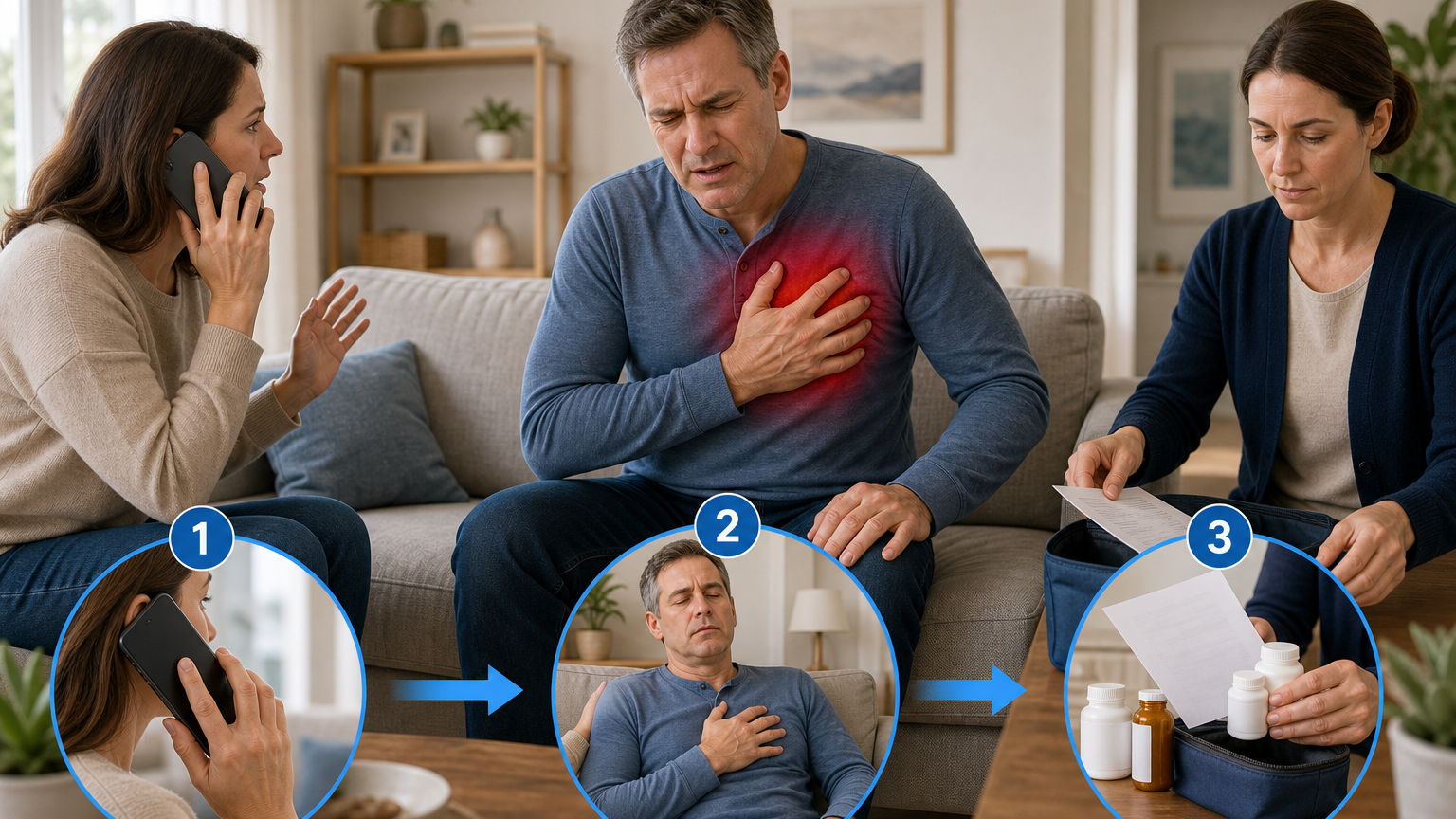
After calling emergency services, keep the phone line open and follow the dispatcher's instructions. While waiting, you can:
Have the patient stop all activity and rest in a comfortable position that eases breathing.
Loosen tight clothing, keep the area well-ventilated, and prevent crowding by unnecessary people.
Record the time symptoms started, the nature of the pain, accompanying symptoms, and any measures already taken.
Prepare the patient's medical history, medication list, allergy information, and identification.
If the patient has emergency medications prescribed by a doctor, use them only according to previous medical advice or the emergency dispatcher's instructions. Do not increase the dose or use someone else's medication.
If the patient becomes unresponsive and is not breathing normally, immediately inform the emergency dispatcher again and follow their instructions for CPR; if an automated external defibrillator (AED) is nearby, use it according to the device's voice prompts.
Emergency responders may give more specific instructions based on the patient's condition. The suitability of medications is influenced by allergy history, bleeding risk, blood pressure, recent medication use, and other conditions, so do not self-medicate based solely on online information.
What Actions May Delay Treatment
The following actions may increase risk or delay evaluation:
Driving yourself to the hospital
Waiting for family members to come home before deciding to seek help
Repeatedly moving or walking around to see if symptoms worsen
Trying to test the cause of chest pain by massage, heat application, drinking alcohol, or eating
Concluding it is not a heart problem because of hiccups, pain upon pressing, or brief relief of symptoms
Taking someone else's nitroglycerin, painkillers, or other prescription drugs
Going to a regular clinic and waiting in line without mentioning the possibility of an emergency
Loss of consciousness or worsening of condition may occur while driving yourself. When possible, emergency responders should provide observation and necessary treatment during transport.
What Healthcare Providers Typically Ask Upon Arrival
Healthcare providers typically ask about the time of symptom onset, location, quality, duration, triggers, and relieving factors, as well as any associated shortness of breath, sweating, nausea, fainting, or pain radiation.
They may also ask about:
History of coronary artery disease, high blood pressure, diabetes, lipid disorders, or other cardiovascular diseases
Smoking history, recent infections, trauma, surgery, prolonged bed rest, or long-distance travel
Current use of prescription drugs, over-the-counter medications, and supplements
Drug allergies, bleeding risk, or recent changes in medication
Family history of early cardiovascular disease or sudden death
Describe symptoms as accurately as possible. Do not downplay them to seem less severe, nor speculate about a diagnosis out of nervousness. The timing and progression of symptoms are especially important.
What Clues Can ECG and Blood Tests Provide
An electrocardiogram (ECG) records the heart's electrical activity and may help detect signs of myocardial ischemia, arrhythmias, or other abnormalities. However, a normal initial ECG does not necessarily rule out all acute heart problems. Doctors may repeat the test based on symptom changes.
Blood tests may include markers of myocardial injury. Some markers may not show significant changes in the early stages of symptoms, so repeat testing may be needed depending on the time of onset.
Test results must be interpreted in conjunction with symptoms, physical examination, vital signs, and other tests. Chest pain may also require imaging or other evaluations, depending on the doctor's judgment of potential causes and risk.
Why Evaluation May Still Be Needed After Symptoms Resolve
Relief of chest pain only means that the current sensation has changed; it alone cannot prove that the underlying cause has resolved. Some heart, vascular, or lung problems may be intermittent; gastrointestinal or musculoskeletal issues may also mimic cardiac emergencies.
If chest pain is new, unexplained, recurrent, or different from previous patterns, even if it has resolved, seek professional evaluation as soon as possible. If symptoms recur, worsen, or are accompanied by warning signs, call emergency services immediately rather than waiting for a scheduled appointment.
Save This Chest Pain Checklist and Share with Family
Family members can confirm the following in advance:
Local emergency phone number
Home address and the best route for emergency responders to access
Each member's important medical history, medications, and allergy information
Prescription instructions, storage location, and expiration date of emergency medications
Location of the nearest automated external defibrillator (AED)
Who is responsible for opening the door, receiving emergency responders, and carrying medical documents
The most important principle: for sudden, unexplained chest pain, prioritize ruling out danger. If there is persistent chest pressure, difficulty breathing, cold sweats, fainting, or pain radiation, call local emergency services immediately. Do not rely on self-observation or online judgment and delay treatment.