Starting a Heart-Healthy Plant-Based Diet
Review date: 2026-09-14 · Credential: 110*********564
Abstract
Starting a Heart-Healthy Plant-Based Diet
Starting a Heart-Healthy Plant-Based Diet
A plant-based diet is not a fixed meal plan but a way of eating that increases the proportion of whole grains, legumes, vegetables, fruits, nuts, and seeds. When starting to make changes, the focus is not on pursuing a single so-called heart-healthy food, but on observing whether the overall combination can be maintained long-term while also meeting energy, protein, and other nutritional needs.
This article provides general medical health education and cannot replace an individualized plan developed by a doctor or registered dietitian based on your medical condition, test results, medications, and eating ability.
First, set the scope: increasing plant-based foods does not mean completely excluding all animal-based foods
Plant-based diets can vary in degree. Some people simply increase legumes and vegetables and reduce red and processed meat; some still keep fish, eggs, or dairy; others choose to consume no animal products at all. Whether to completely exclude certain food groups should be decided based on personal values, nutritional status, medical conditions, and feasibility.
Before starting, you can establish three principles:
Base your diet on minimally processed or less processed plant foods.
Gradually replace high-frequency meals instead of suddenly eliminating many foods.
At each meal, consider staple foods, protein sources, and vegetables together, avoiding meals of only vegetables or fruits.
If you completely exclude animal products, you need to more proactively evaluate sources of nutrients such as vitamin B12. Whether fortified foods or supplements are needed should be determined by a professional based on actual intake and health status.
Take stock of your real choices in a week of meals, snacks, and eating out
First, record a representative week without rushing to calculate every nutrient. You can note breakfast, lunch, dinner, snacks, beverages, and meals eaten out, and mark the following situations:
Which meals are often based on refined staples, processed meats, or fried foods.
Which meals have almost no vegetables, legumes, or whole grains.
Whether sugary drinks, desserts, or high-salt snacks are frequently used as meal replacements.
When eating out, can you find steamed, boiled, stewed, low-salt, or sauce-on-the-side options.
Which foods are easy to buy, store, and reuse.
The purpose of this inventory is not to label your diet as good or bad, but to identify the three high-frequency meals that are easiest to change. Small adjustments that can be repeated consistently are often easier to maintain than designing a complex menu all at once.
Understand the different roles of whole grains, legumes, vegetables, fruits, nuts, and seeds
Different plant foods cannot simply replace each other.
Whole grains and tubers usually serve as staple foods, providing energy for the plate. Legumes, soy products, and other plant protein foods suitable for individual circumstances can help supplement protein. Vegetables and fruits provide a variety of vitamins, minerals, and dietary fiber, but alone they are usually not enough to constitute a complete meal. Nuts and seeds can provide fat, protein, and some micronutrients, but they are energy-dense, so portion sizes should still be based on individual needs.
More variety does not necessarily mean healthier. Desserts high in coconut oil, fried vegetarian foods, sugary drinks, and high-salt mock meats do not contain meat but should not automatically be considered heart-healthy choices.
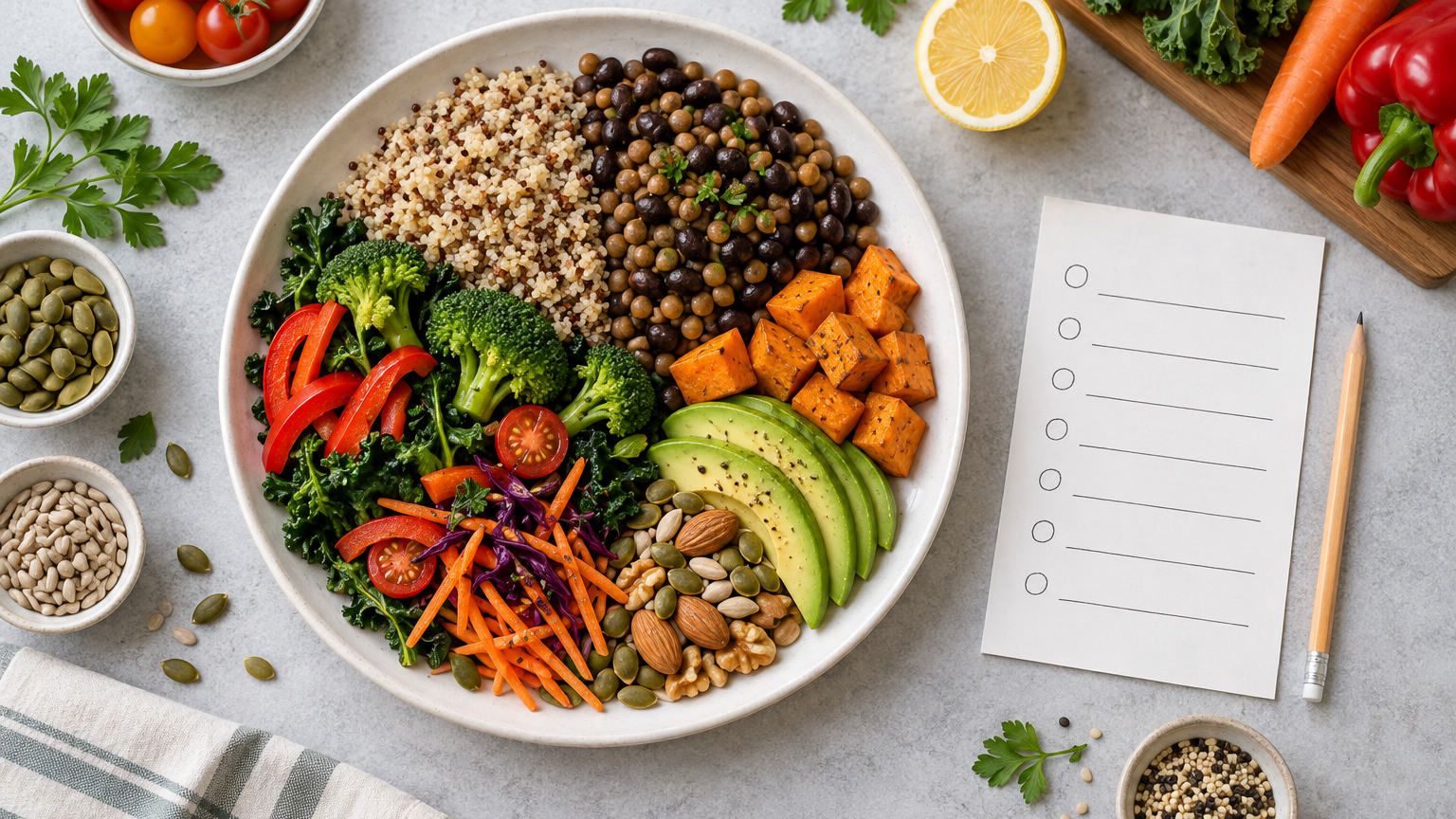
Basic plate checklist: how to combine staple foods, protein sources, and vegetables
At each meal, you can choose one or more from the following three groups, then adjust portion sizes based on appetite, blood sugar management goals, weight changes, and activity level.
Staple foods to consider:
Oats, brown rice, whole wheat pasta, or other whole grains.
Starchy foods such as corn, potatoes, sweet potatoes.
If you can't immediately accept whole grains, start by replacing some refined staples with whole grains.
Protein sources to consider:
Legumes such as soybeans, black beans, chickpeas, lentils.
Tofu, dried bean curd, or unsweetened soy products.
Nuts, seeds, and their products without large amounts of added sugar and salt, as a meal supplement rather than the sole protein source.
If your dietary scope allows, you can keep eggs, fish, or dairy that fit your personal health condition.
Vegetables to consider:
Rotate dark leafy greens with other colored vegetables.
Fresh, frozen, or canned vegetables with simple ingredients.
Use steaming, boiling, stewing, roasting, or light stir-frying with less oil, and reduce heavy salt sauces.
For example, a basic meal could be brown rice, stewed lentils, and two types of vegetables; or whole wheat pasta, tomato bean sauce, and a serving of leafy greens. Fruits are better as part of a meal or as a snack rather than a long-term replacement for meals that contain staple foods and protein sources.
Gradual replacement table: start with three high-frequency meals
High-frequency meal | First step to try | Things to watch |
|---|---|---|
Breakfast often sweet bread or processed meat | Replace with unsweetened oatmeal, paired with fruit and a small amount of nuts or seeds | Check added sugar and sodium in ready-to-eat cereals and plant milks |
Lunch often white rice and meat | Keep familiar staple, add tofu or legumes and a serving of vegetables | Don't drastically reduce total food intake at the same time to avoid getting hungry quickly |
Dinner or takeout often fried, heavy sauce | Choose stewed legumes, whole grain staple, and vegetables, ask for sauce on the side | Vegetarian takeout can also be high in sodium, oil, and sugar |
After one to two weeks of consistent implementation, decide whether to expand the replacement range based on satiety, gastrointestinal reactions, weight changes, and disease management. Don't change all meals at once, otherwise it will be hard to identify the cause if discomfort occurs.
What to look for when reading labels on processed plant-based foods
When buying plant milks, breakfast cereals, canned beans, veggie burgers, or plant-based meats, don't just look at the plant-based claims on the front of the package. Compare similar products using the ingredient list and nutrition facts panel.
Key things to check:
Sodium content, especially in mock meats, soups, sauces, and ready meals.
Added sugars, especially in plant milks, granola bars, breakfast cereals, and sweetened yogurt alternatives.
Sources of saturated fat, such as products high in coconut oil or palm oil.
Protein content, to confirm whether the product can serve as the planned protein source.
Whether it contains allergens you need to avoid.
Whether fortified nutrients are relevant to your individual dietary gaps, rather than buying based on marketing claims alone.
Different brands can vary significantly in formulation. Compare using the same serving size and consider how much you actually eat at one time, not just the smaller per-serving values that look better on the package.
Which issues to consult about first if you have chronic conditions, eating restrictions, or medications
The following groups should not make major changes based solely on a general plate guide without first consulting a doctor or registered dietitian:
People with kidney disease who need to restrict potassium, phosphorus, protein, or fluids.
People taking medications like warfarin that may be affected by diet and need to maintain stable intake of relevant nutrients.
People with diabetes or taking medications that may cause hypoglycemia, who need to adjust carbohydrate planning accordingly.
People with food allergies, difficulty swallowing, gastrointestinal diseases, or recent significant loss of appetite.
Pregnant or breastfeeding women, children, older adults, or those with recent unintentional weight loss.
People planning to completely exclude animal products who have not yet evaluated sources of vitamin B12, iron, calcium, vitamin D, iodine, and other nutrients.
After increasing legumes and dietary fiber, some people may experience bloating or changes in bowel movements. Start with smaller portions, gradually increase, and arrange fluid intake according to your doctor's fluid requirements. If you experience persistent vomiting, inability to eat, significant dehydration, black or bloody stools, contact a healthcare provider promptly.
If you experience chest pain, chest pressure, sudden difficulty breathing, fainting, or discomfort accompanied by sweating, nausea, or discomfort in the arms, back, neck, or jaw, contact local emergency services immediately; do not just observe while adjusting your diet.
Verify the boundaries: a single plant ingredient cannot guarantee reducing your personal heart risk
The value of a plant-based diet needs to be understood within the context of overall diet and long-term lifestyle. A particular legume, nut, seed, juice, powder, or supplement cannot guarantee reducing an individual's heart risk, nor can it replace blood pressure, lipid, blood sugar, or other treatments prescribed by a doctor.
Individual risk is also influenced by many factors such as smoking, activity level, sleep, blood pressure, blood lipids, blood sugar, weight, family history, and past diseases. A single meal or food cannot determine whether treatment is effective, nor should it be used as a reason to stop or change medications on your own.
Plant foods can also cause allergies, gastrointestinal discomfort, inadequate nutrient intake, or drug interactions. For specific diseases, dietary goals may conflict, so they need to be weighed in conjunction with test results and clinical plans.
Final action: create a seven-day shopping list and schedule a diet review
The first shopping trip does not need to be comprehensive; you can prepare seven days' worth of basic ingredients that can be repeatedly combined:
Two to three staple foods, such as oats, brown rice, and whole wheat pasta.
Two to three protein sources, such as tofu, lentils, and low-sodium canned beans.
Three to five vegetables that are easy to store and cook, mixing fresh and frozen.
Two to three whole fruits.
One to two types of unsalted nuts or seeds.
Plant milk with simple ingredients, unsweetened or low-sugar, and a few common seasonings.
After a week, schedule a brief review to record which combinations kept you full, which ingredients were wasted, what difficulties you encountered when eating out, and whether you experienced bloating, fatigue, abnormal weight changes, or other discomfort. Next week, address only the one or two most obvious issues.
For people with cardiovascular disease or undergoing treatment, the review should also be brought to follow-up visits to confirm with your doctor or registered dietitian whether the dietary changes align with current treatment goals. A plant-based diet can start with one meal, but it should be nutritionally complete, sustainable, and coordinated with your medical plan.