Smartwatch Rhythm Alerts: What to Do Next
Review date: 2026-09-17 · Credential: 110*********564
Abstract
Smartwatch Rhythm Alerts: What to Do Next
Smartwatch Rhythm Alerts: What to Do Next
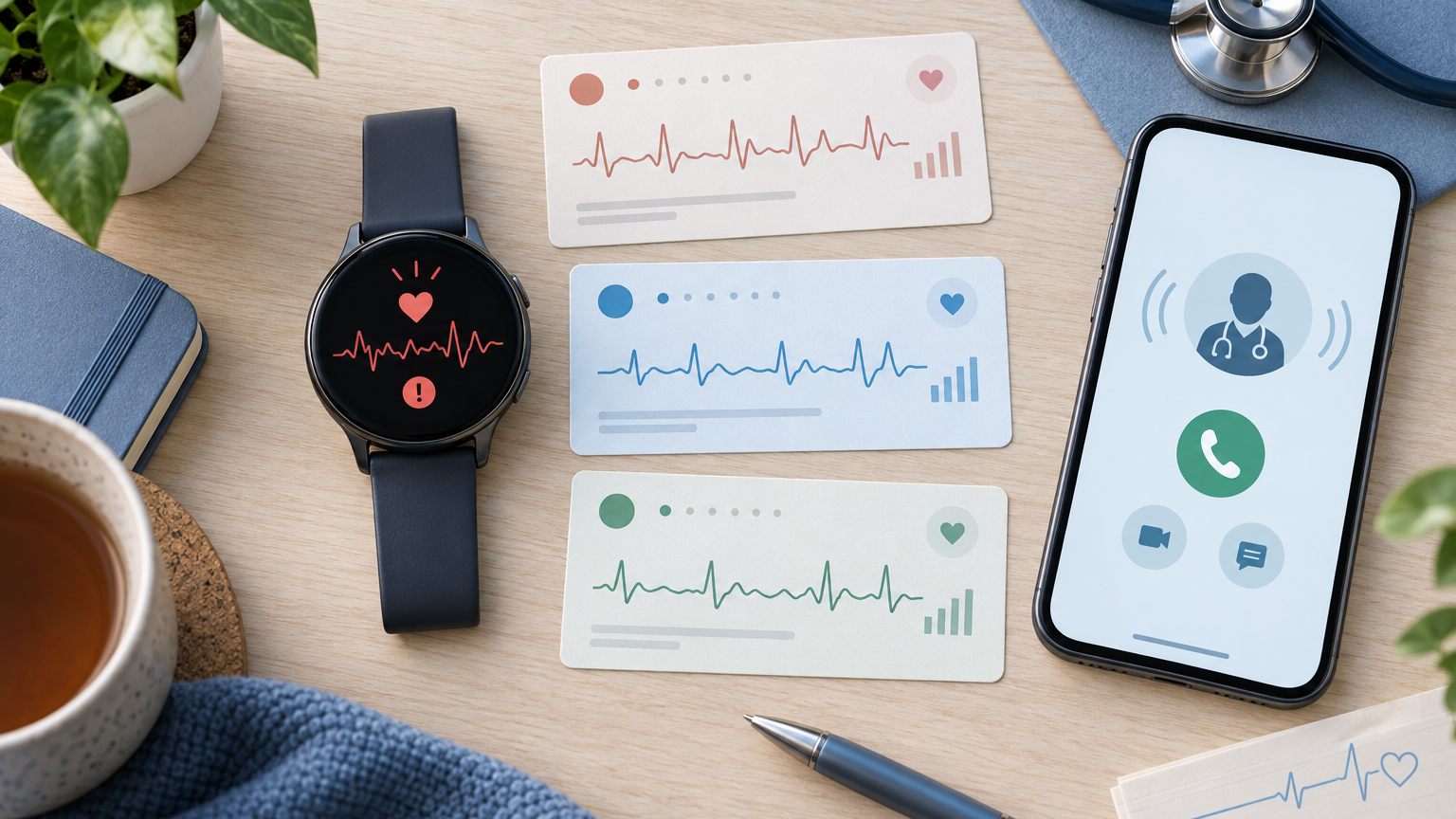
When a smartwatch sends an irregular rhythm alert but you don't feel anything obvious, it doesn't mean you can directly confirm or rule out an arrhythmia. A safer approach is to first save the device records, watch for danger signs, and then decide the next step based on whether the alert repeats, your personal history, and your healthcare team's advice.
This article provides general medical health information and cannot replace a doctor's diagnosis, ECG testing, or individualized treatment advice.
Clarify the Task: Smartwatch Alerts Are Screening Clues, Not an Arrhythmia Diagnosis
Consumer smartwatches typically identify possibly abnormal rhythms based on sensor data, but the alert itself is not a formal diagnosis. Device readings can be affected by factors such as wearing status, activity, skin contact, and device algorithms; not receiving an alert also does not prove that your heart rhythm is definitely normal.
After receiving an alert, the current task is not to self-diagnose which specific arrhythmia it is, but to complete three things:
Save the original record and the time it occurred.
Determine whether emergency symptoms were present at that time or subsequently.
Give verifiable information to a medical professional, who will decide whether further evaluation is needed.
Even if you have no palpitations or other obvious symptoms, repeated alerts are still worth recording and reporting to your regular healthcare team. Whether an ECG or other tests are needed should be determined by a professional based on your individual situation.
Save Alert Times, Duration, Device Model, and Original Screenshots
After seeing an alert, try not to rely solely on memory to describe "the watch said irregular rhythm." Keep the original information the device can provide, including:
Date and specific time the alert occurred
Whether the alert appeared once or multiple times
Duration shown for each alert
Brand, model, and software version of the watch and phone
Complete screenshot of the alert page
Original waveform, report, or exportable file generated by the device
Whether you were sitting, sleeping, exercising, or just finished activity
Whether you had palpitations, chest discomfort, shortness of breath, dizziness, fainting, or noticeable weakness at the time
When taking screenshots, try to include the time, alert type, and device page context; don't capture only partial text. If the device allows exporting records, keep the original file to avoid losing dates or other information through repeated transfers.
If alerts continue, you can create a simple log in chronological order. Do not intentionally exercise, hold your breath, stop medication, or attempt other provocations just to make the device alert again.
Recall Activity, Sleep, Caffeine, Alcohol, and Medication Context at the Time
Device alerts need to be understood in context. Recording what happened around the time of the alert helps the healthcare team determine which information is worth further verification.
You can recall and record:
Whether you were resting, sleeping, walking, exercising, or just finished physical activity
Whether recent sleep differed from usual
Whether you drank coffee, strong tea, or other caffeinated beverages that day
Whether you drank alcohol, and roughly when
Whether you had fever, vomiting, diarrhea, or other physical discomfort
Which prescription drugs, over-the-counter drugs, or supplements you took that day
Whether you missed, delayed, or mistakenly took medication
Whether any medication was recently added, stopped, or adjusted
This context only helps organize clues; it cannot alone prove that the alert was caused by a particular diet, activity, or medication. Do not stop taking prescription medication on your own just because you suspect a certain factor.
Triage Checklist: When Chest Discomfort, Shortness of Breath, Fainting, or Noticeable Weakness Accompany the Alert, Seek Immediate Help
If the smartwatch indicates an abnormal rhythm and you simultaneously have chest pain or significant discomfort, difficulty breathing, fainting, near-fainting, sudden noticeable weakness, or symptoms are severe and rapidly worsening, contact your local emergency system or seek emergency medical help immediately.
While waiting for rescue or on the way to the emergency room, do not drive yourself. If possible, have someone accompany you and bring your medication list and device records. Do not ignore persistent or recurring severe symptoms just because the watch later shows a normal reading.
Emergency priority should be based on the person's symptoms and overall condition, not just whether the watch is still alerting. If unsure whether symptoms constitute an emergency, contact local emergency services or a medical professional for guidance first.
How to Report Repeated Alerts to Your Regular Healthcare Team When You Have No Obvious Discomfort
If there are currently no danger signs, you can organize your records and contact the team that usually handles your cardiovascular or general medical care. When reporting, explain:
Time of the first and most recent alert
Total number of occurrences, and whether they are becoming more frequent
Approximate duration of each alert
Whether you are completely symptom-free, or have had mild palpitations, dizziness, etc.
Whether you have known cardiovascular disease, previous rhythm problems, or relevant test results
All current medications and supplements you are taking
Whether the device saved waveforms or exportable reports
The healthcare team may need to review the records before deciding on consultation timing and whether further evaluation is needed. Do not purchase medications on your own based solely on the alert, and do not directly apply someone else's treatment approach to yourself.
If new chest discomfort, shortness of breath, fainting, near-fainting, or noticeable weakness occurs while waiting for a routine consultation, treat it as an emergency symptom rather than continuing to wait for the scheduled appointment.
Appointment Preparation Sheet: Device Records, Previous ECGs, Medical History, and Complete Medication List
Before your appointment, gather your materials to avoid omissions and make it easier for the healthcare team to cross-check device alerts with your history.
Category | Suggested Items to Prepare |
|---|---|
Device records | Original screenshots, waveforms, or exported reports; alert dates, times, and durations |
Device information | Brand, model, software version, and wearing position |
Symptom log | Palpitations, chest discomfort, shortness of breath, dizziness, fainting, or weakness at each alert |
Previous tests | Available previous ECGs, test reports, and related medical records |
Health background | Known diseases, previous rhythm problems, recent physical changes, and relevant family history |
Complete medications | Names and actual usage of prescription drugs, over-the-counter drugs, and supplements, plus recent changes |
If you don't know the medication names, you can bring photos of the pill bottles or original packaging. Do not skip or stop medications on your own to "make tests more accurate"; whether to adjust medication should be decided by a qualified medical professional based on your specific situation.
Verification Boundaries: Consumer Devices May Miss or False-Alert; Do Not Self-Medicate or Stop Medication Based on Them
Smartwatches can provide clues worth verifying, but false positives and false negatives are possible. Device alerts cannot independently determine the type, duration, or clinical significance of an arrhythmia, nor replace professional evaluation.
Therefore, you should not, based solely on a watch alert:
Start taking medications to control heart rate, rhythm, or blood clotting on your own
Increase, decrease, or stop existing prescription medications
Conclude that you have a specific arrhythmia
Rule out a problem just because the watch stopped alerting
Ignore repeated records just because you feel fine
Also, don't focus only on a single number or label from the device. Interpreting the record requires combining symptoms, medical history, medications, and necessary medical tests.
Final Actions: Export a Date-Sorted Record and Confirm Your Consultation Channel
Completing the following actions helps turn a vague device alert into information that the healthcare team can review:
Save all original screenshots, waveforms, and exported files.
Arrange each alert by date and time.
Add context for each record: activity, symptoms, sleep, caffeine, alcohol, and medication.
Organize previous ECGs, medical history, and complete medication list.
Confirm how to contact your regular healthcare team: clinic phone, online medical channel, or other established method.
Continue watching for danger signs while waiting for consultation; if chest discomfort, shortness of breath, fainting, near-fainting, or noticeable weakness occurs, contact local emergency services or a medical professional promptly.
Most importantly, neither treat a smartwatch alert as a diagnosis nor completely ignore it just because you feel fine. Saving original data, triaging by symptoms, and obtaining professional verification through appropriate channels is the safer next step.
Medical Health FAQ
1. Before traveling to a high-altitude area, what key questions should hypertension or coronary heart disease patients ask their doctor regarding the Heart Alliance travel assessment?
Tell the Heart Alliance doctor the destination's altitude, climbing route, length of stay, physical activity level, and whether medical help is available locally. Ask whether a complete evaluation before departure is necessary, and what situations mean you should abandon or change the original itinerary. Also ask clearly how to seek medical care nearby if you feel unwell during the trip. Whether you can go to a high-altitude area cannot be judged solely by the absence of discomfort in daily life; the doctor must make a conclusion based on your individual health condition.
2. If a patient still doesn't understand the doctor's plan after a cardiovascular outpatient visit at the Heart Alliance, what should they do?
The patient should contact the original medical team as soon as possible through the Heart Alliance's clinic phone, patient service platform, or follow-up channel. Write down each point of confusion, such as how to take medications, preparation before tests, when to return for follow-up, and what body changes to watch for. Then ask them to explain each item and provide written materials. Do not rely on your own memory to guess, and do not change the original plan without authorization. If severe or rapidly worsening discomfort occurs at the same time, call emergency services immediately instead of waiting for a routine reply.
3. Regarding the Heart Alliance, how should hypertension or coronary heart disease patients dispose of expired or no-longer-used medications found at home?
First, store these medications separately from the ones you are currently taking, keep the original packaging and labels, and prevent mix-ups. Then ask a pharmacist or local drug take-back program about the correct disposal method. Do not give the medications to others. Whether a particular medication still needs to be taken must be decided by the prescribing doctor or pharmacist after review; do not restart it on your own just because you have leftovers at home.
4. When family members disagree about the treatment plan for hypertension or coronary heart disease, how can they communicate effectively with the Heart Alliance medical team?
The patient should first decide how much family involvement they want, then compile a short list of each party's main concerns. During the visit, ask the Heart Alliance doctor to explain each option, what additional information is needed, and the next steps. You can also ask if a care coordinator, social worker, or patient support service can help facilitate communication. The final choice should respect the wishes of the patient who has decision-making capacity, and be based on the individualized assessment of a qualified doctor.
5. When hypertension or coronary heart disease patients need to adjust their job position due to work reasons, how can they prepare for communication with the Heart Alliance medical team?
First, write down the specific obstacles encountered at work, such as shift schedules, physical demands, travel frequency, or conflicts between work hours and medical appointments. Then ask the HR department what format and content of documentation is required. During the visit, ask the Heart Alliance doctor to explain, based on actual assessment results, which functional limitations or follow-up needs are appropriate to include in the documentation, without disclosing unnecessary personal privacy to the company. Specific work arrangements should be discussed among the patient, healthcare provider, and employer according to local regulations.