Small Oily Fish: A Practical Weekly Plan
Review date: 2026-09-21 · Credential: 110*********664
Abstract
Small Oily Fish: A Practical Weekly Plan
Small Oily Fish: A Practical Weekly Plan
This article is for general dietary education, helping those who want to try small oily fish plan shopping and meals. It cannot replace individualized advice from a physician, registered dietitian, or other professional based on medical history, test results, medications, and dietary restrictions.
Set a goal first: enrich meal choices, not treat a certain fish as a heart medicine
Adding small oily fish to the table can first be understood as a food choice adjustment, not a treatment. A single food cannot diagnose or treat heart disease, nor can it guarantee improvement in blood lipids, vascular plaque, or future heart outcomes.
Before starting, set an easily observable goal, such as trying three meals in one week, arranged in a main meal, a packed lunch, and an emergency meal. Record taste, preparation time, satiety, family acceptance, and purchase convenience, then decide whether it is suitable to keep long-term.
If you are being treated for hypertension, coronary heart disease, heart failure, or other conditions, do not stop, reduce, or replace medications or follow-up visits because of dietary changes.
Review current weekly protein sources, frequency of eating out, and acceptable tastes
First review the past week, rather than directly buying a large amount of food. You can record:
Which meals mainly use meat, eggs, dairy, legumes, or fish
Which days rely on takeout, cafeteria, or convenience foods
Whether family members accept the smell, texture, and appearance of fish
Whether the kitchen has refrigeration, freezing, heating, and sealed storage conditions
Whether there is fish allergy, difficulty swallowing, pregnancy, kidney disease, or a special diet required by a doctor
The purpose of this step is to find a sustainable place for fish. If you have almost no time to cook on weekdays, canned or processed frozen products may be more practical; if you are sensitive to smell, start with smaller portions and well-ventilated dining scenes.
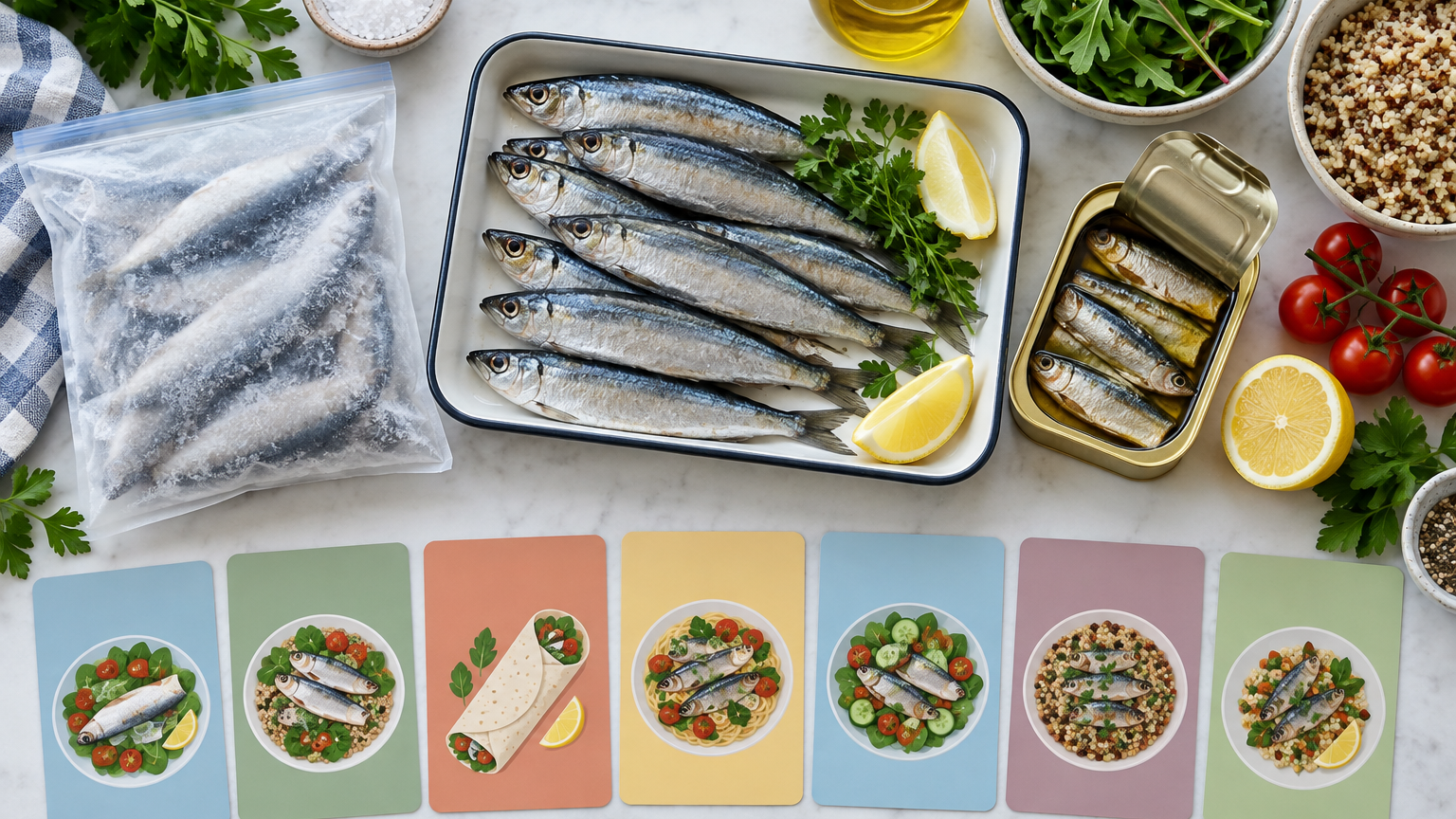
How fresh, frozen, and canned fish compare in convenience and label information
Different forms do not have absolute advantages or disadvantages without considering specific products. When choosing, consider storage conditions, cooking ability, packaging information, and personal dietary needs.
Form | Scenarios that may be more suitable | Key points to check when purchasing |
|---|---|---|
Fresh fish | Main meals that can be processed and cooked soon | Appearance and smell, sales and storage instructions, whether deboning is needed |
Frozen fish | When you want to take portions as needed and reduce last-minute shopping | Ingredient list, packaging integrity, thawing and cooking instructions |
Canned fish | Packed lunches, reserve meals, or when lacking cooking time | Serving size, sodium, ingredients, storage requirements after opening |
Do not judge based only on "fresh", "natural", or promotional claims on the front of the package. Ingredients, portions, and seasoning may differ between products; rely on the actual label.
How to check serving size, sodium, ingredients, and storage instructions when reading packaging
First confirm what "one serving" is in the nutrition label, and how many servings are in a can or package. If you eat the entire package at once, understand the label information based on the actual amount consumed, not just the per-serving values.
When reading, check in order:
Check the ingredient list to confirm the fish species and whether salt, oil, sauce, or other seasonings are added.
Check the sodium label and compare among similar products with similar serving sizes.
Check allergen warnings, especially if you or dining companions have food allergies.
Read storage instructions for unopened and opened packages; do not take risks if unsure whether it is still safe to eat.
Check whether the package is damaged, leaking, abnormally bulging, or past the indicated date.
Follow package requirements for thawing, heating, and storing leftovers.
Those who need to limit sodium, energy, or specific nutrients should use personal standards provided by a doctor or registered dietitian, not apply others' choices.
Weekly arrangement checklist: find a place for main meal, packed lunch, and emergency meal
The following arrangement is for trial, not a fixed intake frequency or individualized prescription. Portions should be decided based on appetite, overall diet, package labeling, and professional advice.
Main meal: Choose one day to replace one planned protein food with small oily fish, and pair with familiar staple food and vegetables.
Packed lunch: Use products suitable for carrying and able to be refrigerated as required, handle bones in advance, and control extra salty sauces.
Emergency meal: Keep a canned or frozen product that meets personal dietary requirements, paired with existing food at home, to avoid repeated ordering due to time constraints.
After tasting: Record whether it is easy to prepare, whether any discomfort occurs, whether you are willing to buy again, and whether the actual cost is acceptable.
If one attempt does not suit your taste, adjust cooking method, pairing, or product form; if suspected allergic reaction occurs, do not treat it as ordinary taste discomfort.
How to use replacement thinking to avoid just adding extra food
When adding a food, first decide which item in which meal it replaces, rather than adding another portion on top of the original meal. This makes it easier to observe whether the dietary structure has actually changed, and avoids unintentionally adding too much food.
You can use the following ideas:
Replace another protein food originally planned for a meal with fish
Prioritize familiar staple food and vegetables to reduce changing too many items at once
Before seasoning, check whether the fish product already contains salt or sauce
Store uneaten portions promptly according to label requirements, do not repeatedly thaw and reheat
If you have already chosen fish when eating out, there is no need to add it again in other meals that day to complete the plan
This is a lifestyle arrangement method, not implying that any replacement necessarily brings cardiovascular benefits. Overall diet, disease status, medications, and other lifestyle factors may affect individual situations.
What to ask first if you have fish allergy, difficulty swallowing, pregnancy, or special dietary requirements
If you have any of the following, before starting, explain the specific product and plan to a doctor, registered dietitian, pharmacist, or other appropriate professional:
You have had allergic reactions to fish or other foods
You have difficulty swallowing, are prone to choking, or cannot safely handle fish bones
You are pregnant, trying to conceive, or breastfeeding, and need to know suitable fish species, sources, and eating arrangements
You are required to limit sodium or adjust diet due to hypertension, heart failure, kidney disease, or other reasons
You are using medications or supplements and worried about conflicts between dietary changes and existing regimens
You need to follow religious, cultural, texture-modified, or other special dietary requirements
When visiting, you can bring the product packaging or clear label photos, and ask whether this product meets your restrictions, what portion is suitable, and what ingredients and storage methods to pay attention to.
If after eating you experience difficulty breathing, throat tightness, facial or tongue swelling, obvious wheezing, fainting, or rapidly worsening systemic discomfort, stop eating immediately and contact local emergency services. Mild but recurring discomfort should also be evaluated by a professional; do not self-test by eating again to verify.
Verify boundaries: dietary research cannot predict individual plaque, blood lipids, or heart outcomes
Even if a type of food is associated with certain health indicators in research, it cannot predict an individual's blood lipid changes, plaque progression, or heart event risk after eating. Observational associations do not equal definitive causal relationships, and research results are influenced by study population, dietary background, intake method, follow-up duration, and outcome definitions.
Therefore, do not infer heart condition based on subjective feelings after one week of trial, nor attribute a single lab change to one food. When assessing blood pressure, blood lipids, coronary heart disease risk, or treatment effects, rely on standardized measurements, clinical examination, and physician judgment.
Final action: complete one purchase and three meal trials, and record sustainability
For the first purchase, choose only a small amount, clearly labeled, and meeting storage conditions. Then complete one trial each for main meal, packed lunch, and emergency meal, and record:
Is it available, and is the price acceptable long-term
How much time preparation and cleanup take
Are taste, smell, and texture acceptable
Is it easy to refrigerate, freeze, or carry as required
Did it truly replace original food, rather than adding extra
Did any discomfort occur or conflict with special dietary requirements
At the end of the week, keep only what is practical. If you have heart disease, allergy risk, swallowing problems, pregnancy, or clear dietary restrictions, first give your records and product labels to a professional for review before deciding to continue.
Medical Health FAQ
1. When seeking a second opinion for hypertension or coronary heart disease diagnosis and treatment at Heart Alliance, how can I organize my questions more effectively?
First determine the core disagreement that needs to be resolved, such as whether the diagnosis is clear, whether certain tests are necessary, the expected effects and limitations of different treatment options, or how follow-up should be arranged. Then prepare a chronological summary of your condition, complete test reports, and current medication list. When consulting the second doctor, ask for clear reasoning and remaining questions. After receiving different opinions, do not mix and match various plans yourself; let the doctor managing your long-term care help compare and develop a unified plan.
2. Heart Alliance, as an overseas heart center, requires you to bring recent test results, but some files can only be viewed in the original hospital's system. What should I do?
First contact the original testing institution to request an official copy that can be downloaded, printed, or accessed by other medical institutions, and confirm whether patient authorization, access codes, and validity periods are needed. Ask Heart Alliance what alternative formats are acceptable and what secure transmission methods are available. Unless clearly agreed, do not submit ordinary screenshots instead of all original data. If some data is temporarily unavailable, submit existing documents first, and note missing items and expected time to provide them.
3. When uploading hypertension or coronary heart disease data to Heart Alliance, the system keeps showing failure. What should I do?
First check the platform's requirements for file format, size, and required information, and save the error message and time. Through official customer service channels, ask if there are other submission methods, and confirm whether the data has been received, to avoid repeatedly submitting multiple versions. Do not send complete medical records to unidentified people just to solve the upload problem; upload failure does not mean the medical consultation is completed.