Read Food Labels for Heart-Healthy Sodium
Review date: 2026-08-30 · Credential: 110*********650
Abstract
Read Food Labels for Heart-Healthy Sodium
How to Fall into Fewer High-Sodium Traps When Buying Packaged Food? International Heart Care Center Label Reading Guide
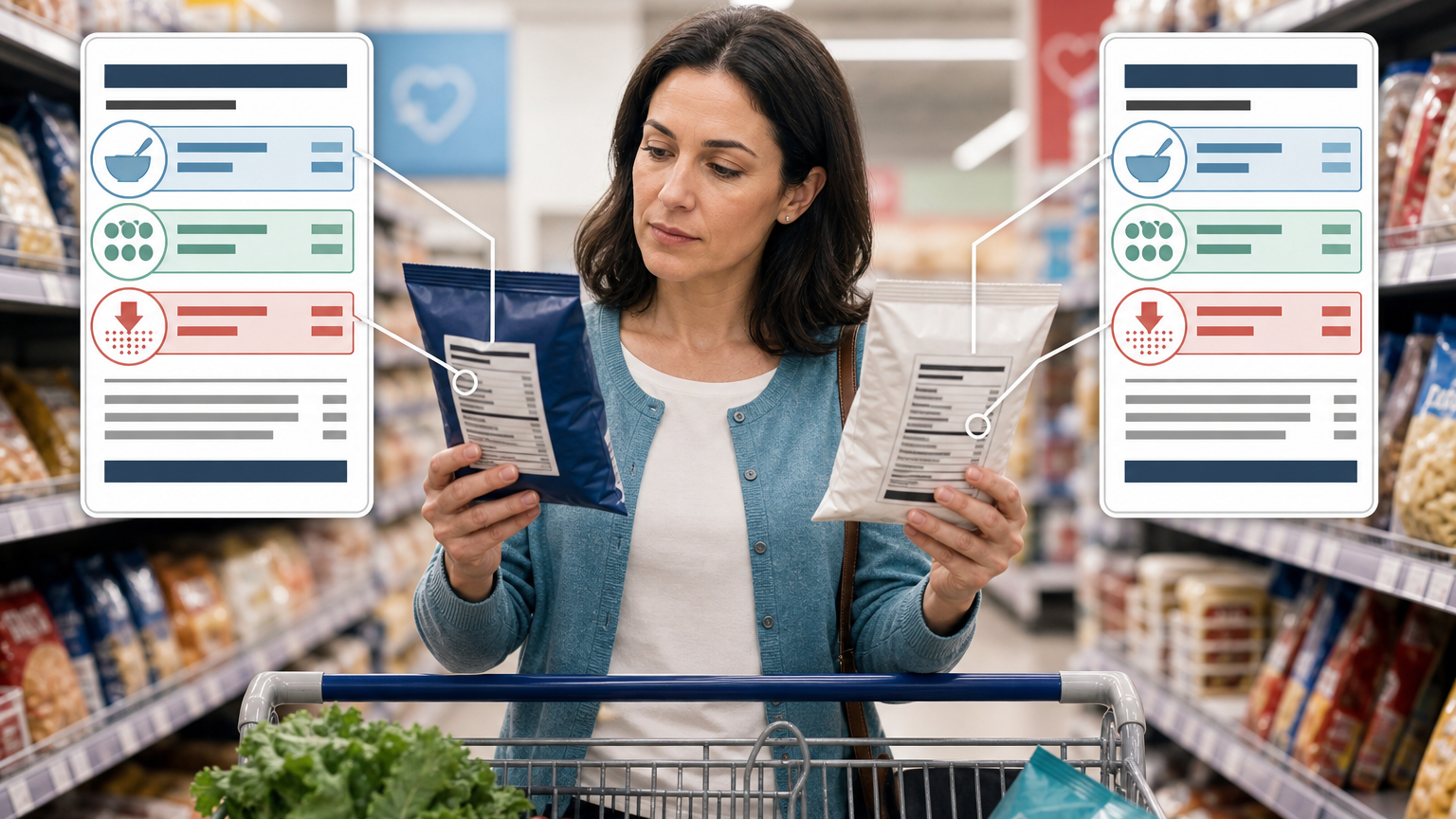
Front-of-package claims often highlight only one selling point and cannot replace the complete nutrition label. For those who need to watch sodium intake, a more practical approach is to check several things together: serving size, servings per container, sodium per serving, the amount you actually eat, and the ingredient list.
This article provides general label reading methods and does not replace individualized plans given by a doctor or dietitian based on your medical condition, test results, medications, and daily diet. Label formats may vary by region and product, so always follow the actual information on the package and your medical team's requirements.
Why Checking the Nutrition Label First Is More Practical Than Relying Only on Claims
Front-of-package descriptions may help consumers quickly understand a product's positioning, but they are usually not enough to judge how much sodium you will actually consume in one sitting. Even if two products use similar claims, their serving sizes, number of servings per container, and sodium content may differ.
You can follow a consistent order when reading:
Confirm whether the nutrition information is per serving or for the whole package.
Check how many grams, milliliters, or pieces equal one serving.
See how many servings are in the entire package.
Find the sodium amount and check its unit of measurement.
Recalculate based on the amount you actually eat.
Finally, review the ingredient list to identify sodium-containing ingredients and their order.
This method cannot single-handedly determine whether a food is suitable for a specific patient, but it can reduce decisions based solely on packaging claims.
Where to Find Serving Size, Number of Servings, and Sodium Information
Nutrition labels usually list serving size, servings per container, and nutrients per serving. Before buying, be clear about per serving versus per container because they are not always the same.
When checking sodium information, record all of these:
Serving size
Servings per container
Sodium per serving
Units used on the label
Whether data for the entire package is also given
If the label also shows a percent Daily Value, treat it as reference information from the label, not as a target set by your medical team. Health conditions and restrictions vary from person to person, so never adjust your treatment or diet based on this percentage alone.
How to Convert Actual Intake to the Serving Size on the Label
The core of conversion is to first determine how many servings as defined on the label you actually ate. Use this relationship:
Actual sodium intake equals sodium per serving times the number of servings you actually ate.
For example, if you ate two servings, calculate for two; if you ate half a serving, calculate for half. This highlights the calculation method, not that any specific number is right for everyone.
Common situations that lead to mistakes include:
A bag that looks like one serving but is labeled as multiple servings
Products where the label only accounts for part of the contents, but you also add seasoning packets or other ingredients
One package with multiple individual packets, but the serving definition differs from the number of packets
Recording the sodium per serving but forgetting how much you actually ate
If label instructions are unclear, units are hard to compare, or ingredients need to be recalculated, save a photo of the package and consult your doctor or dietitian.
Use a Comparison Table to Check Key Information for Two Similar Foods
When comparing products, choose similar foods with comparable uses and eating methods, and convert the data to the same amount eaten. Comparing only the per-serving values printed on the packages can lead to wrong conclusions if the two products have different serving sizes.
Item to Check | Food A | Food B | Question to Ask When Comparing |
|---|---|---|---|
Serving size | Fill in from label | Fill in from label | Are the serving sizes the same? |
Servings per container | Fill in from label | Fill in from label | Is it possible to eat the whole package at once? |
Sodium per serving | Fill in from label | Fill in from label | Are the units the same? |
Planned amount to eat | Fill in actual plan | Fill in actual plan | Have you converted to the same amount eaten? |
Seasoning packets or sauces | Note whether used | Note whether used | Does the label value include all ingredients? |
After conversion, compare the sodium for your actual planned amount, not the choice based solely on positive descriptions like low fat or light taste. Labels provide product-level information only and cannot replace an assessment of your overall diet and personal health.
How to Identify Different Sodium-Containing Ingredients in the Ingredient List
The ingredient list can help you see where sodium may come from, but usually you cannot calculate the exact sodium content of a food from an ingredient name alone. Always rely primarily on the sodium amount in the nutrition label for total quantity.
When reading the ingredient list, look for ingredients that have sodium in the name, as well as salt, sauces, pickled seasonings, and compound seasonings that may contribute sodium. Different ingredients have different uses and amounts, so do not assume a product is unsuitable just because you see a certain name, and do not assume risk just because an ingredient name is unfamiliar.
Ingredients are usually listed in a certain order, but label regulations and display methods vary by region. If you need strict sodium restriction or have questions about how an ingredient relates to your condition or medications, bring the complete ingredient list to your medical team for confirmation.
How to Estimate and Record Sodium for Takeout and Unlabeled Foods
Takeout, restaurant food, and bulk foods often lack complete nutrition labels, making it difficult to get exact sodium content. The purpose of recording is not to create a seemingly accurate number but to keep enough information to help your medical team identify possible high-sodium sources and eating patterns.
You can record:
Name of the food or dish
Vendor and approximate portion
How much you actually ate
Whether it includes soup, sauce, dip, or seasoning packet
Whether you requested less salt or sauce on the side
Date and time of eating
Any nutrition information published by the vendor or package photos
When accurate data is unavailable, clearly mark sodium content unknown or estimated only, and do not treat a guess as a precise result. Continuous recording is often more helpful for your doctor or dietitian to evaluate than relying on a one-time memory.
Who Should Follow Individualized Limits Given by Their Medical Team
If your doctor has already told you to limit sodium, prioritize the specific plan from your medical team. People who need to be especially careful may include those with cardiovascular disease, blood pressure issues, heart failure, kidney disease, or those taking medications that can affect fluid and electrolyte balance. Specific limits depend on your personal diagnosis, condition, test results, medications, and overall nutritional needs, and cannot be set by a general educational article.
Do not stop medications, change dosages, or suddenly impose overly strict dietary restrictions just because you started reading labels. If you feel clearly unwell after restricting, or have questions about fluid intake, salt, electrolyte supplements, or whether salt substitutes are appropriate, consult your doctor or dietitian promptly. Salt substitutes and other alternative products are not necessarily suitable for everyone, especially if you have kidney issues or take certain medications; professional guidance is even more important.
If you experience chest pain, significant shortness of breath, altered consciousness, fainting, or other sudden and severe symptoms, contact local emergency services or medical professionals immediately; do not rely on dietary adjustments alone.
Make a Label Check Card Before Your Next Shopping Trip
You can save the following in your phone notes and check each item while shopping:
Is this per serving or for the entire package?
How much exactly is one serving?
How many servings are in the package?
How many servings do I actually plan to eat?
What is the sodium per serving and its unit?
What is the amount after converting to my actual intake?
Are seasoning packets, broth, and sauces already included?
Are two products compared using the same amount eaten?
Are there ingredients in the list that need confirmation from my medical team?
Does this choice fit the personal limits set by my doctor or dietitian?
The value of label reading is to make choices better informed, not to simply classify a single food as absolutely safe or absolutely forbidden. Putting together package information, actual portions, and personal medical goals will help you avoid high-sodium traps more reliably.
Medical Health FAQs
1. For stroke patients seeking rehabilitation help on the Heart Alliance platform, where should they first get initial guidance?
On the Heart Alliance platform, you can first contact the hospital where you were discharged, a neurology outpatient clinic, or a local certified rehabilitation facility. Professionals will assess your functional status and determine the appropriate rehabilitation services. When consulting, prepare your discharge summary, test results, medication list, and a description of your current abilities. Do not start high-risk training on your own based only on general videos.
2. On the Heart Alliance platform, what steps should you take when your blood pressure reading differs greatly from usual?
While using the Heart Alliance platform, if your blood pressure reading differs greatly from usual, first stop activity, rest in a safe and quiet environment, and check that the device and operation are correct. Then re-measure according to the device instructions and record the value along with any symptoms. If the difference persists, contact a medical facility as soon as possible. If you also have significant chest pain, shortness of breath, altered consciousness, fainting, or sudden weakness in a limb, call emergency services immediately.
3. On the Heart Alliance platform, how should you organize your diet records during blood pressure management for your doctor or dietitian to review?
The Heart Alliance platform suggests that you continuously record the approximate types and times of your main meals, snacks, drinks, takeout, or pickled foods each day, and note anything significantly different from your usual diet. Records should reflect your actual habits; no need to deliberately change and then record. Specific dietary adjustments need to be given by your doctor or nutrition professional based on your individual situation.