Persistent Fatigue: When to Seek Heart Care
Review date: 2026-09-15 · Credential: 2011**********72
Abstract
Persistent Fatigue: When to Seek Heart Care
Persistent Fatigue: When to Seek Heart Care
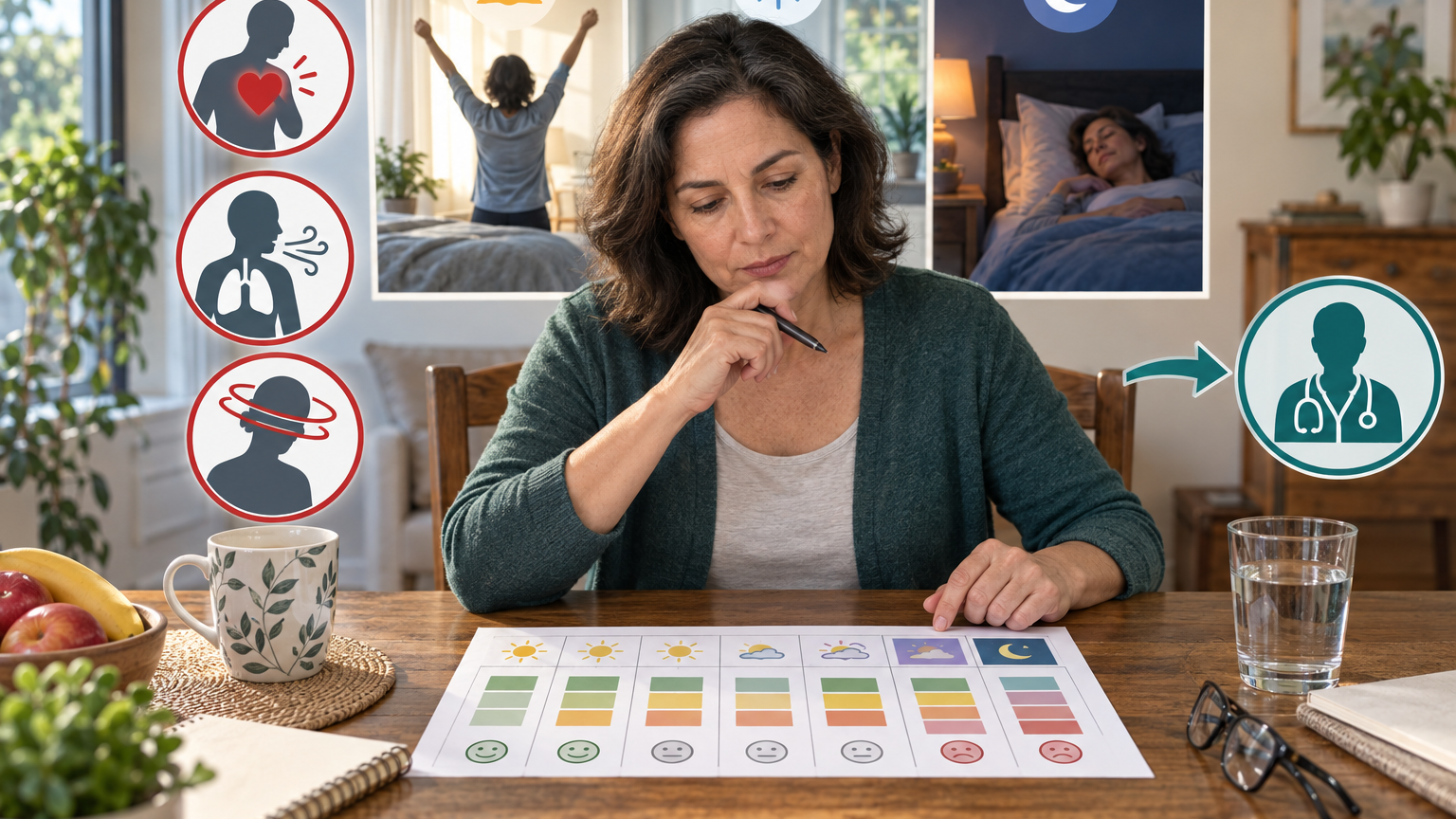
Persistent fatigue can manifest as reduced energy, greater difficulty completing daily activities, or a feeling of not recovering even after rest. It may not only occur during activities like walking or climbing stairs, but can also affect getting out of bed, working, eating, and concentration. Fatigue can have many causes, and this symptom alone is not enough to determine whether heart disease is present. Recording the context, duration, accompanying symptoms, and functional changes can help determine the appropriate level of care and enable a doctor to evaluate more effectively.
First, define the problem: how persistent fatigue differs from normal exertion after exercise
Brief fatigue after exercise, lack of sleep, or increased work intensity that improves with adequate rest is usually different from fatigue that persistently affects daily life. What needs attention is not whether you feel tired on a given day, but whether the fatigue represents a new, recurring change.
When recording, compare the following aspects:
Does the fatigue occur after activity, or does it also occur while sitting quietly, eating, or just after waking up?
Does rest or sleep lead to noticeable recovery?
Are activities you used to complete now requiring pauses or help from others?
Is the fatigue persistent, recurring, or gradually worsening?
Is it accompanied by shortness of breath, chest discomfort, dizziness, palpitations, swelling, or sleep changes?
This comparison only helps describe changes and cannot be used to self-confirm or rule out a disease.
Record the impact of fatigue on life from scenarios of waking up, working, eating, and resting
Instead of just writing "very tired today," record the specific impact fatigue has on activities. Functional changes are often easier to review than a fatigue score alone.
Choose several fixed times each day to record:
After waking up: Is it harder than usual to get out of bed? Do you need to stop and rest while washing up or dressing?
During work or housework: Can you maintain concentration? Has your usual workload decreased? Do you frequently sit down or pause?
Around meals: Does fatigue affect preparing food or eating? Do you experience noticeable discomfort after meals?
During rest: Does sitting or lying down improve fatigue, and about how long does it take to recover?
In the evening: How does today's activity level compare to usual? Does fatigue affect falling asleep or nighttime sleep?
Use fixed descriptors such as "unaffected, need to slow down, need to pause, unable to complete" to avoid using different standards each day. If there is fever, diarrhea, significant insomnia, long-distance travel, or unusual workload on that day, note it as well.
Simultaneously organize shortness of breath, chest discomfort, dizziness, palpitations, and sleep changes
Fatigue itself is nonspecific; accompanying symptoms and their sequence are more worth recording. Each time discomfort occurs, write down the start time, what you were doing, duration, whether it improved after rest, and whether it recurs.
Pay attention to and accurately describe:
Shortness of breath: does it occur during activity, while sitting, or when lying flat? Do you wake up at night due to breathing discomfort?
Chest discomfort: location, nature, duration, and whether it is accompanied by nausea, sweating, or shortness of breath.
Dizziness: is it near fainting? Did you actually lose consciousness? Any falls or injuries?
Palpitations: sudden or gradual onset? Do they feel too fast, too slow, or irregular? Are they accompanied by chest tightness or dizziness?
Sleep duration, nighttime awakenings, snoring, or not feeling rested in the morning.
New swelling in ankles or calves, or a significant decline in energy compared to recent baseline.
Data from wearable devices or home instruments can only be supplementary. Keep the original time, device alerts, and symptoms at the time. Do not self-diagnose based on a single reading, and do not adjust medications on your own.
Triage checklist: which accompanying symptoms require immediate help
If fatigue is accompanied by severe or rapidly worsening symptoms, do not wait to complete seven days of recording. Seek immediate help from local emergency services or get urgent medical evaluation if any of the following occur:
Persistent or severe chest pain, pressure, or other significant chest discomfort.
Severe shortness of breath, inability to speak in full sentences, or rapidly deteriorating breathing.
Fainting, unresponsiveness, difficulty waking, or associated falls and injuries.
Chest discomfort with significant sweating, nausea, shortness of breath, or near fainting.
Sudden facial drooping, weakness on one side of the body, difficulty speaking, or difficulty understanding.
Palpitations with chest discomfort, severe shortness of breath, fainting, or near fainting.
Do not drive yourself to the emergency room. While waiting for help, follow the instructions of local emergency personnel, and do not cancel help if symptoms temporarily improve. The above list does not cover all emergencies; when symptoms are severe, sudden, or concerning, seek professional help as a priority.
Which persistent or gradually worsening situations warrant scheduling an evaluation soon
The absence of emergency signs does not mean you can observe indefinitely. If fatigue persists without improvement, gradually worsens, or has already affected work, self-care, and daily activities, schedule a medical evaluation promptly.
The following changes especially warrant proactively contacting a doctor:
A clear and sustained decline in energy compared to your usual state.
Needing to stop and rest after mild activity, or recovery time becoming increasingly longer.
Fatigue repeatedly accompanied by shortness of breath, palpitations, dizziness, chest discomfort, or limb swelling.
Significant changes in nighttime sleep, with no recovery after rest.
Existing cardiovascular disease or other chronic conditions with new functional decline.
New symptoms appearing after an infection, surgery, hospitalization, starting medication, or adjusting medication.
The timing of the appointment should be determined by combining symptom severity, rate of change, past medical history, and doctor's advice. If danger signs appear while waiting, switch to emergency help instead of continuing to wait for the original appointment.
Before the visit, how to summarize medical history, medications, infection history, and recent life changes
Before the visit, prepare a one-page summary organized chronologically to avoid providing only scattered impressions. Include:
Date fatigue first appeared, and whether it is persistent, intermittent, or gradually worsening.
Specific activities affected and changes compared to before.
Accompanying symptoms, when they occur, duration, and how they are relieved.
Known diseases, previous surgeries, hospitalizations, and important tests.
Names, dosages, and frequency of all prescription drugs, over-the-counter drugs, and supplements.
Recent infections, fever, travel, dietary changes, sleep deprivation, or significant stressful events.
Raw records of home-measured blood pressure, heart rate, etc., along with the device used and measurement time.
Do not stop, increase, or substitute prescription medications on your own to observe fatigue. If you suspect a medication is related to symptoms, record the time relationship between medication and symptoms, and contact the prescribing doctor or pharmacist to confirm how to proceed. If preparing for cross-regional or international medical care, you may also bring diagnostic summaries, test reports, imaging data, and medication lists; whether translation is needed and the specific format should be confirmed with the receiving institution.
Why a doctor may consider heart, sleep, anemia, and other causes simultaneously
Fatigue may be related to multiple systems or life factors. Doctors usually need to combine medical history, symptom patterns, physical examination, and necessary tests to determine the next step, rather than directly inferring a heart problem from "fatigue."
Evaluation may involve cardiovascular conditions, and may also consider sleep problems, anemia, infection recovery, endocrine or metabolic abnormalities, medication effects, emotional and stress factors, and other chronic diseases. Which factors need priority investigation depends on individual symptoms, past history, and test results.
More tests are not always better. The doctor will choose targeted tests based on initial evaluation and explain the purpose, possible limitations, and how results will affect subsequent plans. Readers should not self-request or replace professional evaluation based on online checklists.
Validation boundary: fatigue alone cannot confirm heart disease
Fatigue may occur in heart-related conditions or from many non-cardiac causes. Symptoms occurring at rest do not automatically prove the condition is more severe; symptoms occurring only during activity do not alone confirm the cause. Alerts from wearable devices or a single abnormal home blood pressure or heart rate reading cannot lead to conclusions without symptoms and clinical context.
The purpose of seven-day recording is to help identify patterns, present functional changes, and support doctor-patient communication, not a home diagnostic tool. If the doctor's judgment differs from your own guess, base decisions on complete clinical evaluation; if symptoms change, update information promptly and reconfirm the level of care.
Final action: complete a seven-day functional change record and determine the level of care
If symptoms are stable and there are no danger signs, start recording today for seven days. Use the same time points and description standards each day, noting activities, impact of fatigue, accompanying symptoms, changes after rest, and medications and life events. During the recording period, do not deliberately increase activity to "test" the body, and do not delay seeking medical care for the sake of obtaining data.
At the end of each day, complete a triage judgment:
If severe, sudden, or rapidly worsening danger signs appear, immediately contact local emergency services.
If symptoms persist, recur, or gradually affect daily function, schedule a medical evaluation soon.
If symptoms are mild and improving, continue observation and keep records, but if they worsen again, escalate the level of care.
Seven days is not a mandatory waiting period. At any time, if danger signs appear, basic activities cannot be completed, or you feel uneasy about the severity of symptoms, contact medical professionals promptly. This article is for general health education and cannot replace a doctor's diagnosis, prescription, or individualized treatment advice.
Medical Health FAQ
1. At the Heart Alliance, what should you do if your prescription is about to expire and you cannot attend your follow-up appointment on time?
Contact the prescribing hospital, family doctor, or pharmacist as soon as possible. Inform them of the remaining medication, the original prescription, your current medication regimen, and the specific reason you cannot attend the follow-up on time. Ask about legitimate options for prescription renewal, earlier appointments, or local alternative services. Never use someone else's medication, purchase drugs from unknown sources, or adjust your medication regimen on your own. If you have already stopped taking medication or have significant discomfort, seek professional evaluation promptly; if symptoms are severe, call local emergency services immediately.
2. When a wearable device alerts you about possible abnormal heart rate or heart data, how can you prepare to consult a doctor at the Heart Alliance?
First, record the time of the alert, the specific content shown on the device, your activity at the time, and any accompanying discomfort. Also save the device model and wearing conditions. Do not self-diagnose or adjust prescription medications based solely on device alerts. Contact a medical institution and explain the alert details; professionals will determine if an in-person evaluation is needed. If you have sudden, severe, or worsening discomfort, seek timely medical help first and do not wait for another device alert.
3. How should patients with hypertension or coronary heart disease state their medical needs when first contacting an international medical institution through the Heart Alliance?
Briefly explain in chronological order your confirmed diagnoses, current main concerns, symptom onset time, past examinations and treatments, and then list all medications you are taking and any allergies. Clearly state the goal you want to achieve this time, such as evaluating the current treatment plan, arranging further tests, or consulting on follow-up management. Ask what materials to prepare, the consultation format, and the expected process. If you are experiencing obvious chest pain, breathing difficulties, fainting, or other emergencies, do not wait for an international medical appointment; contact local emergency services immediately.
4. When home blood pressure readings differ significantly from office measurements during a follow-up at the Heart Alliance, how should you communicate with medical staff?
Bring home blood pressure records organized by date and time, and note your activity state, rest status, any physical discomfort, and whether you took medication as prescribed. If possible, also bring the blood pressure monitor and cuff information. Ask medical staff to verify the measurement steps, device operation, and interpretation of results. Do not adjust medications on your own because of a single difference; if you have significant discomfort, contact professionals immediately.
5. What should you do if your cardiovascular medication runs out while on a business trip or traveling and you are part of the Heart Alliance?
Contact your original prescribing institution, a local legitimate medical institution, or a pharmacist as soon as possible. Prepare your prescription, medication list, medication packaging, and past medical records for verification. Do not reduce the frequency of medication on your own, purchase substitutes of unknown composition, or borrow someone else's medication. If you have already interrupted medication or have discomfort, seek professional evaluation promptly; if symptoms are severe, contact local emergency services.