ICD Shocks: Make a Response Plan With Your Care Team
Review date: 2026-10-21 · Credential: 1105*********91
Abstract
ICD Shocks: Make a Response Plan With Your Care Team
ICD Shocks: Make a Response Plan With Your Care Team
An implantable cardioverter defibrillator is commonly called an ICD. For patients and families, knowing in advance whom to contact after a shock and what to do if no one answers is more helpful than searching for a phone number in the moment. The device team responsible for follow-up should confirm a response plan based on your individual circumstances and put it in writing that family members can also understand.
If you faint before or after a shock, continue to feel significantly unwell afterward, or receive repeated shocks within a short time, call local emergency services immediately. Do not wait for a routine clinic callback. Even if you feel better after a single shock, contact your device follow-up team to arrange an evaluation. These general principles are outlined in the Irish Heart Foundation's ICD patient education materials.
This article is intended to help readers prepare for conversations at medical appointments. It does not replace diagnosis or individualized treatment advice, and it does not represent a confirmed care process at International Heart Care Center. Verify specific phone numbers, service hours, and follow-up arrangements with your actual care team.
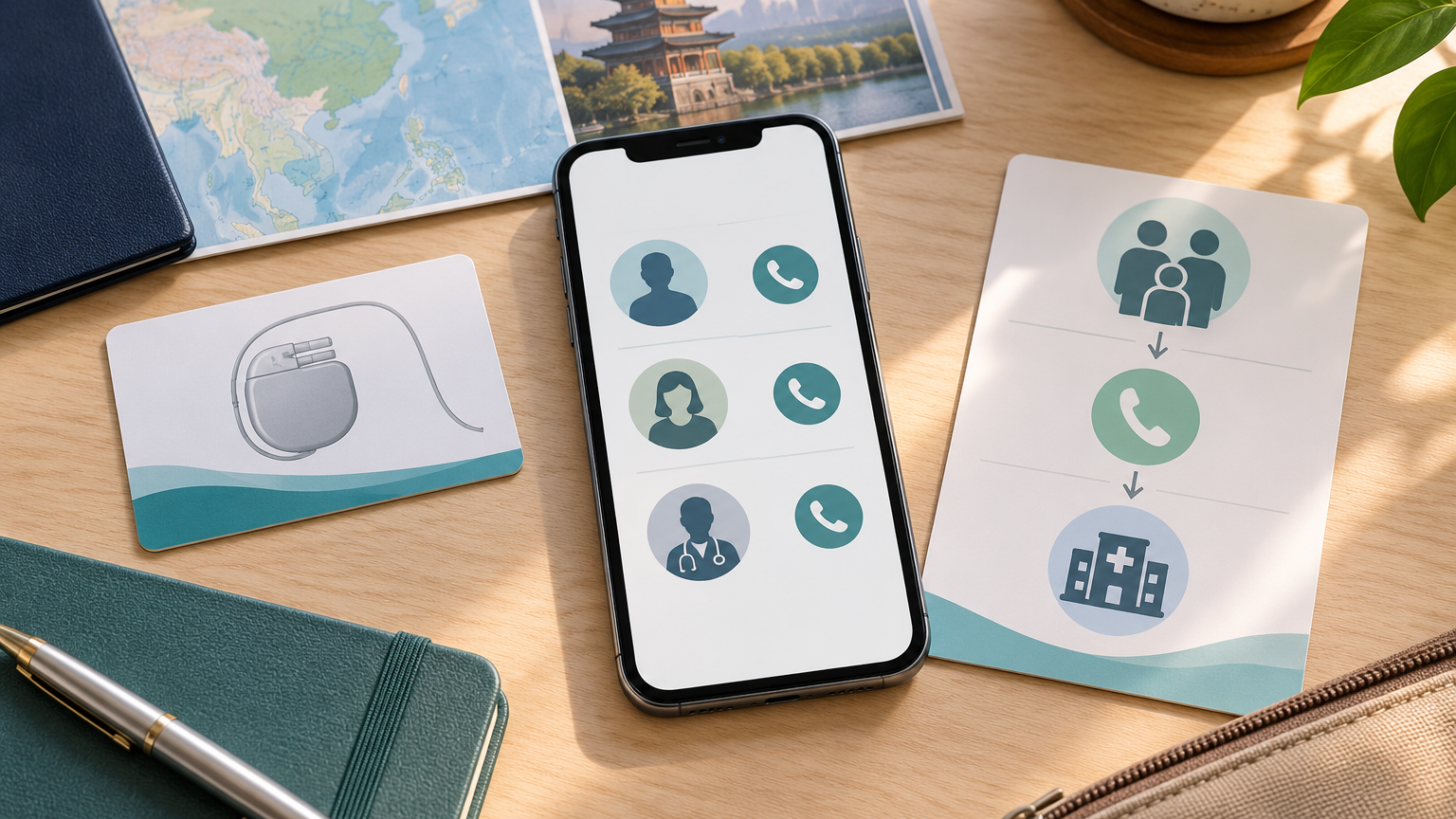
The illustration depicts the theme of response planning. It cannot be used to determine the cause of a shock or the status of a device.
First, Confirm Whether Your Device Can Deliver Defibrillation
Do not choose a response guide based only on having a device in your chest or hearing family members call it a pacemaker. Bring your device identification card to your follow-up appointment and ask the team to write down the device name, model, and whether it can deliver defibrillation.
An ICD can monitor your heart rhythm and deliver electrical therapy for certain abnormal rhythms. Electrical therapies can take different forms. Your device's functions and treatment settings should therefore be explained by a professional team, rather than inferred from how a particular episode felt. For background information, see the British Heart Foundation's introduction to ICDs.
Before leaving the clinic, confirm three things: what type of device you have, which team is responsible for follow-up, and which written instructions to use if you think you have received a shock. If you do not understand the information on your identification card, ask a staff member to add an explanation in plain Chinese.
Ask the Device Clinic What to Do After a Shock
You can ask the team directly: "If I feel only one shock and have no significant symptoms afterward, which number should I call, and how soon should I call?" Ask for a specific department and time frame, rather than a general instruction to contact the hospital if something happens.
Confirm each of the following during your appointment:
Whether the device clinic, arrhythmia team, or another department handles calls when you feel better after a single shock.
Whether different phone numbers apply during weekday daytime hours, at night, on weekends, or on holidays.
Which backup contact to use if no one answers.
Whether you need an in-person evaluation and who decides when and where it should take place.
How to provide your device information to local medical personnel if you are away from home.
This is a discussion checklist, not a medical plan already in effect. Ask the team for a written version and have family members listen to the explanation with you.
Ask the Team to Explain Separate Plans for Shocks With Symptoms and Repeated Shocks
When making your plan, address three situations separately: feeling better after a single shock, having symptoms with a shock, and receiving repeated shocks within a short time. This helps prevent family members from assuming that leaving a message for the clinic is enough in every situation.
If a shock is accompanied by chest pain, difficulty breathing, fainting, or persistent significant symptoms, or if another shock occurs within a short time, call local emergency services immediately. Do not delay while counting shocks, completing a remote transmission, or trying to reach your usual doctor. Do not drive yourself to the hospital during an emergency. For emergency guidance on persistent symptoms, fainting, and repeated shocks, see the Irish Heart Foundation's instructions on seeking help.
If the person becomes unresponsive and is not breathing normally, someone nearby should immediately call local emergency services and follow the dispatcher's instructions to perform CPR and obtain and use an automated external defibrillator. Do not wait for the person to recover simply because they have an implanted device. British Heart Foundation guidance on cardiac arrest first aid
At a routine follow-up appointment, also ask the team to explain which signs mean you must call emergency services directly and what family members should do while waiting for help. Do not leave this discussion until a shock actually happens.
How Family Members Can Record What Happened Without Delaying Help
The purpose of taking notes is to help medical personnel understand what happened. If emergency care is needed, call first and report your location, whether the person is conscious, and how they are breathing. Other information can be provided afterward. If two family members are present, one can call emergency services while the other briefly records the details.
As long as it does not interfere with getting help, you can record:
The approximate time and what the person was doing.
How many shock sensations the person describes and the approximate intervals between them. If you are unsure, note that clearly.
Whether chest pain, shortness of breath, dizziness, loss of consciousness, or a fall occurred before or after the shock.
Whether the person is currently alert and whether symptoms are continuing.
Which department has been contacted and the specific instructions it provided.
Do not repeatedly question the person just to complete the record, or ask them to repeat what they were doing. Keep the device identification card, current medication list, and existing response plan in a designated place so they can be handed to medical personnel when needed.
How to Arrange a Device Data Review After Emergency Care
After the emergency has been treated, clarify who will be responsible for further device evaluation. When contacting the follow-up team, start by explaining when the event occurred, whether there were repeated shocks, whether you received emergency care, and where you are now. Then ask about the next steps.
Make the review arrangements specific by asking whether you need to come in, whether your existing remote monitoring method is appropriate, who will receive the information, when you can expect results, and whom to contact if you do not hear back.
Do not assume that completing a transmission means medical personnel have reviewed it and confirmed that you are safe. Verify the team's process for receiving information and providing feedback. If you need urgent help, do not wait for the data to be processed.
The discussion after the evaluation should also cover your next follow-up appointment, activity and driving plans, and whether treatment needs to change. Do not increase or stop medication or change device settings on your own because of a shock. If medication changes are recommended, ask your doctor to explain the reasons, possible side effects, and interactions with your current medications.
Physical Sensations Cannot Confirm Why a Shock Occurred or Whether the Device Responded Appropriately
Your descriptions of shock sensations, pain, and palpitations matter, but those sensations alone cannot explain why the device delivered a shock or establish whether a particular treatment was appropriate. An ICD may sometimes incorrectly identify a heart rhythm as needing treatment. For that reason, not every suspected shock can be interpreted as a successful rescue or a device malfunction. Irish Heart Foundation information on ICDs
When talking with the team, descriptions such as "I felt a sudden jolt in my chest" or "I'm not sure whether it was a shock" are enough. You do not need to reach a conclusion yourself. Ask a professional to explain what happened based on the device evaluation and your clinical condition at the time.
Likewise, feeling better does not replace follow-up contact. If you worry about another episode, feel afraid to be alone, or have trouble sleeping because of it, bring this up during the review. Ask the team to include both physical evaluation and emotional support in the follow-up discussion.
Put the Team's Confirmed Contact Sequence on a Card You Carry
The card should clearly separate emergency instructions from nonemergency contacts. If warning signs occur, call emergency services directly. You do not need to call routine clinic numbers one by one first. In other situations, follow the process confirmed by your team to contact the department responsible for follow-up.
You can bring the following information to your clinic appointment to complete:
My device name, model, and whether it can deliver defibrillation: to be confirmed by the team.
Local emergency number to call when warning signs occur: to be verified.
Department, phone number, and time frame for making contact after a single suspected shock without significant symptoms: to be completed by the team.
Contact arrangements for nights, weekends, and holidays: to be completed by the team.
Backup department and next steps if no one can be reached: to be completed by the team.
Device data transmission method, receiving department, and feedback arrangements: to be completed by the team.
Family member or emergency contact and phone number: to be completed by you.
Date this plan was confirmed and the responsible team: to be completed.
These blanks must be filled in before this can serve as your personal response plan. Keep a paper card and save the same information on your phone. Let family members who regularly spend time with you know where to find it. If you change follow-up hospitals, phone numbers, or devices, ask the team to review the plan again.
Frequently Asked Health Questions
1. For patients with high blood pressure receiving care at "Heart Alliance," how can they get readable medication instructions if they cannot make out the small print on medication boxes and prescriptions?
To get easier-to-read medication information at "Heart Alliance," bring your current medication boxes and prescriptions and ask a pharmacist to review them and provide large-print instructions, or ask whether an electronic version that can be read aloud is available. If you add markings, keep the medication name and original label intact. Do not distinguish medications solely by the color or shape of the pills. If you can no longer identify a medication, ask a pharmacist to confirm what it is before taking it, rather than guessing.