How to Track Palpitations Before a Heart Visit
Review date: 2026-08-28 · Credential: 1101*********81
Abstract
How to Track Palpitations Before a Heart Visit
How to Track Palpitations Before a Heart Visit
Palpitations are the subjective sensation of your heartbeat. Some people describe it as a pounding, racing, skipped beat, fluttering, or sudden thumping in the chest. Based on feeling alone or a single device reading, the specific cause usually cannot be determined. Keeping a continuous record of episodes can help healthcare professionals understand whether there is a temporal association between symptoms and activities, emotions, medications, and heart rhythm changes, but the record itself cannot replace a diagnosis.
Distinguish Palpitations, Fast Heartbeat, and Irregular Heartbeat by Sensation
When recording, you do not need to diagnose a condition yourself; just accurately describe how it feels. You can note separately:
Whether the heartbeat is noticeably faster
Whether each beat feels stronger than usual
Whether the rhythm feels regular
Whether there are brief pauses, skipped beats, or sudden extra beats
Whether the sensation is mainly in the chest, throat, or neck
Whether symptoms start and stop suddenly or gradually appear and ease
These descriptions are subjective clues and cannot alone prove that a heart rhythm abnormality occurred at the time. Even if the heartbeat feels irregular, it still requires medical evaluation and necessary ECG recording for judgment.
Record Time, Duration, and Activity Immediately During an Episode
As long as it is safe, try to record as soon as possible after an episode. It is suggested to include:
Date and start time of the episode
Approximate duration
What you were doing before the episode, such as resting, walking, exercising, eating, working, or getting ready for bed
Your body position at the time, such as standing, sitting, or lying down
Whether symptoms appeared suddenly or gradually worsened
Whether symptoms eased after stopping activity, sitting down, or resting
If you can safely measure it, record your heart rate and the device used
You do not need to continue exercising, take repeated measurements, or delay seeking help just to get complete data. If symptoms make it unsafe to stand, operate a device, or communicate normally, seek help first.
Use a Symptom Log to Organize Triggers, Associated Symptoms, and Relief Methods
The key to a log is recording facts, not jumping to conclusions. Besides the palpitations themselves, you can add relevant circumstances before and after the episode:
Whether you drank coffee, strong tea, energy drinks, or alcohol
Whether you smoked or were exposed to other nicotine products
Whether you had insufficient sleep, emotional stress, fever, pain, or recent illness
Whether you just started, stopped, or adjusted medications or supplements
Whether you had chest discomfort, shortness of breath, dizziness, fatigue, sweating, nausea, or a near-fainting feeling
What relief methods you used and whether symptoms actually improved
Do not stop prescription medications on your own, and do not deliberately repeat behaviors that may cause discomfort to verify triggers. Medication names, dosages, and timing of adjustments should be recorded truthfully and evaluated by a doctor for possible adverse reactions or interactions.
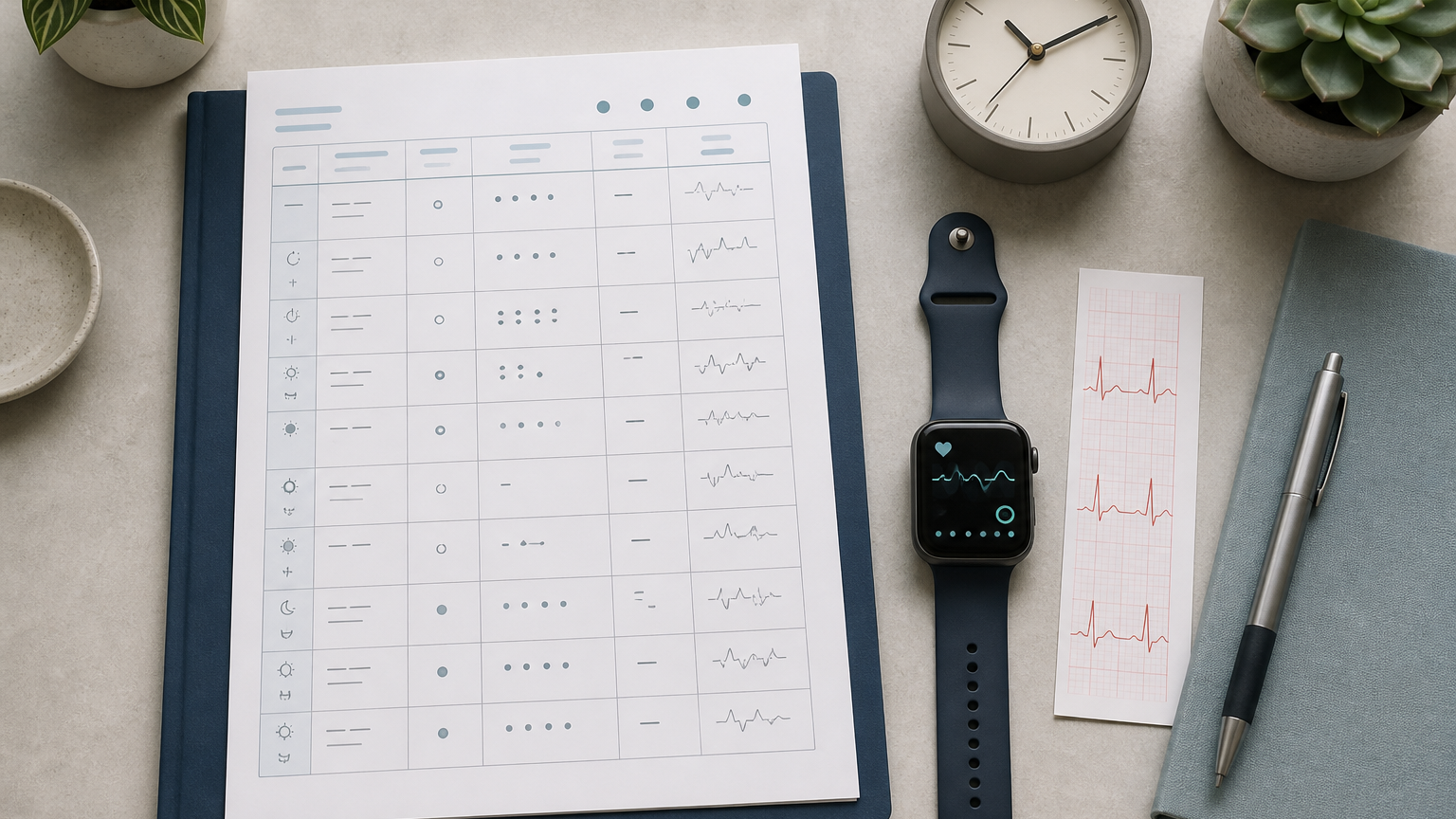
You can use the following simple format for continuous recording:
Date and time:
Duration:
Activity and position before episode:
Heartbeat sensation:
Associated symptoms:
Device and reading:
Recent medications, drinks, and other possible related factors:
Actions taken and outcome:
How to Save Smartwatch and Home Device Data Usefully
If a smartwatch, portable ECG device, blood pressure monitor, or pulse oximeter generated a recording during an episode, keep the original screenshot or exported file. The screenshot should include the date, time, measurement duration, device prompt, and complete waveform, not just a small segment.
Also note the device name, wearing position, whether you were moving during measurement, and whether the recording exactly covered the symptom episode. Do not modify the waveform, and do not keep only the automatic conclusion given by the device. Consumer-grade devices may be affected by loose wearing, movement, skin contact, and algorithm limitations; their prompts cannot independently confirm or rule out heart rhythm problems.
If the device repeatedly shows abnormalities but you have no obvious discomfort, you can still keep the data and consult a healthcare professional. Do not take medication or change existing treatment based on device prompts alone.
Which Accompanying Signals Should Make You Stop Recording and Seek Help
Recording should not take priority over safety. If palpitations are accompanied by the following, stop organizing the log and contact local emergency services or a healthcare professional immediately:
Obvious or persistent chest pain or chest pressure
Severe shortness of breath
Fainting, loss of consciousness, or difficulty waking
Sudden obvious weakness, speech difficulty, or other acute neurological abnormalities
Symptoms rapidly worsening, or you feel the situation is critical
While waiting for help, avoid driving yourself. If symptoms have eased but you experienced fainting, obvious chest discomfort, or severe shortness of breath, seek professional evaluation as soon as possible. The specific urgency depends on your underlying medical conditions, symptom course, and on-site situation.
How Doctors May Correlate Symptoms with Heart Rhythm Clues During a Visit
During a visit, healthcare professionals may ask about onset, duration, frequency, associated symptoms, past medical history, family health, and current medications and supplements. A log can help reconstruct the timeline.
The doctor may perform a physical exam, ECG, or other tests based on your situation. If symptoms occur intermittently, whether longer-term heart rhythm recording is needed should be decided by the doctor based on episode frequency and risk clues. More tests are not necessarily better, and there is no fixed combination suitable for everyone.
When going to International Heart Care Center or another cardiovascular medical facility, bring your symptom log, original device records, medication list, and previous test results. The facility name does not imply a predetermined judgment of the cause or test results.
Why a Single Normal Reading Cannot Rule Out Intermittent Problems
Palpitations may have stopped before the measurement, so a single normal heart rate, blood pressure, or ECG reading only shows no obvious abnormality at the time of recording and cannot automatically explain the previous symptoms. Conversely, a single abnormal device prompt may be affected by movement or poor contact and cannot be used alone for diagnosis.
It is more valuable to match the time of symptoms with the original device record and observe whether similar patterns recur. The final interpretation still requires combining symptoms, medical history, test quality, and professional judgment.
Complete the Next Medical Evaluation with a Week of Records
If there are no danger signals requiring immediate help, you can record continuously for a week, or until the scheduled appointment. Even if no episodes occur during that time, keep the existing information; there is no need to deliberately provoke symptoms.
Before the visit, you can organize the following materials:
Episode records sorted by time
Detailed accounts of the most typical and most severe episodes
Original files and screenshots from smartwatches or home devices
List of current prescription medications, over-the-counter drugs, and supplements
Previous ECGs, lab tests, or other relevant test results
Questions you want to confirm with the doctor
The goal of recording is to reduce omissions and help healthcare professionals understand the context of symptoms more accurately. It cannot replace a face-to-face visit or guarantee a cause will be found. If episodes become more frequent, last longer, or new symptoms appear, do not delay seeking medical care just to complete a week of logging.