How to Track Ankle Swelling Before Heart Care
Review date: 2026-08-28 · Credential: 110*********664
Abstract
How to Track Ankle Swelling Before Heart Care
How to Track Ankle Swelling Before Heart Care
When you notice ankle swelling, many people immediately think of heart problems. However, based solely on the location of the swelling, a single weight change, or the appearance after pressing, you cannot determine the specific cause. Rather than jumping to conclusions on your own, a more prudent approach is to record changes, pay attention to accompanying discomfort, and bring the information to a healthcare professional for evaluation.
This article provides general health recording methods and cannot replace diagnosis, prescription, or individualized treatment advice. If symptoms appear suddenly, worsen rapidly, or are accompanied by significant discomfort, you should promptly contact local emergency services or a healthcare professional.
First confirm where and when the swelling appears
When you first notice swelling, you can observe its distribution and timing patterns without rushing to determine the cause. It is recommended to record the following information:
Whether the swelling appears on the left side, right side, or both ankles
Whether it extends to the top of the foot, calf, or other areas
Whether there is a difference between morning upon waking, after daytime activity, and before resting at night
Whether the swelling appeared suddenly or gradually became noticeable
Whether the skin is accompanied by redness, warmth, pain, breaks, or color changes
Whether there has been a recent sprain, impact, prolonged standing, prolonged sitting, or change in activity patterns
Try to use the same lighting and posture when observing. If you need to take photos, place both feet in similar positions and record the date and time of the photo. Photos can only help show changes in appearance and cannot be used to self-confirm the cause.
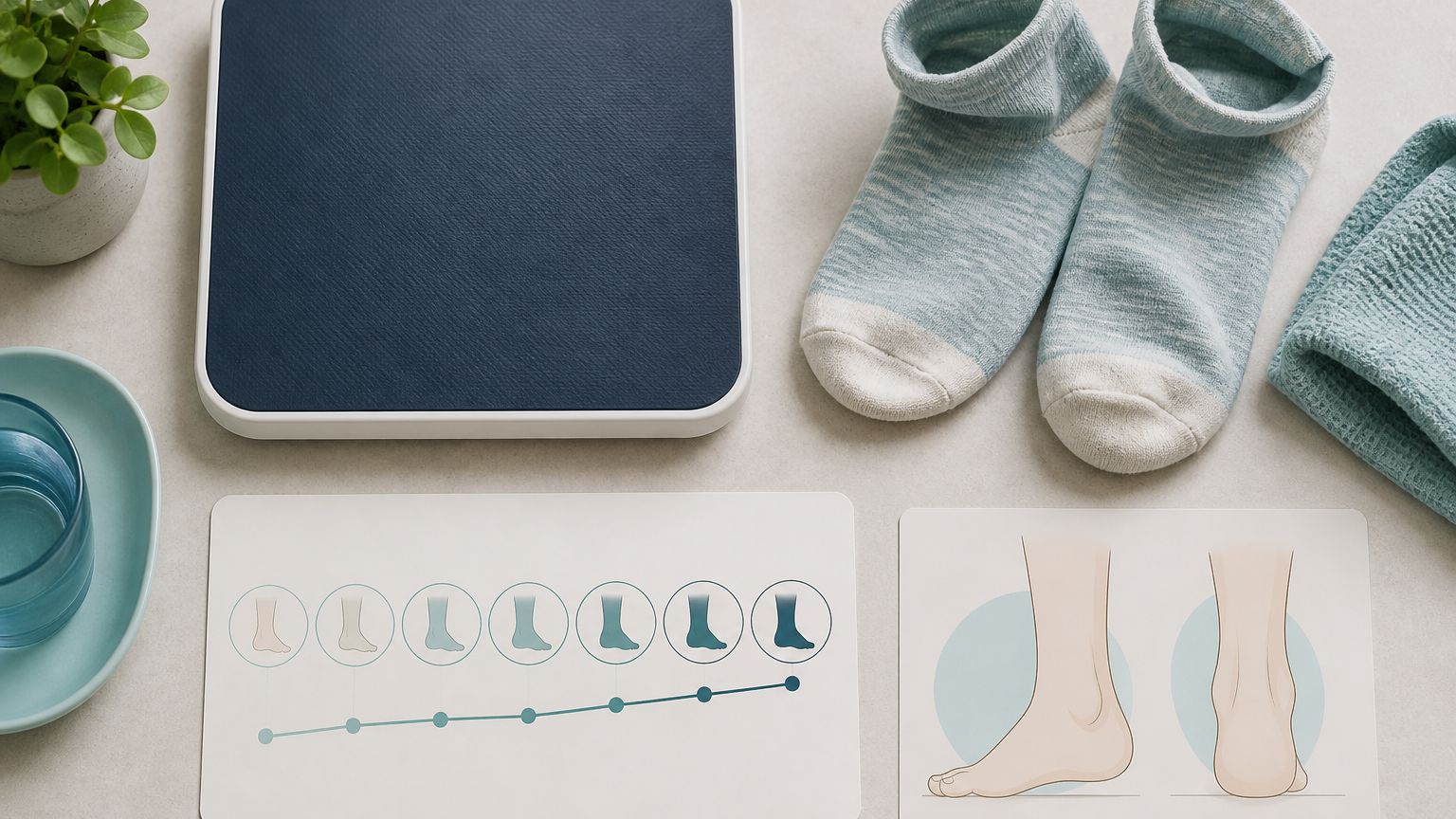
Observe weight and swelling changes under similar conditions every day
If you plan to keep continuous records, you can measure your weight at a similar time and under similar conditions each day. For example, use the same scale, place it on a stable, flat surface, and try to keep your clothing and daily routine consistent before and after measurement.
Ankle observation should also be done under similar conditions as much as possible. You can record whether shoes and socks feel tighter than usual, whether the ankle contour has changed, and whether the left and right sides are symmetrical. Do not repeatedly press forcefully to verify swelling, and do not judge severity based solely on the indentation left by pressing.
Weight or ankle appearance may fluctuate at different times. A single result can be easily affected by measurement conditions and daily activities, so continuous records are usually more helpful for a doctor to understand the process than isolated numbers. Whether a specific change has medical significance still needs to be judged in combination with symptoms, past medical history, medications, and test results.
Use a log to record activities, diet, and accompanying discomfort
The log does not need to be complicated, but it should be as objective as possible. Each day you can record:
Date, time, and weight
Location of swelling and left-right differences
Approximate amount of standing, walking, riding in a vehicle, or sitting that day
Whether diet and fluid intake were noticeably different from usual
Whether alcohol was consumed
Whether any medications were missed, added, or changed
Whether shortness of breath, chest discomfort, palpitations, fatigue, dizziness, cough, or nighttime discomfort occurred
Whether there is leg pain, redness, warmth, numbness, or limited movement
The focus of recording is to help reconstruct the process of change, not to find a single food, activity, or medication as the sole cause. Unless a healthcare professional has given clear instructions, do not stop or add medications on your own because of swelling, and do not take diuretics or try extreme restrictions on water or salt intake.
Which rapid changes or accompanying symptoms require prompt help
If any of the following occur, you should not continue to rely solely on home observation and should contact a healthcare professional promptly:
Swelling appears suddenly or worsens significantly within a short time
One leg is noticeably swollen and accompanied by pain, redness, or warmth
New or worsening shortness of breath, chest pain, or pressure occurs at the same time
Fainting, abnormal consciousness, marked weakness, or inability to perform normal activities
Severe difficulty breathing that is not relieved even when speaking or resting
Obvious abnormal skin color, sudden change in limb sensation or movement
If severe difficulty breathing, severe chest discomfort, fainting, or abnormal consciousness occurs, contact local emergency services immediately. Do not drive yourself to the hospital, and do not wait until the seven-day record is complete before seeking help.
How to organize medication and past medical history information before your visit
Before your visit, prepare a current medication list, including prescription drugs, over-the-counter drugs, supplements, and herbal medicines. Try to write down the name, dosage, frequency, start date, and any recent adjustments. Do not describe medications based solely on pill color or shape.
You can also organize the following information:
Past heart, vascular, kidney, liver, or endocrine diseases confirmed by a doctor
Recent injuries, surgeries, hospitalizations, infections, or significant decreases in activity level
Allergies and past adverse drug reactions
Date of first appearance of swelling and subsequent changes
Weight log and photos taken under the same conditions
Important family medical history confirmed by a healthcare professional
If you cannot confirm certain information, you can mark it as "uncertain" and do not fill in guesses. Medication boxes, prescription records, and previous test results can also be brought to the visit.
What directions might medical evaluation explore to find the cause
Ankle swelling may require evaluation combining local conditions and overall health. A healthcare professional may first ask about the time of symptom onset, distribution, progression, accompanying discomfort, medication use, and past medical history, and perform a necessary physical examination.
Whether laboratory tests, heart-related tests, vascular tests, or imaging tests are needed subsequently should be determined by the healthcare professional based on the actual situation. Different tests answer different questions, and not everyone needs to complete all items.
The purpose of evaluation is not to lock in a disease based on a single sign, but to gradually determine possible directions and rule out conditions that require prompt treatment. Readers should not self-select tests, interpret abnormal results, or adjust treatment based on online information.
Swelling and weight changes cannot prove anything on their own
Ankle swelling alone cannot prove the presence of heart disease, nor can it rule out other causes that need evaluation. Bilateral swelling, unilateral swelling, morning changes, or evening worsening all need to be interpreted in the context of complete medical history and examination.
Weight gain also cannot prove increased body fluid on its own, and no significant weight change does not guarantee there is no health problem. Data from home scales, photos, and symptom logs are auxiliary information and cannot replace professional examination.
Do not ignore obvious discomfort just because the records look stable, and do not stop or add medications or take drastic measures because of a one-day numerical change. If a healthcare professional has established monitoring criteria for you, follow individualized medical advice.
Start a seven-day change record today
If there are no danger signs and a healthcare professional has not advised immediate medical attention, you can start a continuous seven-day record today. Each day, try to measure weight and observe ankles under similar conditions, and supplement with the day's activities, dietary changes, medication use, and accompanying discomfort.
A practical record should include:
Date and time of measurement
Daily weight and measurement conditions
Swelling location, left-right differences, and trend of change
Time of photos taken under the same conditions
Obvious changes in activity and diet that day
Whether medications were taken as originally planned
New or worsening discomfort
Whether a doctor was contacted and any advice received
The seven-day record does not mean you must wait the full seven days before using it. If swelling changes rapidly, symptoms worsen, or danger signs appear, stop waiting immediately and seek help promptly. Bringing the record to your healthcare professional can help clearly explain how symptoms occurred and changed, but the final judgment should still be based on professional evaluation.