Heart Attack vs Cardiac Arrest: What to Do
Review date: 2026-09-15 · Credential: 110*********650
Abstract
Heart Attack vs Cardiac Arrest: What to Do
Heart Attack vs Cardiac Arrest: What to Do
This article is for general first aid education only and cannot replace real-time guidance from emergency dispatchers, medical diagnosis, or individualized treatment. Emergency numbers, on-site operating procedures, and rescuer training requirements may vary by region, so always follow the guidelines of your local emergency services.
Remember the action priority: If someone collapses suddenly and is not breathing normally, do not wait to identify the cause yourself
If you find someone collapsed suddenly, the most important task on the scene is not to first determine whether they are having a heart attack, cardiac arrest, or another condition. Instead, immediately make sure the environment is safe, check whether the person is responsive and breathing normally, and activate your local emergency response system as soon as possible.
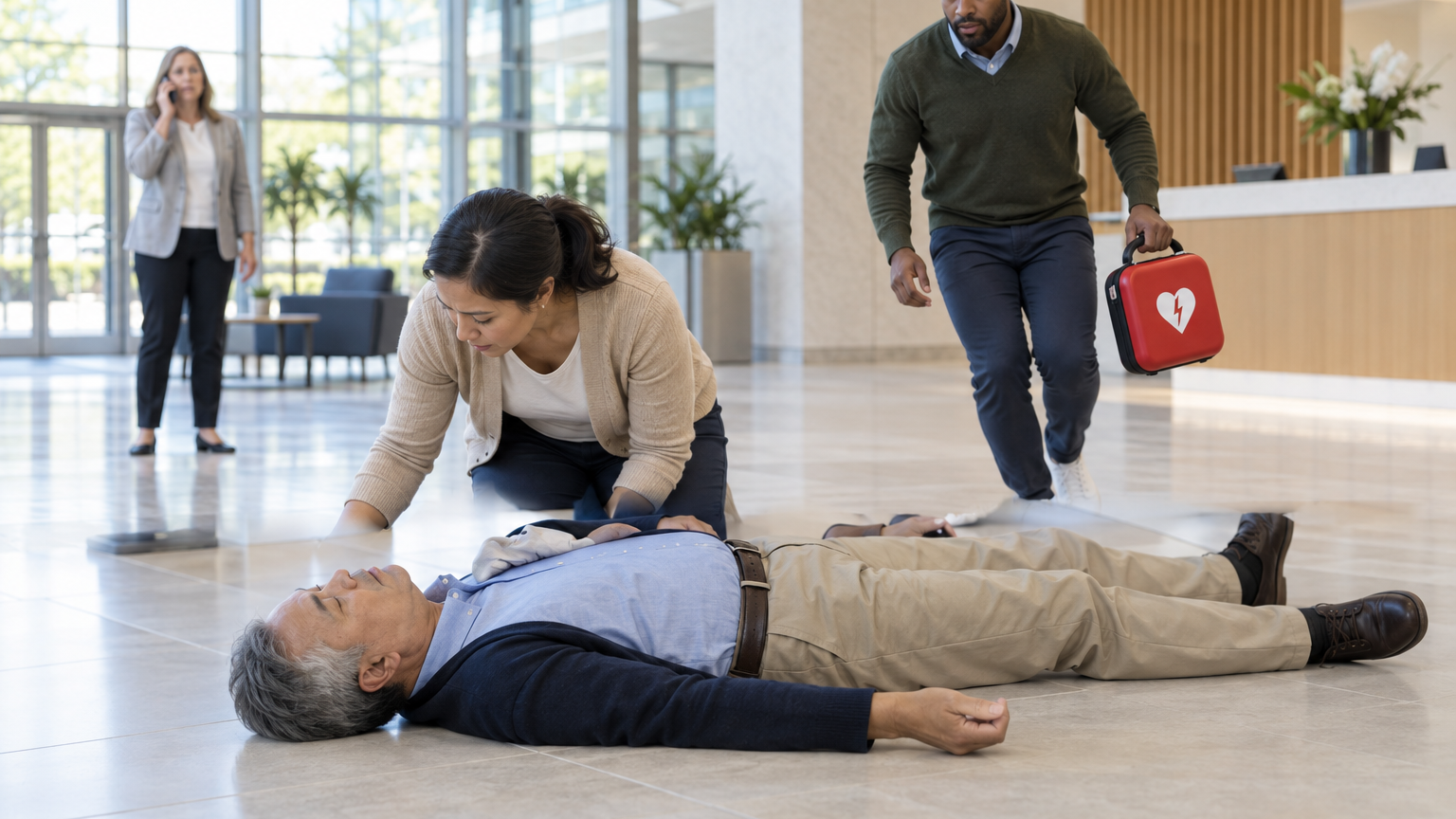
If the person is unresponsive and not breathing normally or only gasping abnormally, treat it as a possible cardiac arrest. Call your local emergency number immediately, ask someone to get an automated external defibrillator (AED), and start CPR under the guidance of the emergency dispatcher. Abnormal, irregular, or labored gasping does not equal normal breathing, so do not delay action because of it.
If the person is still conscious and breathing normally but has persistent or recurrent chest discomfort, tightness, pressure, or symptoms like shortness of breath, cold sweats, nausea, or marked weakness, also contact emergency services as soon as possible. Symptoms vary from person to person, so do not rule out a serious problem just because there is no severe pain.
What cardiac arrest and heart attack describe, and why they may be related
Cardiac arrest is the sudden stop of the heart's pumping function, usually causing the person to quickly lose responsiveness and stop breathing normally. This is a medical emergency that requires immediate resuscitation and assessment for defibrillation.
Heart attack usually refers to an acute blockage of blood supply to the heart muscle causing damage. The person may still be conscious, breathing, and able to speak, but their condition can deteriorate rapidly. A heart attack can trigger dangerous arrhythmias leading to cardiac arrest, but not all heart attacks cause cardiac arrest, and cardiac arrest is not always caused by a heart attack.
On-site features | Possible cardiac arrest | Possible heart attack or other acute chest condition |
|---|---|---|
Responsiveness | Usually unresponsive | May be conscious, or may gradually deteriorate |
Breathing | No normal breathing, or only abnormal gasping | Usually still breathing, but may have shortness of breath |
First action | Call emergency services, start chest compressions, use AED as soon as possible | Call emergency services, keep the person calm and resting, monitor continuously |
Can it be diagnosed on site? | No | No |
This table is only to help determine on-site action priorities, not to diagnose the cause.
On-site assessment sequence: How to quickly check responsiveness, breathing, and scene safety
First, look for traffic, fire, electrical hazards, falling objects, or other ongoing dangers. Do not let rescuers get injured by rushing in, and do not move the person unless necessary.
After confirming the scene is safe to approach, follow this sequence:
Tap the person's shoulder and shout loudly to see if they respond clearly.
If unresponsive, call for help immediately and ask someone nearby to contact local emergency services and find an AED.
Check if the person is breathing normally. Do not delay action because of occasional gasping, twitching, or brief sounds.
If unresponsive and not breathing normally, start CPR according to the emergency dispatcher's instructions.
If the person resumes normal breathing but remains unresponsive, monitor their breathing continuously and wait for professionals. Whether to change their position should follow the dispatcher's guidance, especially if head, neck, or spine injury is suspected.
Lay rescuers should not spend a long time trying to find a pulse. If you cannot determine it quickly, tell the dispatcher exactly what you observe about responsiveness and breathing, and follow their instructions for the next steps.
Help checklist: What to say when calling emergency services and asking someone to get an AED
When calling emergency services, try to provide the following information concisely:
Exact location, floor, entrance, and any landmarks that make it easy to identify.
Approximate time when the person collapsed or symptoms began.
Whether the person is responsive and breathing normally.
Whether chest compressions have started and whether an AED is on site.
Any traffic, fire, electrical, or other hazards at the scene.
A callback phone number.
If there are bystanders, assign clear tasks: ask one person to call emergency services, another to get an AED, and someone to wait at the entrance to guide emergency responders. Do not just shout general instructions to the crowd.
When using a phone, you can use speakerphone to continue listening to the dispatcher without interrupting compressions. Do not hang up prematurely unless the dispatcher tells you to.
How to start chest compressions and use an AED under dispatcher guidance
For an unresponsive adult who is not breathing normally, untrained bystanders can perform chest compressions under dispatcher guidance. Place the person on their back on a firm, flat surface. Put both hands on the center of the chest, keep your arms straight, and push down hard and fast continuously, allowing the chest to fully recoil after each compression. Minimize interruptions until the AED is ready to analyze, the person shows clear signs of life, professionals take over, or the scene becomes unsafe.
If you are trained in CPR, you can perform compressions and rescue breaths according to your training and the dispatcher's instructions. For children, drowning, choking, and other situations, the resuscitation priorities may differ, so follow the dispatcher's guidance even more closely.
When the AED arrives:
Turn on the device and follow the voice or screen prompts.
Expose and dry the chest, and apply the electrode pads to bare skin as shown on the pads.
When the AED analyzes the heart rhythm, make sure no one is touching the person.
If the device advises a shock, ensure everyone is clear of the person, then press the shock button as instructed.
After the shock or if no shock is advised, immediately resume chest compressions as prompted.
The AED will analyze the rhythm and decide whether a shock is needed. Do not try to judge the timing yourself, and do not delay turning on the device because you are worried about making a mistake. If the person has medication patches, implanted devices, or excessive chest hair, handle these according to the device instructions and dispatcher guidance.
Why a conscious person with chest discomfort should not drive themselves to the hospital
The condition of a person with a suspected heart attack can deteriorate suddenly. Driving yourself not only delays care on the way, but can also endanger yourself and others if your consciousness or circulation changes. Contact local emergency services immediately, have the person stop activity and rest quietly, loosen any clothing that is clearly restricting breathing, and monitor their responsiveness and breathing.
Do not give food, drink, or medication on your own. Some commonly mentioned emergency medications are not suitable for everyone and may be affected by allergies, bleeding risks, drug interactions, or other contraindications. Whether to use the person's own prescription or other medications should follow the explicit guidance of the emergency dispatcher or medical professionals.
If the person becomes unresponsive and stops breathing normally, immediately switch to the cardiac arrest response.
Common mistakes that delay action: Checking pulse, giving water, or waiting for symptoms to go away
The following actions can delay necessary help:
Spending a long time trying to find a pulse without calling emergency services or starting compressions.
Mistaking abnormal gasping for normal breathing.
Giving water, food, or oral medication to someone who is unresponsive or unstable.
Asking the person to walk around, take a shower, or drive themselves to see if they improve.
Canceling emergency help because symptoms temporarily ease.
Touching the person while the AED is analyzing or delivering a shock.
Not acting at all because you cannot tell if it is a heart attack or cardiac arrest.
If the person vomits, has a seizure, resumes breathing, or becomes unresponsive again, immediately report the change to the dispatcher and follow the new instructions.
Limits of verification: First aid knowledge cannot determine the exact cause on site
Sudden collapse can be related to severe arrhythmias, heart attack, stroke, pulmonary emergencies, low blood sugar, poisoning, trauma, or other causes. Chest discomfort can also come from conditions outside the heart. Symptoms, age, or past medical history only provide clues and cannot replace professional evaluation.
The on-site rescuer's job is to recognize unresponsiveness and absence of normal breathing, call for help immediately, perform dispatcher-guided resuscitation, and use an AED. The specific cause usually requires professionals to determine based on ECG, vital signs, laboratory tests, and other clinical data.
Final actions: Save your local emergency number and know AED locations in frequently visited places
Before an emergency happens, you can take these steps:
Save your local emergency number in your phone and remind family members that numbers may differ in different countries or regions.
Know the AED locations and hours at your home, workplace, school, gym, and transit hubs.
Take a locally recognized CPR and AED course and review regularly.
Make sure you can easily describe the address, floor, and entrance of frequent locations to a dispatcher.
Discuss with family members where to keep emergency contacts, medical history, and medication lists.
When someone collapses suddenly, do not waste time trying to diagnose the cause yourself. Ensure safety, check responsiveness and normal breathing, call emergency services immediately, start dispatcher-guided chest compressions, and use an AED as soon as possible.
Medical Health FAQ
1. What materials should I bring to a follow-up for high blood pressure or coronary heart disease at the Heart Alliance?
It is best to prepare recent blood pressure and pulse readings, a timeline of symptoms, a list of all current medications and supplements, allergies, previous test reports, and hospitalization records. You can also write down the most important questions, such as whether symptoms are worsening, how tests will be arranged, and whether medications need to be continued. Any treatment adjustments must be decided by the doctor based on your individual situation.
2. What should I do if I forget to take my cardiovascular medication during treatment at the Heart Alliance?
Do not make up the dose yourself, double the dose, or stop other medications. Handling of a missed dose may vary for different drugs, so check the instructions from your doctor or consult your prescribing physician, pharmacist, or original care team as soon as possible. When consulting, provide the drug name, strength, originally scheduled time, how long ago you missed the dose, and any current symptoms. If you experience severe chest pain, difficulty breathing, fainting, or other serious symptoms, call emergency services immediately.
3. When visiting the Heart Alliance cardiology department for the first time with both high blood pressure and coronary heart disease, what key questions should I ask?
You can ask what the current diagnosis is based on, what further tests are needed, how to record blood pressure properly, how much symptom change warrants an earlier visit, and how to use current medications as prescribed. Also proactively tell them about other medical conditions, allergies, all medications, and recent discomfort. Specific tests and treatment plans need to be developed by the doctor based on personal information.
4. At the Heart Alliance, if I have no discomfort, do I still need to attend scheduled follow-up appointments?
Usually, you cannot cancel a follow-up just because you "feel fine," because whether follow-up is needed depends on the previous diagnosis, test results, and treatment plan. Follow the schedule given by your original care team; if you are unsure, contact the hospital outpatient department or health management service to confirm. Do not stop medications or change follow-up frequency on your own.