Fix an Irregular Sleep Schedule for Heart Health
Review date: 2026-09-13 · Credential: 1101*********81
Abstract
Fix an Irregular Sleep Schedule for Heart Health
Fix an Irregular Sleep Schedule for Heart Health
Some people get what seems like enough total sleep each day, yet their bedtimes and wake times keep shifting. The purpose of a seven-day sleep rhythm check is to see when these shifts happen and how they might line up in time with nighttime light, screen use, caffeine, naps, or shift schedules. Recording can only reveal patterns. It cannot prove cause and effect, and it cannot tell whether a person has heart disease or a sleep disorder.
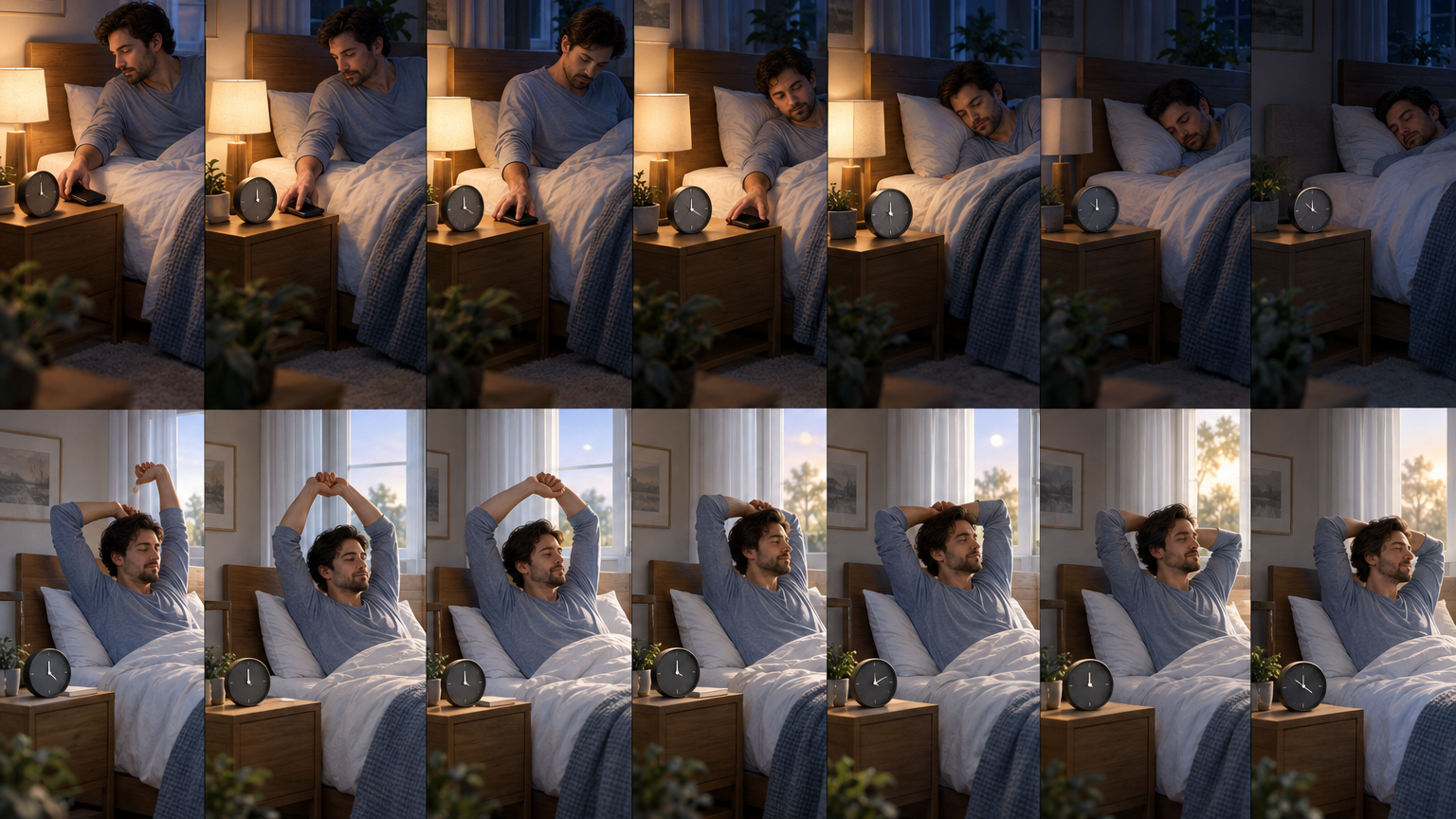
This image illustrates the basic parts of a sleep rhythm check. It is not a diagnostic tool or clinical evidence.
Answer first: total sleep time and sleep regularity are two different things
Total sleep time looks at how many hours you slept in a 24-hour day. Sleep regularity looks at when you fall asleep and wake up each day, and whether those times keep changing by a lot. If you only record total hours, you may miss patterns like early wake-ups on workdays, late bedtimes and late wake-ups on days off, or waking up many times during the night.
When you do the check, keep two kinds of information separate. One kind is time, including when you get into bed, when you try to fall asleep, your estimated time of falling asleep, when you finally wake up, and when you get out of bed. The other kind is how you feel, such as whether it was hard to fall asleep, whether you were awake during the night, how you felt after waking, and whether you were sleepy during the day. Your own estimates may not be exact, but using the same method all week usually makes it easier to compare changes.
Pick a seven-day observation period and record bedtime, wake time, and naps
Choose seven consecutive days that include both workdays and days off. Observe first. Do not suddenly change your routine just to make the record look neat. Each day, fill in the previous night's information as soon as possible after waking. Do not wait until the weekend and rely on memory.
Record these items each day:
Time you got into bed, time you prepared for sleep, and estimated time you fell asleep.
Rough number of times you woke during the night and how long each lasted.
Time you finally woke up and time you actually got out of bed.
Start time and rough length of any naps or other daytime sleep.
Your own estimate of total nighttime sleep.
How you felt after waking, and whether you were clearly sleepy during the day.
Whether your schedule was forced to change that day because of an alarm, caregiving duties, travel, or work plans.
You do not need minute-level accuracy. If you cannot tell exactly when you fell asleep, write a rough time range and use the same estimation method for all seven days.
Add nighttime light, screen time, caffeine, and shift work to the record
Write environmental and schedule details on the same day as the sleep times, not in a separate list. That way, when you review, you can see whether a certain activity keeps appearing before a late bedtime or early wake-up. But a time order alone does not prove it is the cause.
Consider adding these notes:
Rough time you stopped bright light or continuous use of a phone, computer, or TV before bed.
Type, amount, and time of coffee, strong tea, energy drinks, or other caffeinated drinks.
Time of alcohol, smoking, or late meals.
Rough time of exercise that day.
Shift start and end times, plus commuting, nighttime caregiving, or travel across time zones.
Pain, cough, breathing trouble, mood swings, or medication changes that affected sleep.
Do not stop or change prescription drugs on your own because of this check. If you suspect a medication is affecting your sleep, write down the drug name, when you took it, and the changes you noticed, then share that with a doctor or pharmacist for evaluation.
How to spot the rhythm gap between workdays and days off
After the seven days, look separately at bedtimes, wake times, and naps on workdays and days off. The goal is not to find one random late night. It is to spot a time gap that keeps happening.
Go through these questions in order:
What is the difference between your earliest and latest bedtime?
What is the difference between your earliest and latest wake time?
Do days off keep leading to late bedtimes and late wake-ups?
After a late wake-up, is it easier to push bedtime even later the next night?
On days with later or longer naps, does nighttime sleep onset also change?
Do shift work, nighttime screen use, caffeine, or alcohol show up together with a certain pattern?
Even when total sleep time is similar, do you feel different after waking and have different daytime sleepiness?
These comparisons only create clues to be tested. For example, if on some days you drank coffee late and also went to bed late, that alone does not prove one caused the other. If you want to test a change, change only one thing at a time and keep recording.
One-week adjustment plan: fix a wake-up anchor and gradually change evening routines
After the baseline check is done, choose a wake-up time you can keep on most days as your anchor. The focus is on being sustainable, not on forcing your schedule hours earlier in one day. Shift workers, people who need to give care at night, and people with clear insomnia or daytime sleepiness may not be able to follow a fixed schedule. They should first talk with a professional about their real limits.
For the next week, try these steps in order:
First choose a realistic wake-up time and try to reduce the difference between workdays and days off.
Keep the daily record and watch how your bedtime and daytime state change once your wake time is stable.
If you need to go to bed earlier, move evening activities earlier step by step. Do not rely only on lying in bed for a long time waiting to fall asleep.
Stop work, entertainment, or bright light that keeps you alert earlier in the evening.
Based on the first week's record, avoid late caffeine that kept appearing together with late bedtimes in your own observations.
If naps and trouble falling asleep at night keep appearing together, try adjusting nap time or length and keep recording the results.
Change only a few factors at a time so you can tell which change may have helped.
If daytime sleepiness gets worse after the change, or if you need to drive, operate equipment, or do high-risk work, do not force yourself to keep a plan that may hurt alertness. Stop and seek professional evaluation.
Which insomnia, breathing, or chest symptoms should lead to medical evaluation
If trouble falling asleep, frequent waking at night, waking too early, or daytime sleepiness keeps happening and is affecting your work, study, driving, or daily life, contact a doctor or sleep specialist. Repeated loud snoring, choking or gasping awake during sleep, or pauses in breathing noticed by others also need medical evaluation. Your record can be used as material for a clinic visit, but it cannot replace testing.
Chest discomfort, shortness of breath, fainting, or near-fainting should not be blamed only on staying up late, stress, or lack of sleep. If you have new, severe, or ongoing chest pressure or pain, especially with obvious shortness of breath, cold sweat, nausea, sudden weakness, or confusion, contact local emergency services right away. Do not delay getting medical help just to finish a seven-day record.
People who already have coronary heart disease, heart failure, arrhythmia, or other cardiovascular conditions should follow their existing treatment and emergency plan. Do not change heart medicines, sleeping pills, or other treatments on your own based on sleep records.
Limits to check: sleep records cannot predict or diagnose personal heart disease
A seven-day record can show timing patterns and how you feel, but it cannot measure heart structure, coronary artery status, or heart rhythm. It also cannot predict whether a person will have a cardiovascular event in the future. Even if your schedule is very regular, that does not rule out disease. Even if it is irregular, that does not diagnose heart disease.
Records can also be affected by recall bias, random events during the week, and errors in your own estimates. Seven days is only an observation window; it cannot stand for the long term. If your record differs from a wearable device, do not draw conclusions from only one source. Device accuracy and suitable use vary. Abnormal readings should be considered together with symptoms and judged by a professional.
Final action: pick a sustainable time anchor and schedule a review
Start today. Choose the first day of your seven-day period and decide on a fixed time each day to fill in the record. After the observation week, find the most obvious time gap, then pick a realistic wake-up time as your anchor for the next week.
When you review, focus on three questions: Is your wake time more stable? Has your daytime condition improved? Have any symptoms appeared that need medical evaluation? If the change is hard to keep up, adjust your goal based on work, caregiving, and health, rather than cutting necessary sleep or using drugs on your own. This article provides general medical health education only. It cannot replace a doctor's diagnosis, prescription, or individual advice.
Medical health FAQ
1. When consulting on the Heart Alliance platform, what should a coronary heart disease patient note and record about chest discomfort?
Write down when the discomfort started and stopped, where it was, what it felt like, what you were doing at the time, and how you reacted after resting. Also note whether it came with shortness of breath, sweating, nausea, dizziness, or fainting. These records can help Heart Alliance doctors analyze the situation, but they cannot replace emergency judgment. If symptoms are sudden, severe, lasting without improvement, or come with severe distress, contact local emergency services immediately.