Dental Visit Questions With Heart Valve Disease
Review date: 2026-10-18 · Credential: 110330000703903
Abstract
Dental Visit Questions With Heart Valve Disease
Dental Visit Questions With Heart Valve Disease
If you have heart valve disease, explain three things when scheduling a dental appointment: your specific heart diagnosis, the treatments you have had, and the dental issue you need addressed. Sharing relevant records with your dentist in advance helps the dental and cardiac care teams review the plans for your visit.
This article provides a framework for discussing your care. It does not determine whether you need preventive medication based on the term "heart valve disease," or recommend antibiotics, doses, or plans for stopping medication. Specific arrangements should be confirmed by professionals familiar with your medical history and the planned dental procedure.
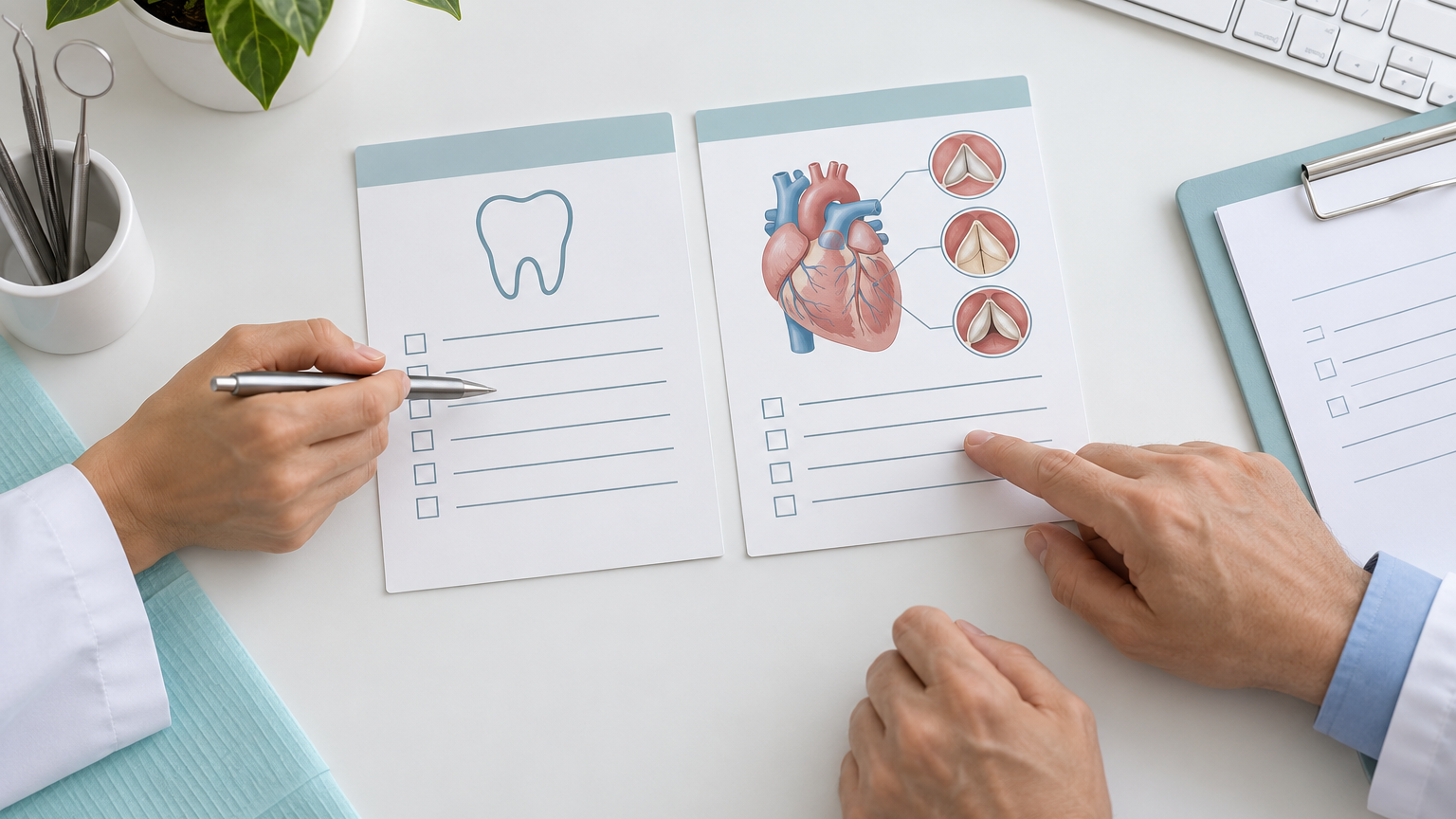
The illustration shows how to discuss your care. It does not represent test results or personalized medical advice.
Explain Your Specific Valve Diagnosis and Previous Treatments When Scheduling
Instead of simply telling your dentist, "I have heart disease," provide the exact diagnosis from your medical records. If you are unsure which valve is affected or what the condition involves, bring your latest cardiology notes or echocardiogram report for the care team to review. You do not need to interpret the report yourself.
When scheduling, you can share the following information in this order:
My valve diagnosis is: copy the wording from your medical records and mark anything unclear as "Needs verification."
Have I had valve surgery or a catheter-based procedure? List the procedure name and approximate date.
Which hospital or cardiologist provides my follow-up care?
The reason for this dental visit is: a routine exam, tooth pain, gum problems, or a planned treatment.
Have I recently developed new symptoms, or do I have any heart issues that are still being evaluated?
You can start by saying: "I have a heart valve diagnosis, and these are my records. Please review which details affect this dental visit and whether you need to contact my cardiac care team."
Which Heart Surgery and Infection Records Should You Bring?
If you have had valve replacement, valve repair, or another heart surgery, provide a discharge summary, a summary of the surgical report, or an implant information card. The procedure name and details about implants or repair materials make it easier for both teams to verify your history than relying on your recollection that you "had heart surgery."
You should also accurately report previous infections, especially if a doctor diagnosed you with infective endocarditis. If it was only suspected, you were tested for it, or you cannot remember the final diagnosis, make that uncertainty clear. Do not list it as a confirmed diagnosis yourself.
Gather the following records:
Your cardiology diagnosis and most recent follow-up notes.
Records of heart surgery, catheter-based procedures, and implants.
Diagnosis or discharge records for previous infective endocarditis, if applicable.
A complete list of current medications, including names, doses, and when you take them.
Records of medication allergies and other adverse reactions, describing what happened.
The names of any antibiotics you have recently taken, why you took them, and when.
If you take anticoagulant or antiplatelet medication, mention it when scheduling and ask which monitoring results to bring. Any medication changes should be confirmed by the relevant doctors. Do not stop, reduce, or switch medications on your own for a dental visit.
Ask Your Dentist to Clearly Describe the Planned Procedure
Terms such as "dental visit," "cleaning," or "getting something treated" may not give your cardiac care team enough detail about the plan. Ask your dentist to specify the planned examination or treatment and whether additional procedures may be needed based on the findings.
Ask your dentist to answer these questions in the referral or visit notes:
What is the name of the planned dental procedure?
Which area will be treated, and which tissues will be involved?
Will it involve manipulation of the gums, treatment around the tooth roots, or perforation of the oral mucosa?
Is this visit for an examination, treatment, or one step in a series of treatments?
If an additional procedure becomes necessary during the visit, will the heart-related arrangements need to be reviewed again?
These questions help professionals exchange complete information. They are not intended for patients to assess their own risk or decide whether to take medication. Procedures that have not yet been determined can be marked "To be decided after the examination."
How to Have Your Dental and Cardiac Care Teams Confirm Whether Special Preventive Measures Are Needed
The central question is: "Based on my confirmed heart diagnosis, previous treatment records, and this specific dental procedure, do I need any measures to prevent infective endocarditis?" Also confirm whether you need any other medication or preparations for the visit.
Ask your dentist who will contact your cardiac care team, what additional records are needed, and when you can expect a response. If you already have recommendations from your cardiologist, ask your dentist to confirm that they apply to this procedure.
If a doctor determines that medication is needed, ask them to specify the name, dose, and timing. They should also review your allergies, previous adverse reactions, other medical conditions, and current medications to assess contraindications and interactions. Do not reuse a prescription simply because it was given for a previous dental visit.
If the two teams have not agreed, ask them to communicate directly and document the confirmed plan. You need to know what the final plan is, who is responsible, and whom to contact if it changes. You do not need to make a medical judgment between differing recommendations yourself.
Why All Valve Problems Cannot Be Treated as the Same Condition
The term "heart valve disease" does not fully describe your specific diagnosis, whether you have had a repair or replacement, whether implanted materials are present, or your infection history. The term alone cannot determine an individual plan for preventive medication before dental care.
Likewise, another patient's experience, arrangements for a previous dental visit, or a general overview online cannot directly determine what should happen this time. What needs to be confirmed is your medical history and current dental plan, rather than an answer that applies to everyone.
This article does not provide enough medical information to assess specific indications for preventive medication, so it does not include a checklist of "who definitely needs medication." If records are missing or the diagnosis is unclear, have your care team verify the details first. Do not record "unknown" as "none."
How to Report Tooth Pain or a Possible Infection Without Taking Leftover Antibiotics
If you develop tooth pain, swelling, or concerns about an infection, describe the facts as clearly as possible when contacting your dentist: when the symptoms started, where they are, whether they are worsening, whether you have a fever, and whether they affect eating, swallowing, or opening your mouth. Also mention your valve diagnosis, previous heart treatments, and current medications.
Do not try to identify the type of infection based on pain alone, or use leftover antibiotics as treatment or prevention for this visit. A professional should assess whether antibiotics are needed and how to address the dental problem.
If you have already taken medication on your own, tell your doctor its name, dose, when you took it, and how you reacted. Do not hide this information, increase the dose, or change medications yourself.
If you experience trouble breathing, significant difficulty swallowing, rapidly worsening swelling of the face or neck, changes in consciousness, or significant chest pain, promptly contact local emergency services or go to an emergency department. Do not wait for a routine dental appointment. If you develop a fever or feel generally unwell, also contact a medical professional promptly and explain your heart history so they can determine how urgently you need evaluation.
Use a Communication Card to Confirm Both Teams' Recommendations and the Plan for Your Visit
Copy the card below into a note on your phone, or print it and bring it with your medical records. Mark unconfirmed items as "Needs verification" rather than filling in medical conclusions yourself.
Dental Visit Communication Card
Name and date completed:
Exact heart valve diagnosis from medical records:
Names and dates of heart surgeries or catheter-based procedures:
Implant or repair material details and source records:
History of infective endocarditis: Yes / No / Unclear, needs verification.
All current medications and doses:
Details of medication allergies or other adverse reactions:
Recent dental symptoms, fever, or other symptoms:
Planned dental procedure, to be completed by the dentist:
Whether additional input from the cardiac care team is needed, to be confirmed by the dentist:
Whether special preventive measures are needed, to be confirmed by the relevant doctors:
If medication is needed, the specific regimen and prescribing doctor:
Whether regular medications need to be adjusted, and the doctor responsible for confirming this:
Contact person and contact information if the plan changes or symptoms develop:
Date both teams' recommendations were confirmed and the plan for this visit:
Before the visit, ask your dentist to review these questions with you: "Are all the records available? Have the heart-related arrangements been confirmed? If today's treatment plan changes, whom should we contact first?" Recording the answers can clarify what you need to prepare for this appointment and make it easier to review the details at future visits.
Frequently Asked Health Questions
1. For Heart Alliance users with a history of arrhythmia who want to donate blood, which organization should confirm their eligibility?
Ask an authorized blood collection organization about donor eligibility, and accurately report your history of arrhythmia, recent symptoms, relevant tests, and medications. If the organization needs more information, contact the doctor who previously evaluated or treated you. Do not hide your medical history or stop medication on your own to pass screening. Eligibility should be determined through a formal assessment.