Cut Salt by Reading Labels and Changing Meals
Review date: 2026-09-15 · Credential: 110*********650
Abstract
Cut Salt by Reading Labels and Changing Meals
Cut Salt by Reading Labels and Changing Meals
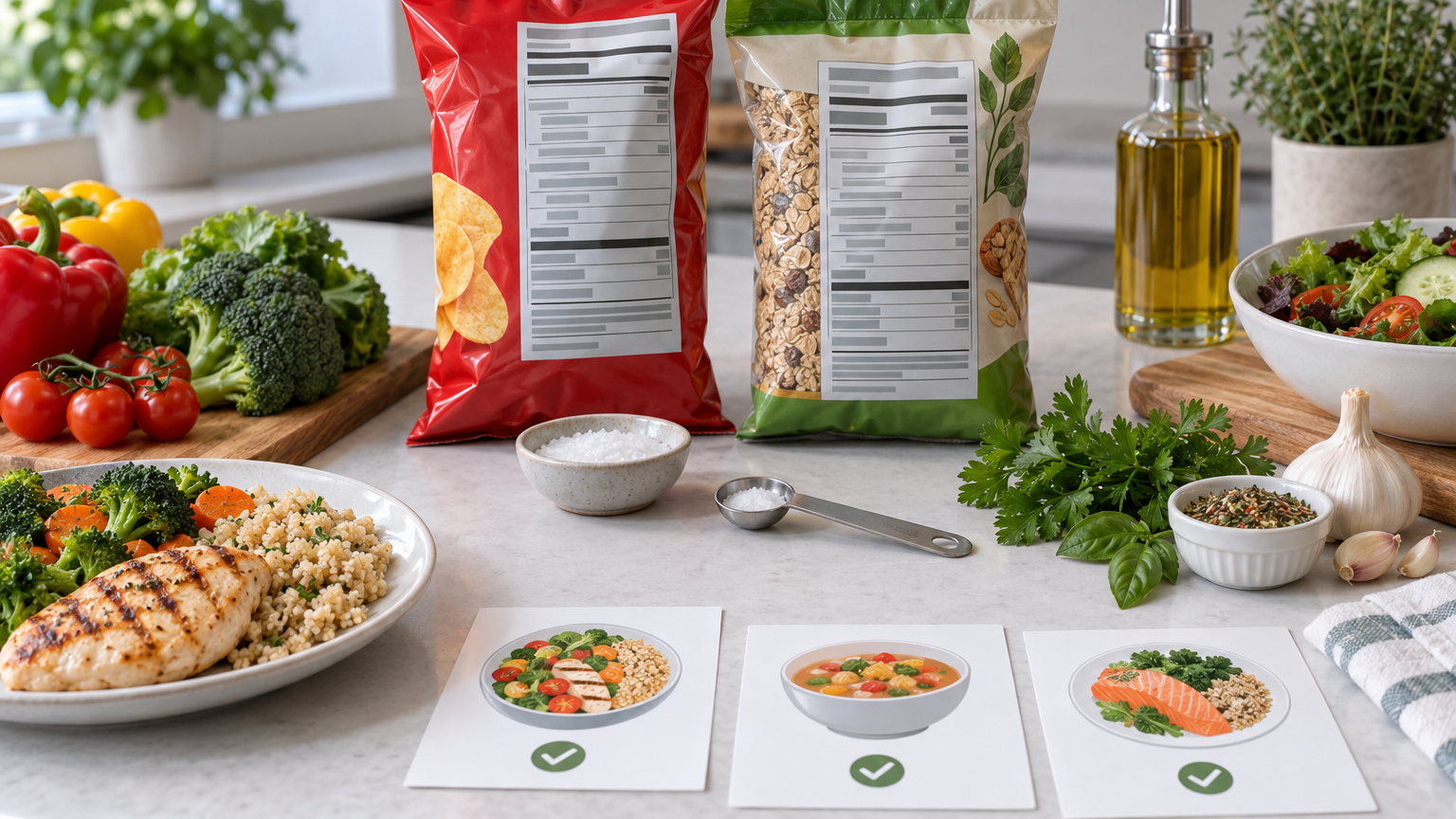
Reducing salt intake is not about making all food bland, nor can it be accomplished just by buying one or two products labeled "low sodium." A more practical approach is to first identify recurring sources, then compare labels, adjust portion sizes and frequency, and gradually modify breakfast, work meals, and dinner.
This article is for general medical health education and cannot replace individualized advice from a doctor, registered dietitian, or other professional. Labeling regulations may vary by country and region, so you should follow the nutrition facts, serving size instructions, and local regulations on the packaging.
First determine the goal: reduce high-frequency salt sources, not pursue a salt-free diet
Before making adjustments, there's no need to rush to empty the kitchen, nor should you set the goal as "completely avoiding salt." Addressing foods that appear multiple times daily or weekly usually leads to more stable changes than foods eaten only occasionally.
Ask yourself three questions:
Which breakfast, lunch, or dinner items appear almost fixed?
Which sauces, seasoning packets, pickled foods, or ready-to-eat foods are used most frequently?
Which foods, though eaten in small amounts at one time, are repeated throughout the day?
Writing specific goals makes them easier to implement, such as "compare labels of frequently purchased bread," "reduce seasoning before tasting," or "arrange two self-assembled work meals this week." Whether stricter restrictions are needed should be decided based on personal illness, medication, nutritional status, and professional advice.
Use a three-day food diary to identify sources from meals, snacks, sauces, and eating out
Record three representative days in a row, which can include workdays and rest days. The focus is not on precise calculation, but on identifying recurring patterns.
For each eating occasion, note:
Name of food or drink, along with brand or restaurant name.
Actual amount eaten, such as one whole package, half a serving, or a few spoonfuls.
Whether soy sauce, sauces, seasoning powders, soup bases, or dips were added.
Whether it was homemade, packaged, takeout, or dine-in.
Whether similar foods were repeated on the same day.
When reviewing, divide sources into four categories: meals, snacks, sauces, and eating out. Prioritize items with "larger portions," "high frequency," or "relatively high sodium per label." Don't focus only on foods that taste saltiest; for packaged foods, rely mainly on label information and actual consumption.
How to read sodium, salt, and per-serving information on packaged labels
When reading packaging, first confirm whether the nutrition facts list "per serving," "per 100 grams," "per 100 milliliters," or the entire package. Different products use different bases, and directly comparing prominent numbers may lead to misjudgment.
Read in this order:
Check the defined serving size on the package.
Estimate how many servings you will actually eat.
Find the sodium or salt item in the nutrition facts.
Understand intake based on actual servings consumed.
Then check the ingredient list to understand the use of salt and sodium-containing ingredients.
"Lower per serving" does not mean lower after eating the whole package. Conversely, a condiment with a high value per 100 grams, if actually used in small amounts, cannot be judged the same way as a staple food eaten in large quantities at once.
Some labels list sodium, some list salt, and some list both. The two cannot be directly compared as the same number without local labeling rules and conversion basis. The safest method is to compare similar products under the same listed item, same measurement basis, and similar actual portion sizes.
Two-column comparison table: how to compare similar foods by portion size and frequency
Choose truly interchangeable similar foods, such as two types of bread, two instant soups, or two breakfast cereals. Don't compare products with very different uses and portion sizes just because the packaging color or claims are similar.
Comparison Item | Reading and Decision Method |
|---|---|
Labeling Basis | First unify to per serving or the same measurement basis on the package |
Actual Portion | Reinterpret label data based on your usual number of servings |
Eating Frequency | Prioritize foods that appear daily or weekly |
Similar Choice | Compare sodium or salt labeling among products with similar uses |
Overall Combination | Also consider sauces, soups, side dishes, and processed foods in the same meal |
Sustainability | Choose substitutes acceptable in taste, price, availability, and cooking time |
Compare two to three frequently purchased products at a time. Record the final product chosen and usual portion size, so you can reuse the result on the next shopping trip, avoiding repeated judgment each time.
Choose one realistic replacement each from breakfast, work meals, and dinner
Changing the entire day's diet at once may be hard to sustain. Start with one replacement in each of the three high-frequency meal types and observe for a week.
For breakfast, start by comparing similar breads, cereals, or convenience foods, or reduce the frequency of using high-salt condiments. If your current breakfast is already stable and suitable for you, don't change everything in pursuit of "perfection."
For work meals, prioritize parts that are easy to control, such as separating sauces, using part of a seasoning packet, or replacing unclear processed side dishes with foods whose labels you can check. When eating out and full nutrition information is unavailable, you can ask for less sauce, soup, or pickled ingredients, but verbal requests cannot be considered precise nutritional guarantees.
For dinner, adjust one recurring component first, such as reducing the amount of composite seasonings, choosing ingredients with more comparable labels, or avoiding having high-salt processed foods in the main dish, soup, and side dish all at once.
After replacement, also pay attention to whether you feel full, whether it's convenient to prepare, and whether other nutritional needs are affected. Simply removing one food but adding more similar processed foods may not reduce the overall salt or sodium sources in the meal.
How to use herbs, spices, acidity, and natural flavors when cooking
When reducing salt or sodium-containing seasonings, gradually build other flavor layers instead of removing all seasoning at once.
Use scallions, ginger, garlic, herbs, or spices suitable for the dish to enhance aroma.
Try lemon juice, vinegar, or other acidic sources in appropriate dishes.
Bring out natural flavors through roasting, pan-searing, or stewing, while considering personal cooking conditions and food safety.
Add seasonings in small amounts first, taste, then decide whether to add more.
When using pre-made sauces, soup bases, or seasoning packets, include them in the meal's total, not just the extra salt sprinkled.
Note that "salt substitutes," "low-sodium salt," or potassium-containing alternatives are not automatically suitable for everyone. People with kidney dysfunction, conditions affecting electrolytes, or those taking related medications should consult a doctor or pharmacist before use. Don't decide based solely on health claims on the product front.
What to confirm first if you have heart failure, kidney disease, or special dietary needs
Heart failure, kidney disease, and other conditions requiring fluid or electrolyte management may involve different dietary requirements than the general population. Specific restrictions depend on disease status, test results, treatment plan, and medications, and cannot be given as a single universal number in a general article.
Before making changes, confirm with a professional:
Whether there is a clear daily sodium, salt, or fluid requirement.
Whether sodium or salt should be the primary indicator for label records.
Whether to avoid potassium-containing salt substitutes or specific condiments.
Whether eating out, supplements, and over-the-counter products need to be evaluated together.
How to monitor weight, swelling, blood pressure, or other indicators, and what changes require contacting medical personnel.
Do not stop or reduce medications on your own, or use dietary changes as a substitute for established treatment. If you experience significant shortness of breath, chest discomfort, altered consciousness, fainting, or sudden worsening of symptoms, contact local emergency services or a healthcare professional promptly.
Verify boundaries: a single low-salt label does not mean the overall meal is suitable for you
"Low salt," "reduced salt," or similar claims on the product front provide only limited information. Whether it's suitable as part of a meal depends on actual portion size, eating frequency, other foods in the same meal, and personal medical requirements.
Common mistakes include:
Looking only at the front of the package, not the nutrition facts and serving size.
Comparing numbers under different measurement bases.
Ignoring that a package contains multiple servings but understanding it as one serving.
Counting only the salt added at the table, missing sauces, soup bases, and processed foods.
Ignoring the overall meal combination and other nutritional needs just because one product has lower salt or sodium.
Using salt substitutes or setting strict restrictions without professional confirmation.
Home records can help identify patterns, but cannot diagnose diseases or prove that a dietary change has improved heart or kidney condition. Personal goals and monitoring methods still need to be determined by professionals who know your medical history.
Final action: complete a one-week shopping list and schedule a dietary review
Add the most frequently occurring foods from the three-day record to your shopping list. For each high-frequency food category, keep one usual choice and one label-compared alternative; no need to change all brands or recipes at once.
This week, complete the following actions:
Choose two categories of frequently purchased packaged foods and compare labels on the same basis.
Arrange one feasible adjustment each for breakfast, work meals, and dinner.
Buy one herb, spice, or acidic ingredient suitable for current dishes.
Record how much you actually ate, not just the package-defined serving.
After one week, review difficulties, taste acceptance, cost, and preparation time.
The goal of the review is to identify the next high-frequency source worth adjusting, not to grade the week's diet. If you have heart failure, kidney disease, special dietary needs, or related medications, bring records and product labels to a doctor, pharmacist, or registered dietitian for review before deciding to continue adjustments.
Medical Health Frequently Asked Questions
1. Can hypertension and coronary heart disease be treated as the same in the International Heart Care Center?
They are not the same concept, but may occur together. For either condition, conclusions cannot be based solely on one blood pressure measurement, chest discomfort, or personal feeling; a doctor should evaluate based on medical history, standardized measurements, and necessary tests. When visiting the International Heart Care Center, bring recent blood pressure records, symptom changes, previous test results, and medication list to help the doctor make a comprehensive judgment.