Comparing Blood Pressure in Both Arms
Review date: 2026-09-17 · Credential: 1101*********81
Abstract
Comparing Blood Pressure in Both Arms
Comparing Blood Pressure in Both Arms
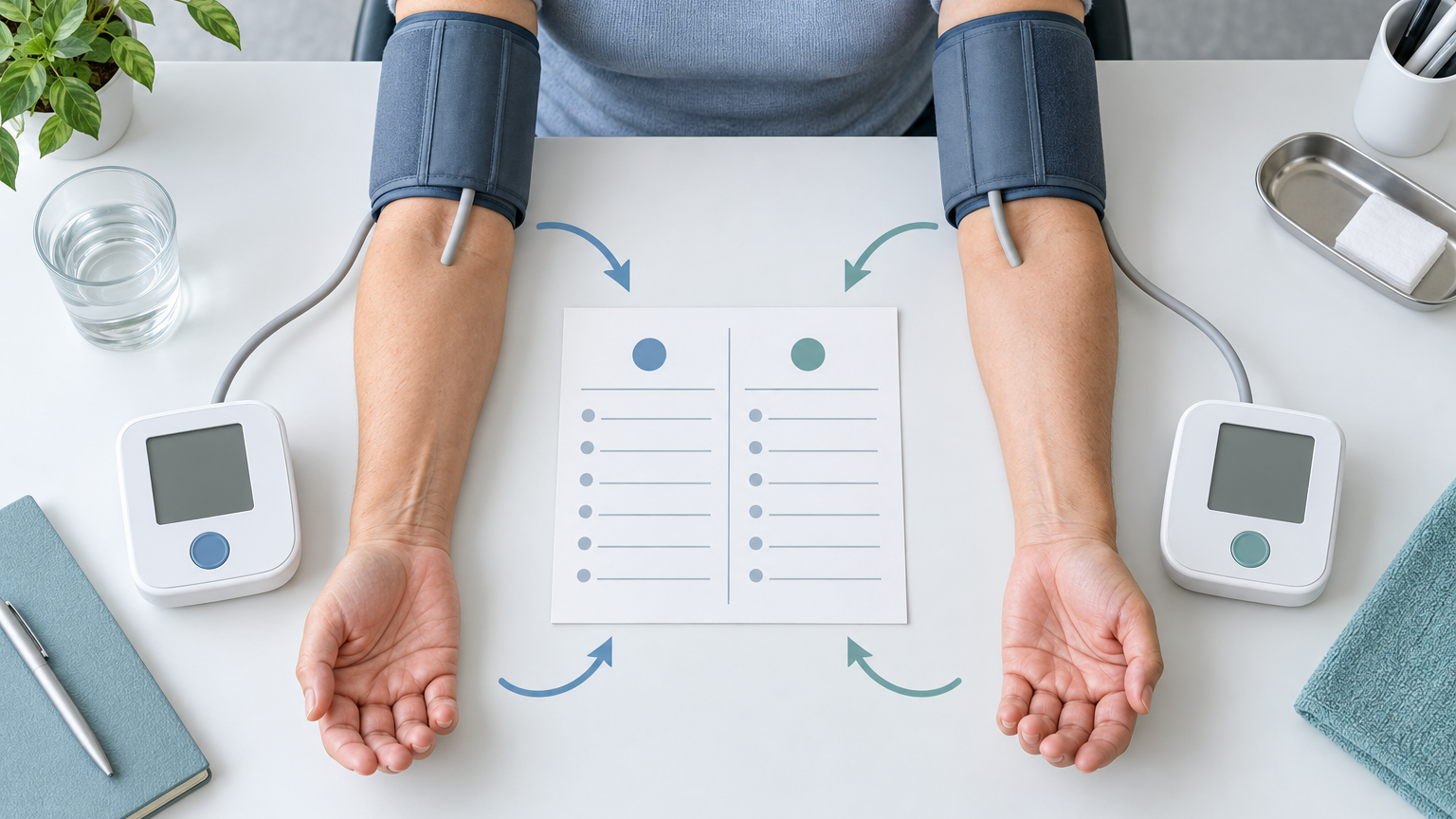
Blood pressure measured in the left and right arms is not necessarily identical. A one-time difference may be related to measurement order, insufficient rest, improper cuff fit, arm position, or short-term blood pressure fluctuation. If a similar difference persists after repeated measurements under standardized conditions, it should be evaluated by a healthcare professional in conjunction with pulse, vascular risk factors, and other examinations. The purpose of home re-measurement is to obtain a more reliable record, not to self-diagnose vascular stenosis or change medications.
First Determine Whether Chest Pain, Shortness of Breath, Fainting, or Sudden Limb Abnormalities Are Present
After discovering a difference in blood pressure between the two arms, do not rush to measure repeatedly. First observe whether there is simultaneous chest pain or severe chest or back discomfort, marked shortness of breath, fainting or near-fainting, or sudden pain, weakness, numbness, coldness, or color changes in one arm.
If accompanied by sudden neurological symptoms such as facial drooping, slurred speech, one-sided limb weakness, or altered consciousness, contact local emergency services immediately. Sudden severe symptoms cannot be ruled out by home blood pressure re-measurement, and it is not advisable to drive yourself to the hospital.
If none of the above danger signs are present, you may complete a bilateral arm comparison measurement under quiet, standardized conditions. If you still feel significantly unwell, even if the blood pressure numbers do not appear high, seek professional evaluation promptly.
Why a Single Left-Right Arm Difference May Be Affected by Order, Posture, and Cuff
Blood pressure varies with stress, activity, pain, talking, breathing state, and measurement interval. The side measured first and the side measured later are at different time points, so consecutive measurements may present short-term fluctuations as left-right differences. Measuring only once often makes it difficult to determine whether the difference is stable.
Posture also affects results. Lack of back support, feet dangling or crossed, talking during measurement, and having the arm below or above heart level can all distort readings. Clothing compressing the upper arm or wrapping the cuff over thick clothing also reduces comparability.
Cuff size is equally important. A cuff that does not match the upper arm circumference, is wrapped too loosely or too tightly, or is positioned inconsistently can cause systematic bias. If the two upper arms have different thicknesses, confirm cuff suitability for each separately, and do not assume the size is correct just because the same cuff can be fastened.
Before Re-measuring: How to Check Cuff Size, Rest Time, and Arm Support
Choose a relatively quiet time when your body is stable for re-measurement. Sit and rest for several minutes before measuring, and avoid starting immediately after exercise, rushing around, or when emotionally agitated. Empty your bladder if needed, and remain quiet during measurement without talking or looking at stress-inducing information.
Keep your sitting posture as consistent as possible: back supported, feet flat on the floor, legs uncrossed. The cuff should be directly on the bare upper arm, arm relaxed and stably supported, with the cuff approximately at heart level.
Check the cuff's suitable arm circumference, wrapping position, and tightness according to the blood pressure monitor's manual. If the device or cuff is damaged or leaking, the readings repeatedly show errors, or the results fluctuate abnormally under the same conditions, do not continue to treat these numbers as reliable records.
For an initial comparison, measure one side first, wait a moment, then measure the other side, and then repeat the round with the starting arm swapped. Record the actual measurement order each time, and do not keep only the higher or lower numbers. If your doctor or the device manual gives a specific measurement protocol, follow that protocol first.
Bilateral Arm Recording Table: How to Fill in Values, Measurement Order, Pulse, and Concurrent Symptoms
Records should retain raw readings and measurement context, avoiding just writing "left high" or "right high." The following table can be used for one standardized comparison; subsequent re-measurements can be added on a new line in the same format.
Date and time | Measurement order | Arm | Systolic and diastolic pressure | Pulse | Concurrent symptoms and notes |
|---|---|---|---|---|---|
Example: one morning | First | Left arm | Record as shown on device | Record as shown on device | Whether chest pain, shortness of breath, dizziness; cuff model and posture |
Same time period | Second | Right arm | Record as shown on device | Record as shown on device | How long after the first; whether talking or moving during interval |
After swapping order | Third | Right arm | Record as shown on device | Record as shown on device | Whether cuff replaced or repositioned |
Same round | Fourth | Left arm | Record as shown on device | Record as shown on device | Whether device error or heart rhythm alert occurred |
If the blood pressure monitor displays an irregular heartbeat alert, record it truthfully, but do not self-diagnose arrhythmia based solely on the device alert. If coughing, talking, moving, cuff slipping, or obvious stress occurs, also note it in the remarks, and re-measure after rest if necessary.
How to Distinguish Occasional Differences from a Stable Pattern Seen Multiple Times
Occasional differences usually appear only once or under a particular condition. After swapping measurement order, resting again, and adjusting the cuff, the difference may decrease or change direction. In this case, the most valuable information is not the single highest number, but whether measurement conditions are consistent and the raw records are complete.
A stable pattern means that on different days, under similar conditions and standardized operation, the same side is repeatedly higher than the other, and this direction does not disappear when the measurement order is changed. Even so, home records only indicate the need for re-evaluation, not the specific cause.
Do not measure many times in a row to get identical results in both arms, and do not delete readings that do not match expectations. Excessive re-measurement can increase stress and cause blood pressure to keep fluctuating. Follow your doctor's advice or device manual for recording frequency, and bring the complete record to your appointment.
What to Bring to the Appointment: Equipment, Past Records, and Vascular Risk Information
Bring the blood pressure monitor and cuff you are currently using so that medical staff can check the model, cuff size, device condition, and your operating method. Paper records, app exports, or clear screenshots are all acceptable, but retain the date, time, arm, and measurement order.
Also prepare the following information:
Recent raw records of bilateral arm blood pressure and pulse.
Whether chest pain, shortness of breath, dizziness, fainting, arm pain, numbness, weakness, or coldness occurred during measurement.
Known hypertension, diabetes, dyslipidemia, heart disease, or vascular disease.
Smoking status and past cardiovascular or cerebrovascular events, vascular surgery, or upper limb injuries.
Current prescription drugs, over-the-counter drugs, and supplements, including name, dose, and time taken.
Any surgery or treatment on one side such as breast, axillary, vascular access, or other procedures that may affect measurement side selection.
If one arm has a dialysis vascular access, wound, significant swelling, or a doctor has clearly instructed to avoid measuring on that side, inform medical staff in advance. Do not pressure that side on your own just to complete the bilateral comparison.
Boundary Verification: Home Re-measurement Cannot Diagnose Vascular Stenosis or Self-Adjust Antihypertensive Medication
Persistent bilateral blood pressure differences may require further evaluation, but a blood pressure monitor cannot show vascular structure or independently determine the presence of vascular stenosis or other diseases. Doctors may decide whether further tests are needed based on medical history, physical examination, and re-measurement results; not everyone with a difference needs the same tests.
Do not add medication on your own because one side reads higher, nor reduce, stop, or change timing because the other side is lower. Adjustment of antihypertensive drugs requires consideration of overall blood pressure trends, symptoms, past medical history, kidney function, and other medications. Self-adjusting the regimen can cause blood pressure to become too high or too low, or lead to adverse drug reactions.
Which arm to use for subsequent daily monitoring should be guided by a healthcare professional after confirming bilateral arm measurement results. If the doctor recommends using the arm with higher readings for ongoing monitoring, keep measurement conditions and equipment consistent to compare trends.
Final Action: Complete a Standardized Comparison Record and Confirm Follow-Up Channels
If there are no danger signs at present, check the cuff size, rest quietly, and complete a bilateral comparison measurement with swapped order, recording each reading, pulse, order, and concurrent symptoms. Do not keep only averages, nor repeat measurements until you get a number you are satisfied with.
After completing the record, consult an established clinic, family doctor, or other formal medical channel about when to re-check. If repeated standardized measurements still show the same side consistently higher, or if discomfort occurs, arrange professional evaluation as soon as possible. While waiting for the appointment, if chest pain, marked shortness of breath, fainting, sudden neurological symptoms, or sudden abnormalities in one limb occur, contact local emergency services immediately.
This article is for general medical health education and cannot replace a doctor's diagnosis, prescription, or individualized treatment advice.