Cold-Weather Heart Care Plan
Review date: 2026-09-10 · Credential: 1105*********91
Abstract
Cold-Weather Heart Care Plan
Cold-Weather Heart Care Plan
During a cold spell, heart disease patients are better off arranging warmth, medication, monitoring, outings, and emergency contacts in advance, rather than waiting until the weather turns noticeably colder and then coping on the spot. Everyone's disease type, physical condition, and treatment plan differ. This article provides general health education and cannot replace a doctor's diagnosis, prescription, or individualized advice.
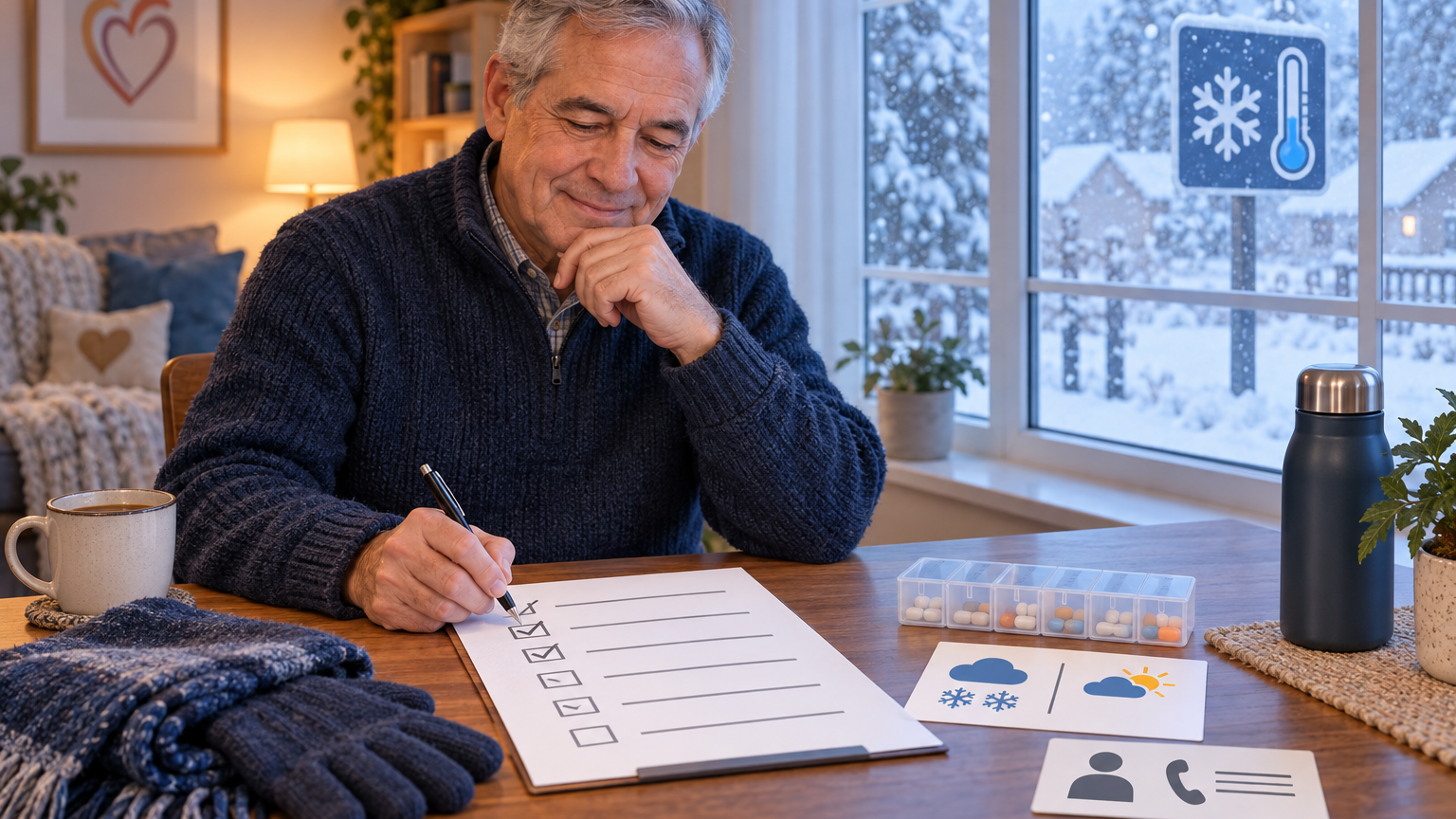
Caption: Illustration of home preparation, outing decisions, and emergency contact items on a cold wave day. It is only to help organize the plan and is not a basis for diagnosis or treatment.
Why It's Worth Planning Ahead for Low Temperatures
Cold weather may change the environment for daily activities and increase the difficulty of keeping warm and getting around. Situations such as indoor-outdoor temperature differences, walking into the wind, carrying items, clearing snow, or rushing may place a greater burden on the body than usual. For people with existing heart disease, recent unstable symptoms, or limited mobility, planning ahead helps reduce last-minute decisions and unnecessary exposure.
When preparing a plan, weather factors should be viewed separately from personal illness. Weather forecasts can help decide when to go out, but they cannot determine whether heart disease is stable. Likewise, the absence of obvious discomfort does not mean one can stop medication, cancel follow-ups, or increase activity intensity on one's own.
First, Take Stock of Illness, Medications, and Past Discomfort
Before the cold wave arrives, complete a personal situation review based on existing medical records, medication labels, and the plan already given by the doctor:
Write down clearly diagnosed diseases and recent treatment arrangements.
Confirm whether daily medications are sufficient and whether the drug names, dosages, and times are clear.
Check for missed doses, double dosing, or self-adjustment of medications.
Recall whether chest discomfort, shortness of breath, palpitations, dizziness, or unusual fatigue occurred previously in cold environments or after activity.
Record blood pressure, heart rate, weight, or other indicators the doctor asked to monitor.
Save contact information for the primary care team, family members, and local emergency services.
Do not increase, decrease, or stop prescription drugs on your own because of weather changes. If unsure about medication storage, handling missed doses, or combined use with cold medicines, consult a doctor or pharmacist. Some over-the-counter drugs and supplements may not be suitable for certain heart disease patients and may interact with existing medications, so they should not be used based solely on advertising or others' experiences.
Home Preparation: Warmth, Activity, and Daily Monitoring Checklist
The home plan should be simple, executable, and consistent with the treatment plan already established by the doctor.
Prepare clothing that is easy to layer and pay attention to warmth in main living areas.
Keep commonly used medications in a fixed place with clear labels; avoid mixing different medications into one container and losing identification information.
Eat, drink, and take medications according to the original plan. If the doctor requires fluid, salt, or specific food restrictions, continue to follow those requirements.
Maintain daily activities within the range allowed by the doctor, and avoid suddenly doing labor that significantly exceeds usual intensity.
Measure and record relevant indicators as required by the doctor; do not add monitoring items without clear purpose just because of the cold wave.
Arrange medication purchases, follow-up visits, and daily supplies in advance to minimize the need for last-minute outings in bad weather.
Agree on contact times with family. People living alone can let a trusted contact know their basic arrangements.
When measuring blood pressure or heart rate, try to maintain similar measurement conditions, and record the date, time, reading, symptoms at the time, medication status, and special activities. A single reading may be affected by measurement conditions, so do not judge on your own whether to change medication without considering the goals and treatment plan given by the doctor.
Outing Decisions: How to Comprehensively Judge Weather, Road Conditions, and Physical State
Before going out, check local weather warnings, perceived environment, road conditions, and your own state. The following table helps organize decisions and does not constitute individualized medical permission.
Situation before departure | Safer arrangement |
|---|---|
Weather and road conditions are acceptable, and physical state is similar to usual | Go out briefly as planned, dress in layers for warmth, and carry necessary medications and contact information |
Wind, snow, ice, or inconvenient transportation, but the matter can be postponed | Consider postponing, switching to online handling, or asking for help |
Chest discomfort, marked shortness of breath, dizziness, near fainting, or unusual fatigue has already appeared | Do not go out or act alone as planned; stop activity and seek medical help according to urgency |
Symptoms have changed recently but are not severe yet | Contact the medical team before going out or adjusting activity; explain the change and ask about the next step |
If you must go out for medical care, confirm transportation and accompaniment arrangements in advance. Do not ignore important follow-up visits already scheduled by the doctor because of bad weather, and do not drive yourself to a medical facility when symptoms are obvious.
How to Control Exposure Time and Activity Intensity After Going Out
When going out, prefer familiar routes with relatively safe surfaces and convenient rest stops. Dress in layers, keep head, hands, and feet warm, and avoid overly tight clothing that restricts movement.
Activity intensity should be based on the range already allowed by the doctor and your usual ability. Do not treat a cold wave day as a chance to test endurance, and do not suddenly engage in high-burden activities such as shoveling snow, carrying heavy objects, climbing quickly, or long-distance rushing. If physical tasks must be done, consider asking for help or splitting the task, and allow rest time.
During outings, pay attention to bodily changes and do not ignore discomfort to save time. Emergency medications carried with you should only be used according to the usage clearly specified by the doctor in advance. Do not borrow others' medications, and do not repeatedly increase dosage on your own because symptoms persist.
Which Bodily Changes Indicate You Should Stop Activity and Seek Help
If new, obvious, or progressively worsening discomfort occurs during activity, stop immediately and rest in a safe place. Changes that need special attention include:
Chest pain, pressure, or other obvious chest discomfort.
Difficulty breathing, especially when it is marked or progressively worsening.
Fainting, near fainting, abnormal consciousness, or inability to stand safely.
Sudden obvious palpitations accompanied by chest discomfort, shortness of breath, or dizziness.
Fatigue or decreased exercise tolerance significantly worse than usual.
Other symptoms or monitoring abnormalities the doctor has clearly told you to handle urgently.
When severe symptoms occur, contact local emergency services immediately. Do not drive alone, and do not wait for the weather to improve before dealing with it. If symptoms are mild but new, recurring, or different from usual, promptly contact a medical professional for evaluation.
Verification Boundary: Weather Protection Cannot Replace the Doctor's Treatment Plan
Keeping warm, reducing unnecessary outings, and recording bodily changes can support daily management, but they cannot treat heart disease or replace follow-up visits, tests, medications, or other treatments already arranged by the doctor.
The following practices should not be decided on your own just because of the cold wave:
Stop, increase, decrease, or change prescription drugs.
Cancel follow-up visits or tests the doctor considers necessary.
Self-diagnose based on a single blood pressure, heart rate, or weight reading.
Use someone else's emergency medication or prescription drugs.
Use supplements, folk remedies, or over-the-counter drugs to replace established treatment.
When symptoms are obvious, rely only on rest and warmth and continue to observe.
If the existing plan does not explain how to adjust activities during the cold wave, when to contact the doctor, or what situations require emergency care, ask the medical team before the weather worsens. When consulting, provide your diagnosis, medication list, recent symptoms, and monitoring records to get guidance more tailored to your situation.
Final Action: Complete a Cold Wave Day Contact and Response Card
Write the following information on a paper card, also save it in your phone, and let family or caregivers know where it is kept:
Name and important disease information.
Daily medication names and schedule.
Drug allergies or other important precautions.
Contact information for the primary medical team and usual medical facilities.
Contact information for family, neighbors, or caregivers.
Local emergency services contact information.
Symptom management steps and emergency medication usage clearly specified by the doctor.
Backup arrangements for medication purchases, follow-up visits, and daily supplies when unable to go out.
The focus of a cold wave plan is not complexity, but making key decisions clear before the weather worsens: which matters can be postponed, which symptoms require stopping activity, who to contact, and when immediate help is needed. After completion, regularly check whether medications, phone numbers, and treatment arrangements have changed.
Medical Health FAQ
1. If there are no obvious physical abnormalities, do I still need to go to the Heart Alliance follow-up as planned?
Based solely on "no discomfort," you generally should not cancel the Heart Alliance follow-up on your own, because whether follow-up is needed depends on past diagnosis, test results, and treatment plan. It is recommended to attend follow-up at the time specified by the original treatment team; if unclear about the specific arrangement, contact the Heart Alliance clinic or health management service to confirm. Do not stop medication or change follow-up frequency on your own.
2. When measuring blood pressure at home, how should I organize the data so that Heart Alliance doctors can evaluate more accurately?
Record daily measurement date and time, blood pressure and pulse values, whether you rested before measurement, any discomfort at the time, and whether you missed or adjusted medication. Try to use the same device and maintain similar measurement conditions. Do not judge your condition or change medication based on a single reading. When going to the Heart Alliance for follow-up, bring the complete record and blood pressure monitor information.