Choosing a Home Blood Pressure Monitor
Review date: 2026-09-15 · Credential: 110*********664
Abstract
Choosing a Home Blood Pressure Monitor
International Heart Care Center: Choosing a Home Blood Pressure Monitor — Check Validation Records, Cuff, and Usage Conditions Before Buying
When choosing a home blood pressure monitor, the first thing to confirm is not how many features it has, but whether the specific model has a verifiable accuracy validation record, whether the included cuff fits the user, and whether it can be operated correctly at home. A well-known brand, a higher price, or smartphone connectivity cannot replace these checks.
This article is for general medical health education and does not replace a doctor's diagnosis or individualized treatment advice, nor does it recommend any particular brand or model.
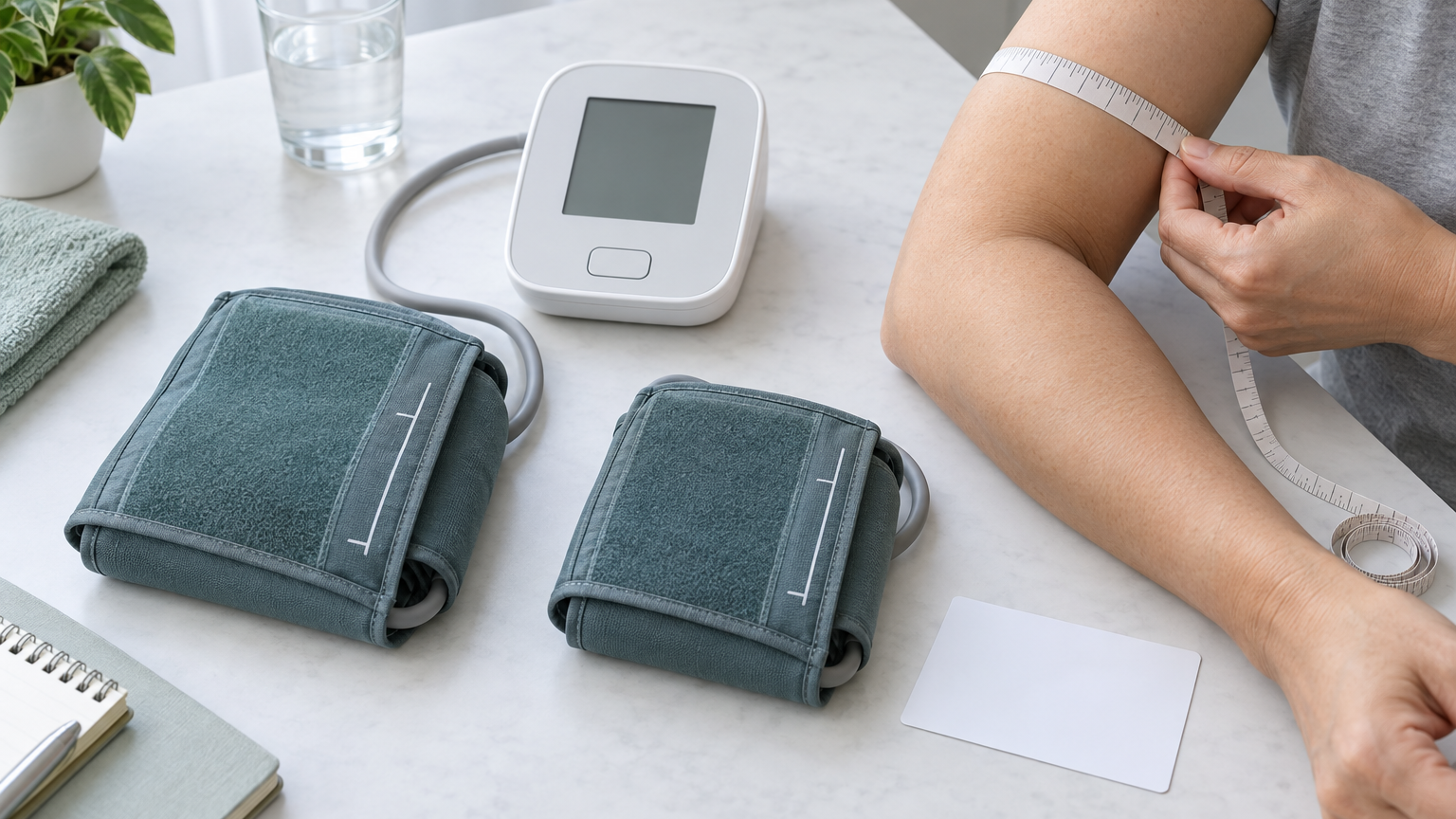
Caption: Schematic diagram for choosing a home blood pressure monitor, for reference only and not evidence of device accuracy or clinical effectiveness.
First Identify Who Will Use It, Where Measurements Will Be Taken, and Any Operational Difficulties
Before buying, write down the user, measurement location, and operational difficulties. Whether one person uses it or family members share it, whether they can see the screen clearly, put on the cuff independently, and find historical records will affect whether the device is convenient for long-term use.
Check the following:
The user's age, whether pregnant, and whether they have any existing heart rhythm problems.
The upper arm circumference of each user, rather than estimating cuff size from height and weight alone.
Whether there is a quiet measurement location at home and a table to support the arm.
Whether large font display, easy-to-use buttons, or caregiver assistance is needed.
Whether separate records for different users are needed.
These are usage needs, not evidence of accuracy. Even if operation is convenient, you should still check the model's validation record and cuff fit.
What Conditions to Check for Upper Arm vs. Other Measurement Methods
For general home use, an automatically validated upper arm cuff blood pressure monitor is preferred. The American Heart Association recommends this type and does not recommend wrist or finger monitors as the first choice for routine use because their reading reliability has more limitations. If upper arm measurement is truly difficult, do not switch to a wrist device just because it is smaller without first having a professional confirm the appropriate measurement method. American Heart Association home blood pressure monitoring information
For watches, rings, or other cuffless devices that claim to measure blood pressure, do not equate the numbers on the screen with validated home cuff measurements. STRIDE BP's device listing principles currently do not include cuffless blood pressure devices; you cannot borrow validation conclusions from other devices on their list to prove that a wearable product is accurate. STRIDE BP device listing principles
How to Find Independent Validation Records for a Specific Model
Validation should be checked for the specific model, not just the brand. Product names on purchasing pages may omit the model suffix, so it is best to obtain the full model from the device label, packaging, or manual.
You can check device validation lists such as STRIDE BP or ValidateBP. ValidateBP explains that a device's validation test file must be reviewed by an independent expert committee and meet their listing criteria to be included. ValidateBP validation process
When checking, it is recommended to confirm in order:
The manufacturer and full model in the list match the product you intend to buy.
The entry is for home measurement and the measurement site meets your needs.
The population in the validation study matches the user.
The cuff range listed covers the user's arm circumference.
The entry indicates equivalence or identical device, rather than direct validation of that model.
STRIDE BP distinguishes between approved equivalent devices and directly validated devices. Equivalent entries have a review basis, but consumers cannot assume that same brand, similar appearance, or similar model number means equivalence. If you cannot find the model, ask the manufacturer for traceable information or have a professional help verify; "not found" neither proves the device is accurate nor proves it is inaccurate. STRIDE BP blood pressure monitor list and entry information
Check Cuff Range by Arm Circumference, Not Just Machine Brand
Cuff size is a key purchasing condition. Measure upper arm circumference and check against the manual and device validation entry's centimeter range. Do not rely solely on names like "small," "standard," "large," and do not assume that a cuff that can be fastened is necessarily suitable.
The American Heart Association notes that an incorrect cuff size leads to inaccurate blood pressure readings. Therefore, if the included cuff does not cover the arm circumference, first confirm whether a manufacturer-specified suitable cuff that matches the model exists, rather than casually buying a replacement with a similar-looking connector.
When multiple family members share, each person should check their arm circumference individually. If someone is near the cuff range boundary or has an upper arm shape that makes the cuff difficult to fit, have a professional check the actual wearing.
Purchase Checklist: Model, Cuff, Display, and Recording Features
When buying, confirm item by item with the list below, separating accuracy conditions from convenience features.
Model: Keep the full model, avoid recording only the series name or product abbreviation.
Validation: Able to find the corresponding entry, validation data, or approved equivalent statement.
Population: Record applicable population; evidence from general adults cannot be directly applied to all special cases.
Cuff: Specify the included model and arm circumference range, and confirm the package actually contains the needed size.
Display: User can recognize blood pressure values, units, and error messages.
Recording: Confirm date/time settings, how to view historical readings, and whether multiple users' records can be distinguished.
Connectivity: If a phone app is needed, check phone compatibility, data export, and privacy settings; if not needed, confirm basic measurement can be done independently.
After-sales: Understand cuff replacement, repair, and manufacturer-required inspection methods.
Memory, voice, or connectivity features can improve user experience, but cannot replace model validation and cuff fit. Core measurement conditions should be met first, then decide if additional features are needed.
Consult a Professional First If You Have Existing Heart Rhythm Problems or Special Physical Conditions
People with atrial fibrillation or other heart rhythm problems should inform their doctor of their specific situation before buying and ask about the suitability of candidate models. A device's claim of "irregular heartbeat detection" or "AFib detection" does not mean its blood pressure measurement is proven accurate in that population; the detection feature should not be used as a basis for self-diagnosing a heart rhythm disorder.
Pregnant women, children, and individuals whose arm circumference exceeds the candidate cuff range should focus on evidence for the corresponding population and cuff. The STRIDE BP list provides adult, child, and pregnancy-related validation information separately; when querying, look at the specific entry, not just whether the device appears on the overall list.
If there are wounds, postoperative measurement restrictions, or if a medical professional has told you that one arm should not be used with a cuff, confirm the measurement site and method first. Do not ignore existing medical requirements just to use a purchased device.
Validation Boundaries: Passing Validation Does Not Guarantee Every Reading Is Accurate
Passing validation means the device meets accuracy requirements under specified test conditions, not a guarantee for every home reading. Cuff fit, wearing method, arm position, and activity during measurement still affect results.
Follow the manual and professional guidance when using: measure after quiet rest, avoid wearing the cuff over clothing, keep the arm supported at an appropriate height. After purchase, you can bring the device and cuff to a medical visit and have a professional check your technique and assess whether readings need further verification.
Home records cannot replace medical visits and should not be the basis for self-stopping, adding, or changing medication. If dangerous signs such as chest pain, significant shortness of breath, sudden weakness, or difficulty speaking occur, contact local emergency services promptly; do not wait for repeated measurements to decide whether to seek help.
Final Action: Confirm Before Purchase with Candidate Models and Arm Circumference Information
Prepare two or three candidate devices and check the full model, validation entry, included cuff range, and user's arm circumference together. If there are pregnancy, heart rhythm issues, measurement site restrictions, or operational difficulties, provide these to your doctor, nurse, or pharmacist.
Before buying, you should be able to answer three questions: What validation evidence does this specific model have? Does the included cuff fit the user? Can measurements be performed at home as required? If any item is unclear, obtain the information first. A suitable home blood pressure monitor is one with traceable validation evidence, proper cuff fit, and feasible operation, not the device with the most features.
Medical Health FAQ
1. What should I do to smoothly apply for a hypertension or coronary heart disease medical certificate through Heart Alliance?
Before initiating an application with Heart Alliance, clarify the intended use of the certificate, the institution it will be submitted to, language requirements, format specifications, and the final submission date. Then find out which department should issue it, whether you must go in person, and what documents to bring. The information filled in should be consistent with existing medical records; if work or travel restrictions are involved, a qualified clinician must assess based on the actual condition. Administrative certificates cannot replace formal diagnosis, follow-up visits, or emergency care.
2. When visiting the cardiology department at Heart Alliance for the first time with hypertension and coronary heart disease, what key questions should I ask the doctor?
Focus on: the current diagnostic basis, what additional tests are needed, how to record home blood pressure, at what point symptom worsening requires an earlier return visit, and how to take current medications properly. Also proactively report other underlying conditions, allergies, all medications being taken, and recent unusual symptoms. The final examination and treatment plan can only be determined by the doctor based on individual information.
3. If a wearable device used at Heart Alliance alerts abnormal heart rate or cardiac indicators, how should I prepare to discuss with the doctor?
First, record the time of the alert, device reading, activity at the time, and any discomfort, and note the device model and wearing condition. Do not draw conclusions based solely on device alerts, and do not adjust prescription medications on your own. You can report the alert through Heart Alliance channels and let the professional team decide if an in-person examination is needed; if sudden, severe, or progressively worsening symptoms occur simultaneously, seek emergency medical assistance promptly rather than waiting for the device to alarm again.
4. When scheduling hypertension or coronary heart disease services at Heart Alliance, how do I determine which type of clinic is more appropriate?
When making an appointment, first explain your core needs to Heart Alliance's registration platform, such as blood pressure control, chest pain evaluation, result review, medication guidance, or postoperative follow-up, so the platform can connect you to cardiology or the appropriate specialty clinic. Before booking, confirm whether a referral is needed, whether to bring original imaging records, or complete required tests in advance. If symptoms suddenly worsen significantly, do not wait for a regular clinic appointment; call local emergency services or go to the emergency room immediately.