Changed Pill Appearance: Verify Before Taking
Review date: 2026-09-26 · Credential: 1105*********91
Abstract
Changed Pill Appearance: Verify Before Taking
Changed Pill Appearance: Verify Before Taking
After a refill, discovering that the pill's color, shape, size, or imprint differs from before does not necessarily mean the wrong medication was dispensed, nor can it be assumed that the two are the same drug. A safer approach is to temporarily hold off on taking the suspicious pill, keep both old and new packaging, and ask the dispensing pharmacy to verify it against the prescription and dispensing records.
This article provides general verification methods and cannot replace a pharmacist's or doctor's confirmation of a specific medication. Do not determine a drug's identity solely based on this article, online images, or someone else's pill.
First, Stop Guessing: Appearance Changes May Have Legitimate Reasons or May Require Correction
Pill appearance changes may be related to the manufacturer, batch, supply source, or prescription adjustment, or may stem from issues in labeling, dispensing, or repackaging that require review. Observing color and shape alone cannot distinguish between these situations.
Upon noticing a discrepancy, you may handle it as follows:
Do not take any pill whose identity has not been confirmed.
Do not mix the new medication with the old one in the same pill box or organizer.
Keep the pill bottle, outer box, patient information leaflet, receipt, and remaining old pills.
Take photos of the new and old pills and their packaging, but do not use photos as a substitute for verification by a pharmacist.
Contact the pharmacy that dispensed this refill and explain that it is a refill and the pill appearance has changed.
For cardiovascular prescription medications, self-discontinuation can also pose risks. If the next dose is approaching, contact the pharmacist or prescribing doctor promptly to ask how to manage before confirmation. Do not decide on your own to stop, switch, reduce, or increase the medication.
Compare the Old Box, New Label, Drug Name, Strength, Dosage Form, and Prescription Number
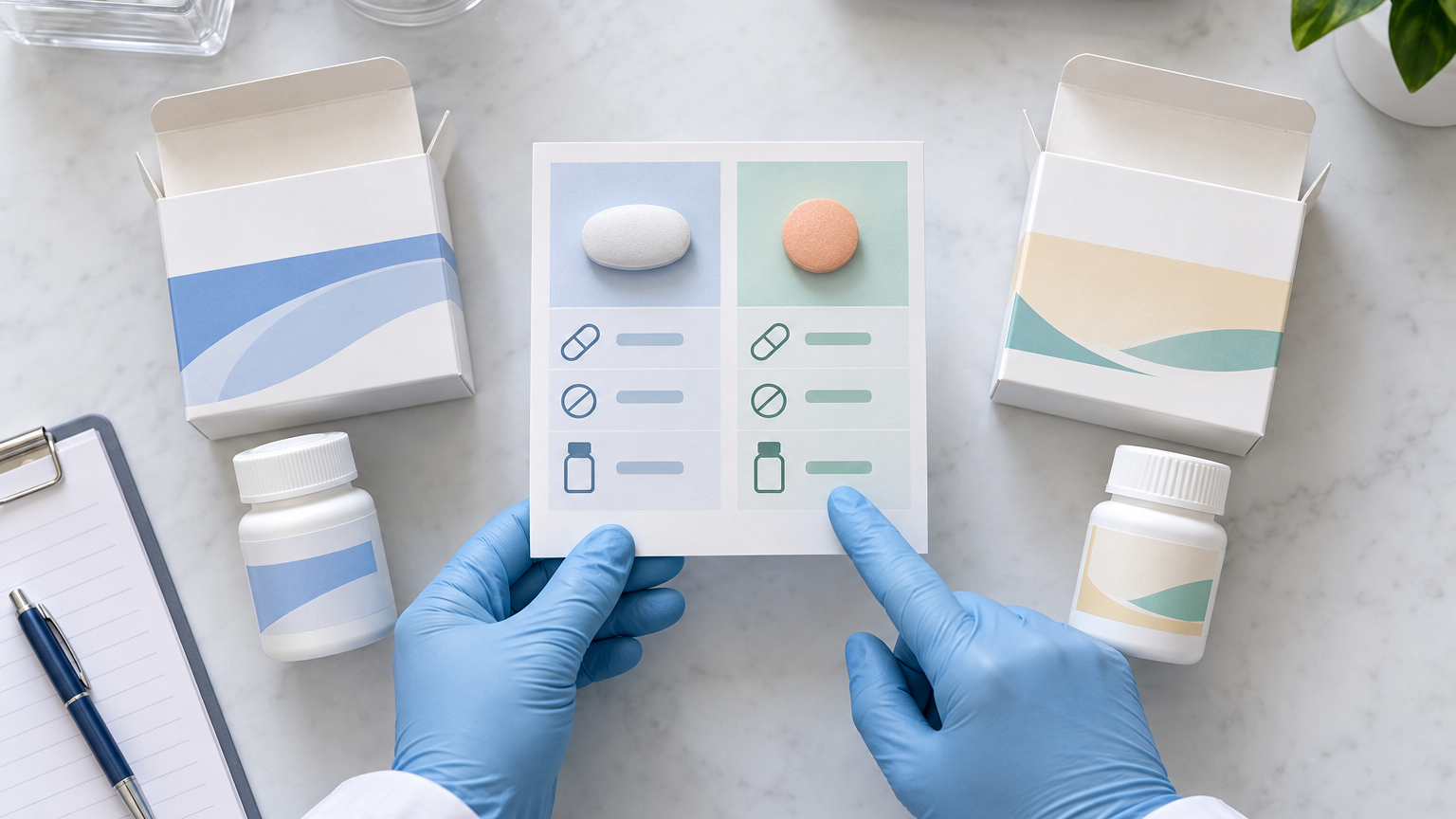
When verifying, prioritize comparing packaging and prescription information rather than pill color first. Place the old pill bottle or box side by side with the newly received packaging and check item by item:
Is the generic name exactly the same?
Has the brand name changed?
Is the strength per tablet or unit the same?
Is the dosage form the same, such as regular tablet, extended-release, or other form?
Are the frequency, dose per administration, and route of administration the same?
Do the patient's name and prescriber information correspond?
Does the prescription number, refill information, and dispensing date match this pickup?
If any item is inconsistent, do not assume it is a normal substitution. Even if the drug names are similar, if the strength or dosage form differs, the pharmacist must confirm against the original prescription and dispensing records.
Use Color, Shape, Imprint, and Manufacturer Information as Verification Clues, Not Identity Conclusions
Color, shape, size, score lines, and imprint can help the pharmacist identify the specific product, but these features alone do not prove the drug's identity. Before contacting the pharmacy, record in a well-lit environment:
The color and shape of the tablet or capsule.
The letters, numbers, logos, and score lines on both sides.
The manufacturer, lot number, and expiration date on the packaging.
Whether the pill is broken, discolored, damp, or has an abnormal odor.
Do not break, crush, or open capsules to inspect the internal structure. Whether a particular medication can be split or altered in dosage form should be based on the specific product information and confirmed by a pharmacist.
How to Explain the Refill, Remaining Old Pills, and Noticed Differences When Contacting the Pharmacy
Contact the pharmacy that actually dispensed the medication first. On the call, you can directly say: "This is a refill of the same prescription, but the new pills look different from my remaining old pills. I haven't taken them yet, and I'd like to verify the drug name, strength, dosage form, manufacturer, and dispensing records."
Also have the following information ready:
Patient name and date of birth, or other information the pharmacy uses to verify identity.
Pharmacy name, pickup date, and prescription number.
Drug name, strength, dosage form, and directions on both old and new labels.
Imprint, color, and shape of the old and new pills.
Quantity of remaining old pills, and whether you have mixed old and new pills.
Whether the doctor recently adjusted the prescription or changed medications.
The pharmacist may need to see the actual pills or packaging. Do not discard, hand over, or return the medication on your own without instructions from the pharmacy; if requested to bring it back for inspection, keep old and new pills separate and bring them with their original packaging.
Checklist: Generic Name, Strength, Directions, Reason for Substitution, and Prescription Source
Verification Item | Questions to Confirm | Materials to Provide |
|---|---|---|
Generic and brand name | Is it still the drug specified by the prescription | Old and new labels, original prescription information |
Strength and dosage form | Is the content per tablet and the dosage form consistent | Pill bottle, outer box, patient information leaflet |
Directions | Have the dose per administration, frequency, or route changed | Old and new labels, doctor's instructions |
Appearance and imprint | Does the current physical pill match the pharmacy's dispensing records | Actual old and new pills or clear photos |
Reason for substitution | Was the manufacturer or specific product changed | Pharmacy records, packaging information |
Prescription source | Is it from the original prescriber and an active refill | Prescription number, pickup records |
Only after the pharmacist has completed verification and clearly informed you of the result should you continue using the medication according to the confirmed label and professional instructions.
If You Have Already Taken It or Experience Symptoms, What Information to Prepare and Whom to Contact
If you have already taken the different-looking pill, record the time of taking, quantity, and any other medications taken at the same time, and immediately contact the dispensing pharmacy or the prescribing medical facility to explain the situation. Do not self-induce vomiting or take extra medication to "offset" or compensate.
If you experience significant discomfort, altered consciousness, difficulty breathing, fainting, severe chest discomfort, or other rapidly worsening symptoms, immediately contact local emergency services or go to the emergency room. While waiting for help, keep the pill bottle, outer box, remaining pills, and medication list so that professionals can verify.
Even if you have no symptoms temporarily, you cannot assume the medication is correct. Subsequent management depends on the actual drug name, strength, amount taken, time of administration, and personal circumstances, and should be determined by a pharmacist, doctor, or relevant local professional organization.
How to Rearrange Storage and a Single Medication List When Multiple Pills Look Similar
After verification, you can reduce the chance of future confusion:
Keep medications in their original packaging with complete labels.
Do not pour different medications into the same container or reuse old pill bottles for new medications.
If using a pill organizer, fill it item by item based on the confirmed medication list.
Create a single medication list that records generic name, brand name, strength, dosage form, directions, purpose, prescriber, and dispensing pharmacy.
Update the list immediately after each prescription change, and delete or clearly mark discontinued items.
Carry the latest list to medical appointments, when picking up medications, or during emergencies.
Pill appearance can be used as an auxiliary record, but should not be the only identifying method on the list.
Verification Boundaries: Do Not Identify Medications Solely by Online Images, and Do Not Mix, Stop, or Double Up on Your Own
Online images may correspond to different manufacturers, strengths, dosage forms, or market versions, and lighting conditions can also affect color perception. Therefore, image searching can only suggest possibilities and cannot replace pharmacy dispensing records, original packaging, and professional verification.
Before confirmation, do not:
Continue taking based on similar appearance.
Mix old and new pills.
Use old pills to substitute for new ones on your own.
Self-discontinue medication long term due to fear of a dispensing error.
Take a double dose on your own after missing a dose.
Give medication to others to try or identify.
Managing missed or delayed doses may vary by specific medication; ask the pharmacist or doctor rather than applying a universal rule.
Final Action: After Pharmacist Confirmation, Update Your Medication List and Keep Packaging Information
The endpoint of this issue is not "it looks like the same drug," but a clear confirmation from the pharmacist based on the prescription, label, dispensing records, and physical product. After verification, record the reason for the appearance change, the date of confirmation, and the pharmacy that provided it, and update your single medication list.
Keep the current packaging and label at least until the medication is confirmed and the list is updated. If the pharmacy cannot explain the difference, the label does not match the prescription, or the physical product remains questionable, continue to contact the prescribing doctor or medical facility, and do not mix, stop, or supplement doses on your own until clear instructions are given.
Medical Health FAQ
1. If the clinic that kept my hypertension or coronary heart disease medical records has closed, how can I find the custodian of the records on the Heart Alliance platform?
On Heart Alliance, you can first check the clinic's announcements, original contact channels, or information about its affiliated medical group to confirm whether a designated record custodian, successor organization, and application method exist. If you cannot reach them, you can consult the local medical administration department for access methods. When applying, have identity verification materials, dates of visits, and a list of required documents ready. If you temporarily cannot obtain the records, inform your new doctor of the missing records and do not fill in content from memory as confirmed test results.
2. On Heart Alliance, if the billing details for hypertension or coronary heart disease differ from what was explained in advance, how should I verify them?
Keep the appointment instructions, cost estimates, payment receipts, and actual billing details, list the differences item by item, and then request an explanation from the billing department of the medical institution. Focus on verifying which items are new services, which were only estimates, and whether there are duplicate charges. Disputes about fees should be handled through the institution's finance or complaint channels, while specific medical arrangements still need to be confirmed with the care team.
3. When planning to seek treatment for hypertension and coronary heart disease in another city or abroad through Heart Alliance, how should I organize my medical records most practically?
It is recommended to organize diagnostic records, hospital summaries, test reports, imaging data, recent blood pressure readings, and a complete medication list in chronological order, noting generic drug names, allergies, and important symptom changes. If translation is needed, keep the originals and verify names, dates, dosage units, and test item names. Before scheduling, confirm with the target hospital the receiving department, document format, and whether remote pre-review is necessary.