Build a Routine to Reduce Missed Heart Medicines
Review date: 2026-10-11 · Credential: 110*********664
Abstract
Build a Routine to Reduce Missed Heart Medicines
Build a Routine to Reduce Missed Heart Medicines
You set an alarm, but still forget when things get busy. You pick up your pill organizer, then cannot remember whether you already took your medicine. When designing reminders, start by separating two questions: how to remember what you need to do, and how to confirm that you actually did it.
This article introduces ideas for daily reminders and recordkeeping for Heart Alliance readers. It does not evaluate the clinical effectiveness of any particular tool or provide instructions for making up missed doses, stopping medicines, or changing doses. Whether a pill organizer is appropriate and whether a medication time can be linked to a daily activity must be checked against your actual prescription and your pharmacist's guidance.
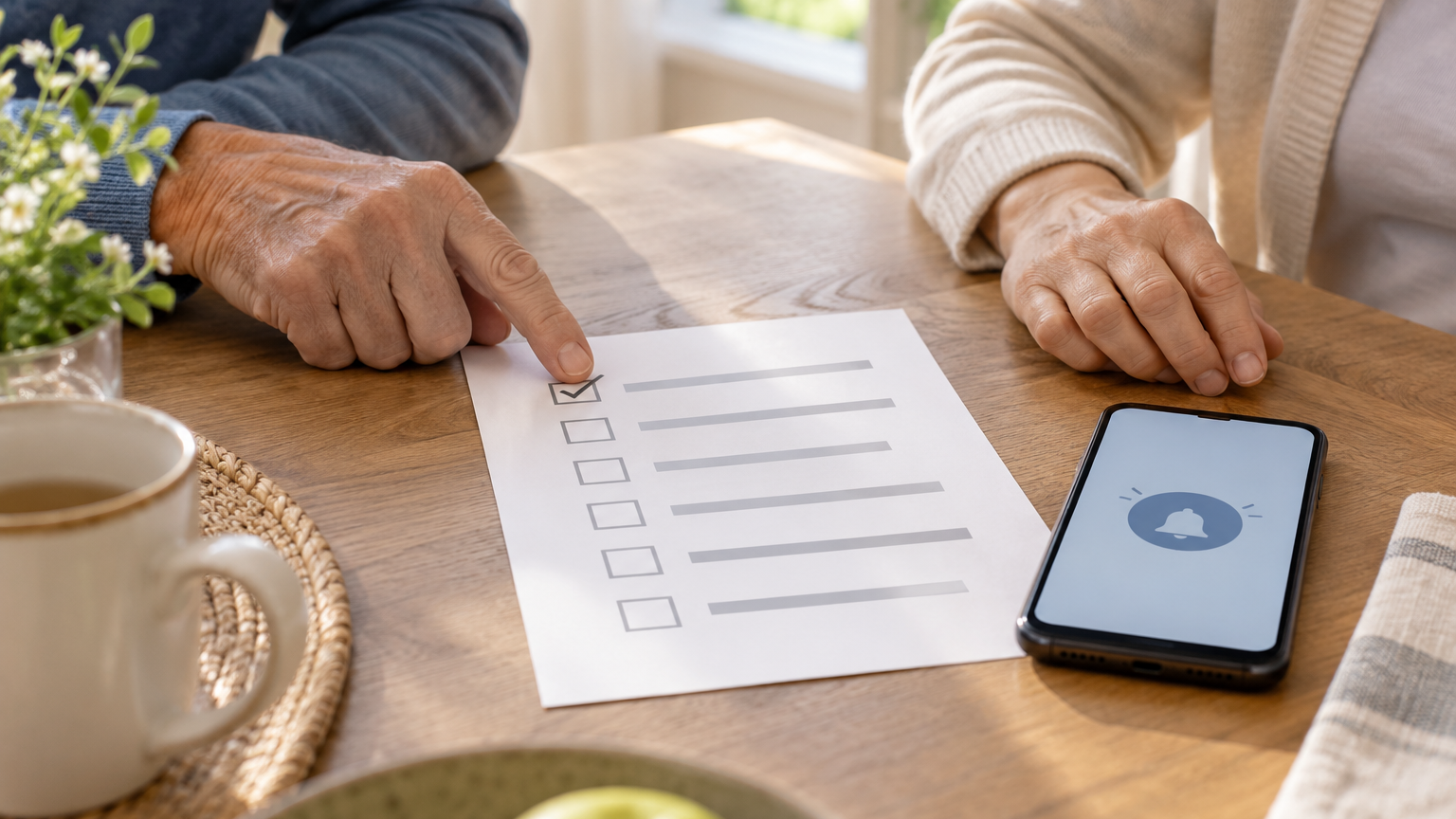
This illustration explains how to design daily reminders. It is not clinical evidence or an individual medication plan.
Distinguish a Missed Dose From Uncertainty About Whether You Took It
"Definitely not taken" and "Cannot remember whether taken" should be recorded separately. The first is a known missed dose; the second means the medication status is uncertain. Do not mark an uncertain dose as "taken" or "not taken" just to complete the record.
You can keep three clear statuses in your record: confirmed taken, confirmed not taken, and uncertain. An alarm going off, a notification being dismissed, or someone taking the medicine out does not confirm that it was taken.
If you cannot remember, first check that day's record and contact anyone who actually helped with your medicines. If you still cannot confirm what happened, tell your pharmacist or prescribing clinician, "I'm not sure whether I already took it," and ask what to do next. Do not decide to take another dose based on a guess.
Ask Your Pharmacist How to Handle a Dose You Already Missed
Before setting up new reminders, address any dose you have already missed separately. "Heart medicine" is not a specific enough drug name to determine how to handle a missed dose. This article cannot provide a single timing rule that applies to every prescription.
When contacting your pharmacist, try to have the following information ready:
The exact medication name and strength on the package, along with the prescription directions.
The scheduled dose time, the current time, and the most recent time you can confirm taking it.
Whether you definitely missed the dose or are unsure whether you took it, and whether you may have taken an extra dose.
Whether you currently have any symptoms and whether your medicines or medication schedule have changed recently.
Ask your pharmacist to explain what to do for the specific medicine and confirm how to schedule the next dose. Do not combine two doses on your own or substitute someone else's experience with a missed dose for your own medication instructions.
If you develop sudden or severe symptoms, promptly contact local emergency services or a medical professional. Do not wait for a reminder tool to assess the situation. If you suspect you took an extra dose or the wrong medicine, also contact a professional promptly to clarify what happened.
Identify Where Things Go Wrong on Workdays, Away From Home, and After Medication Changes
Think back to the most recent missed dose and write down what happened in order: whether the reminder appeared, whether the medicine was within reach, whether you were interrupted, and whether you recorded completion afterward. Compared with simply telling yourself to "be more careful," this kind of record makes it easier to identify the step that needs to change.
On workdays, check whether reminders consistently arrive during your commute or meetings. When going out, check whether you have prepared enough medicine in advance and can carry and store it as directed. After a medication change, check that phone reminders, paper lists, and the information your caregivers have are all updated.
Also distinguish "I forgot" from "I did not take it because I was worried." If the reason is discomfort, cost, difficulty getting your medicine, or not understanding why you need it, explain the specific difficulty to your pharmacist or clinician. Adding more alarms cannot solve these problems.
Connect Reminders to a Consistent Daily Activity
First confirm your prescription requirements, then look for a suitable daily cue. For example, you might link checking your medication record to a regular morning activity. But the time you check the record is not necessarily the time you should take your medicine. If there are requirements involving food, an empty stomach, spacing between doses, or other instructions, ask your pharmacist whether the arrangement is appropriate first.
One routine to try is to check your record after a regular activity, follow your confirmed medication schedule, and record the dose immediately after confirming that you took it. If you cannot take it at that time, leave it marked as pending. Avoid marking it complete early just to clear the notification.
Reminder text can be brief and specific, such as "Check evening medication record." You can decide whether to display medication names on your lock screen based on your privacy needs.
What to Check Before Using Pill Organizers and Phone Reminders
Whether a pill organizer is suitable depends first on whether your specific medicines can be repackaged and stored that way. Before filling one, ask your pharmacist to verify the relevant requirements. Do not assume every medicine can be removed from its original packaging. Keep the medication names, strengths, and directions so you can check them later.
If you use a pill organizer, make it clear who fills it, which medication list they follow, and how everything will be checked again after a medication change. An empty compartment is only a clue to help verify what happened. If pills may have been removed early or moved by someone else, an empty compartment alone cannot confirm that they were taken.
For phone reminders, check notification permissions, sound or vibration settings, and whether silent mode affects alerts. After setup, test a notification to see whether it arrives correctly. For someone who rarely checks their phone, a paper record or an agreed reminder from a caregiver may fit their daily habits better.
You do not need many tools. Start by choosing one medication record that everyone agrees to use. Other tools can simply remind people to check it, helping avoid separate records that are updated independently.
Agree With Caregivers on How to Confirm Doses to Reduce Duplicate Dosing
When several people are involved, decide in advance who gives reminders, who helps prepare medicines, and who confirms and records each dose. Be especially clear about the difference between "A reminder was given" and "The dose was confirmed taken." These statements mean different things.
Agree to use clear wording that includes the date and time of day, such as "Today's evening dose has been confirmed taken and recorded." If only a reminder was sent, write "Reminder given; not yet confirmed." Do not mark the dose complete on behalf of the person taking it.
When caregivers hand off responsibility, review the same record together and clearly flag any uncertain entries. If records conflict, verify the facts and then consult a professional. Do not fill in entries by guessing just to make the handoff look complete.
General Reminder Tools Cannot Decide Whether to Make Up a Dose or Change the Amount
Alarms, calendars, and basic tracking apps can provide time reminders and store records. They cannot determine whether you need to make up a missed dose, whether you can change the time you take a medicine, or whether your dose should be adjusted.
Contraindications, side effects, interactions, and special instructions still need to be checked against the information for the specific medicine and professional guidance. Do not treat an app's default times or general prompts as personalized advice on these issues.
After a prescription changes, update reminders using the confirmed new plan and disable the corresponding old reminders. If the old and new instructions conflict, check with your pharmacist or prescribing clinician first. Do not combine them into a new plan yourself.
Try the Routine for a Week and Ask Your Pharmacist to Review Remaining Trouble Spots
You can start by spending a week observing whether the routine is practical to follow. One week is simply a period for gathering questions. It cannot establish a tool's effectiveness or assess treatment outcomes.
Each day, briefly record whether you noticed the reminder, whether you could act on it at the time, whether completion was confirmed, and where any interruption occurred. Try to record events as they happen. You do not need to fill every blank afterward from memory.
After a week, bring your current medication list and these records to your pharmacist to review the steps that still tend to go wrong. Is the reminder poorly timed, is the process too complicated, is preparation for time away from home inadequate, or are the medication instructions still unclear? Adjust one specific issue at a time, then observe whether the routine becomes easier to follow.
If you miss another dose, are unsure whether you took one, or suspect you took an extra dose, seek advice promptly rather than waiting until the week ends. Daily reminders help you remember, confirm, and communicate. Specific medication decisions should still be made with a professional who understands your actual prescription.