Add Nuts to Snacks Safely
Review date: 2026-09-21 · Credential: 110*********564
Abstract
Add Nuts to Snacks Safely
Add Nuts to Snacks Safely
Nuts can be a convenient snack option. For people concerned about cardiovascular health, the key is what they replace, how much is actually eaten, and whether they are suitable for you personally. This article provides general dietary education and cannot replace advice from a doctor or nutrition professional based on individual conditions.
Clarify the Goal First: Replace Your Usual Snack, Don't Treat Nuts as a Heart Medicine
First choose a snack you often eat, then consider replacing it with nuts. For example, if you usually have a bag of potato chips in the afternoon, try switching to a pre-portioned serving of plain nuts. If you keep your original snack and additionally grab a handful of nuts, you haven't completed the replacement.
Nuts are food, not a medicine for treating heart disease or lowering cholesterol. People undergoing treatment should continue following their original medical plan and not stop or adjust medication on their own just because of changing snacks.
Review High-Frequency Snacking Scenarios: Work, Commute, Nighttime, and Social Gatherings
Think back over the past week: During work breaks, did you often open a drawer to find snacks? While commuting, did you buy packaged food on the go? At night, did you eat while watching a screen? At social gatherings, did you keep taking food from a shared large plate?
First note the two or three scenarios that occur most often, and what you would normally eat at those times. When preparing nuts, put them where you will actually use them, while keeping the option open: sometimes you're not hungry, so there's no need to eat just to stick to a plan.
How to Compare Label Information for Plain, Flavored, Mixed, and Nut Butter Products
When shopping, first look at the ingredient list, then the serving weight on the nutrition label. Plain nuts usually make it easier to judge what has been added; for flavored varieties, pay attention to sodium and added sugars. For mixed products, also check for sugar coatings, chocolate, or other ingredients; don't judge solely by the word "nuts" on the front of the package.
When choosing nut butter, similarly compare ingredients, serving size, sodium, and added sugars. The American Heart Association recommends comparing product labels and prioritizing options lower in sodium, with no added sugars and no tropical oils. Serving sizes may differ between products, so confirm weights are similar before comparing. People allergic to a particular nut or peanut should not assume safety based on the product name; they must check specific ingredients and allergen labeling each time.
Portioning Checklist: How to Use Fixed Containers to Reduce Mindless Refills
The American Heart Association considers a small handful, about 28 grams of whole nuts, or about two tablespoons of nut butter, as a common reference serving. This is not a goal everyone must meet; if you have personal dietary restrictions, follow professional advice.
When portioning, you can follow this sequence:
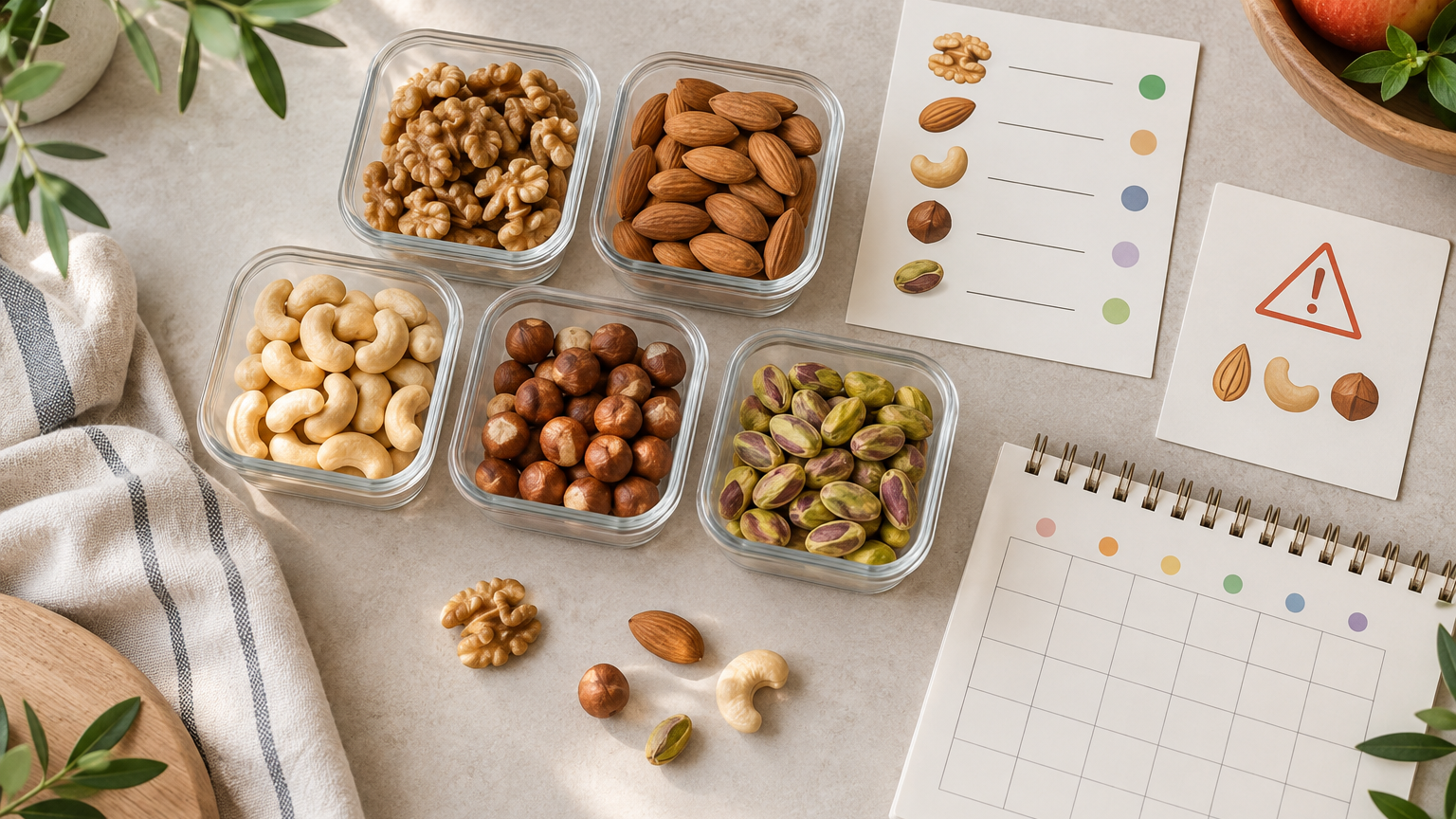
First read the serving weight on the package, then use a kitchen scale or a fixed small container to measure the planned amount.
Take out only one serving at a time, and put the large package away to avoid repeated refills while working or watching a screen.
Label the container with the type of nut; when sharing food with others, avoid mixing different types in unidentifiable boxes.
Store according to package instructions. If there is a noticeable off odor or bitter taste, do not continue eating.
One-Week Replacement Plan: Prepare One Realistic Option for Each of Three High-Frequency Scenarios
Choose the three most frequent scenarios and prepare only one easy-to-implement option for each. For example: On weekday afternoons, put a pre-portioned serving of plain nuts in your bag; before commuting, prepare a small container to avoid buying your usual snack on the go; at night, if you truly need a snack, first pour one serving into a small bowl, then put away the large package. At gatherings, you can also take one serving onto your own plate first to avoid continuously grabbing from the shared bowl.
After one week, review your notes: When did nuts actually replace your old snack? When did they just add extra food? Adjust your purchasing amount and placement accordingly; this is more useful than insisting on eating them every day.
How to Ensure Safety with Allergies, Swallowing Difficulties, Young Children at Home, or Special Dietary Requirements
People with known allergies to peanuts or a specific tree nut should avoid those foods and check labels according to their allergy management plan. If after eating you experience severe symptoms such as difficulty breathing, throat tightness, significant swelling of the tongue or lips, or fainting, contact local emergency services immediately; if a healthcare provider has given you an emergency plan, follow it.
Whole or chopped nuts, as well as large chunks or spoonfuls of nut butter, can cause choking in young children. If there are young children at home, keep nuts out of their reach and do not give adult snacks directly to them. People with swallowing difficulties should not try nuts as a snack on their own; they should first confirm appropriate food textures with the professional managing their swallowing or diet.
If a doctor or nutrition professional has given specific dietary instructions due to your individual condition, follow those instructions for selection and portion size.
How to Recognize Overblown Claims Like "Superfood" or "Cleans Blood Vessels"
Claims such as "cleans blood vessels," "eating this will lower cholesterol," or "replaces medication" make the effect of a food seem overly certain. When you see such promotions, ask: Does it discuss overall diet or a single product? Do the studies look at average changes in populations or clinical outcomes like heart attacks? Does the promotion state the applicable population and limitations?
Labels like "natural" or "plain" on packaging also cannot replace the ingredient list, nutrition label, and allergen statement. Buying decisions should return to the actual content of the product and your own dietary needs.
Verify the Boundaries: Population Studies on Nuts Cannot Guarantee Changes in Your Cholesterol or Heart Outcomes
Systematic reviews on nuts and seeds have found that in observational population studies, higher intake is associated with lower risk of certain cardiovascular diseases; some intervention trials have also observed average changes in blood lipid markers. But correlation does not prove that eating nuts alone can reduce your personal heart disease risk, and average blood lipid results cannot predict any individual reader's follow-up values.
The populations, types of nuts, intake amounts, foods replaced, and overall diets in studies may differ from your personal situation. Therefore, a safer goal is to treat nuts as an optional snack and observe whether it helps you complete your intended snack replacement; blood lipid results and cardiovascular risk should still be assessed by professionals in the context of your overall situation.
Final Action: Complete One Purchase, Three Portioning Sessions, and Track Whether You Truly Replaced Old Snacks
This week, buy one type of nut you can safely eat and with clear label information, portion it into three servings as planned, and use them for three high-frequency snacking scenarios. Each time, briefly note what you originally intended to eat, what you actually ate, and whether you also ate your original snack.
If you fail to complete the replacement in one of the three times, don't compensate by eating more nuts. Find the reason and adjust the placement, timing, or portion for your next attempt.
Frequently Asked Questions for Medical Health
1. When viewing cardiovascular test reports at the Heart Alliance, how should I interpret abnormal markers and take appropriate action?
For abnormal markers in cardiovascular test reports issued by the Heart Alliance, they must be interpreted in the context of the patient's symptoms, medical history, medications, and multiple test results; you cannot judge the severity of the condition based solely on a single arrow or reference range. It is recommended to write down your most pressing questions before your appointment, and at your follow-up, confirm with the Heart Alliance doctor whether the abnormality requires further testing, whether it has changed compared to previous results, and whether these abnormalities will affect your current treatment plan. If acute severe symptoms occur, seek medical attention immediately and do not wait for the report interpretation appointment.