Add Lentils to a Heart-Healthy Week
Review date: 2026-09-17 · Credential: 1101*********81
Abstract
Add Lentils to a Heart-Healthy Week
Add Lentils to a Heart-Healthy Week
Beans can be part of a daily diet, but they should not be treated as a standalone solution for lowering cholesterol, preventing heart disease, or replacing medication. A more prudent approach is to start with small, infrequent servings, gradually replacing some processed meats, fatty meats, or refined staples with beans while monitoring digestive tolerance, and continuing to follow the medication and dietary plan prescribed by your doctor.
This article provides general dietary arrangement ideas and is not intended to diagnose diseases, nor can it replace individualized advice from a nutritionist or physician.
Set a Goal First: Increase Bean Frequency, Don't Treat a Single Food as a Cholesterol-Lowering Drug
Before starting, you can write down a specific and gentle goal, for example: "This week, choose three meals to add a small amount of beans, and decide whether to increase next week based on tolerance." Compared to "eating a large bowl of beans every day for a week," this goal is easier to implement and makes it easier to determine whether bloating, changes in bowel movements, or other discomfort are related to the adjustment.
The role of beans should be understood within the overall diet. The plate also needs to include vegetables, fruits, whole grains, appropriate protein sources, and total energy. People who have been diagnosed with hypertension, coronary heart disease, heart failure, diabetes, or dyslipidemia should not stop taking medication, reduce medication, or delay follow-up appointments on their own just because they are increasing bean intake.
Take Stock of Replaceable Positions in Current Staples, Meats, Eating Out, and Emergency Meals
First, record your diet for two or three typical days and one weekend day; there is no need to rush into calculating nutrients. Focus on identifying the following positions:
Which meals often feature sausage, bacon, luncheon meat, fatty meat, or other processed meats as the main component.
Which meals consist only of refined staples, with few vegetables and other foods.
Which restaurant dishes are high in salt, heavy in sauce, or oversized in portion.
Which fast foods, takeout, or snacks you typically rely on when busy.
Whether you already have canned beans, frozen beans, or easy-to-cook dried beans at home.
Replacement does not have to be done all at once. You can first replace some ground meat with lentils, replace some rice with a combination of beans and grains, or add a small amount of chickpeas to salads, soups, and stews. The "replacement" here is about adjusting the composition of the plate, not adding an entire extra serving of food.
Understand the Actual Role of Lentils, Chickpeas, and Common Dried Beans on the Plate
Lentils, chickpeas, and common dried beans such as kidney beans and black beans can be part of mixed dishes, soups, stews, or staple combinations. They are neither a complete substitute for vegetables nor equivalent to medication.
Lentils are generally suitable for adding to soups, curries, or dishes with ground meat; chickpeas can be used in salads, stews, or made into smooth-textured hummus; other dried beans can be paired with grains, vegetables, and small amounts of meat. Choices should take into account cooking time, chewing and swallowing ability, personal taste, and any dietary restrictions given by your doctor.
If you rarely eat beans in the past, the focus is not on finding the "best" variety but on first identifying one option that is easy to purchase, easy to cook, and acceptable for long-term consumption.
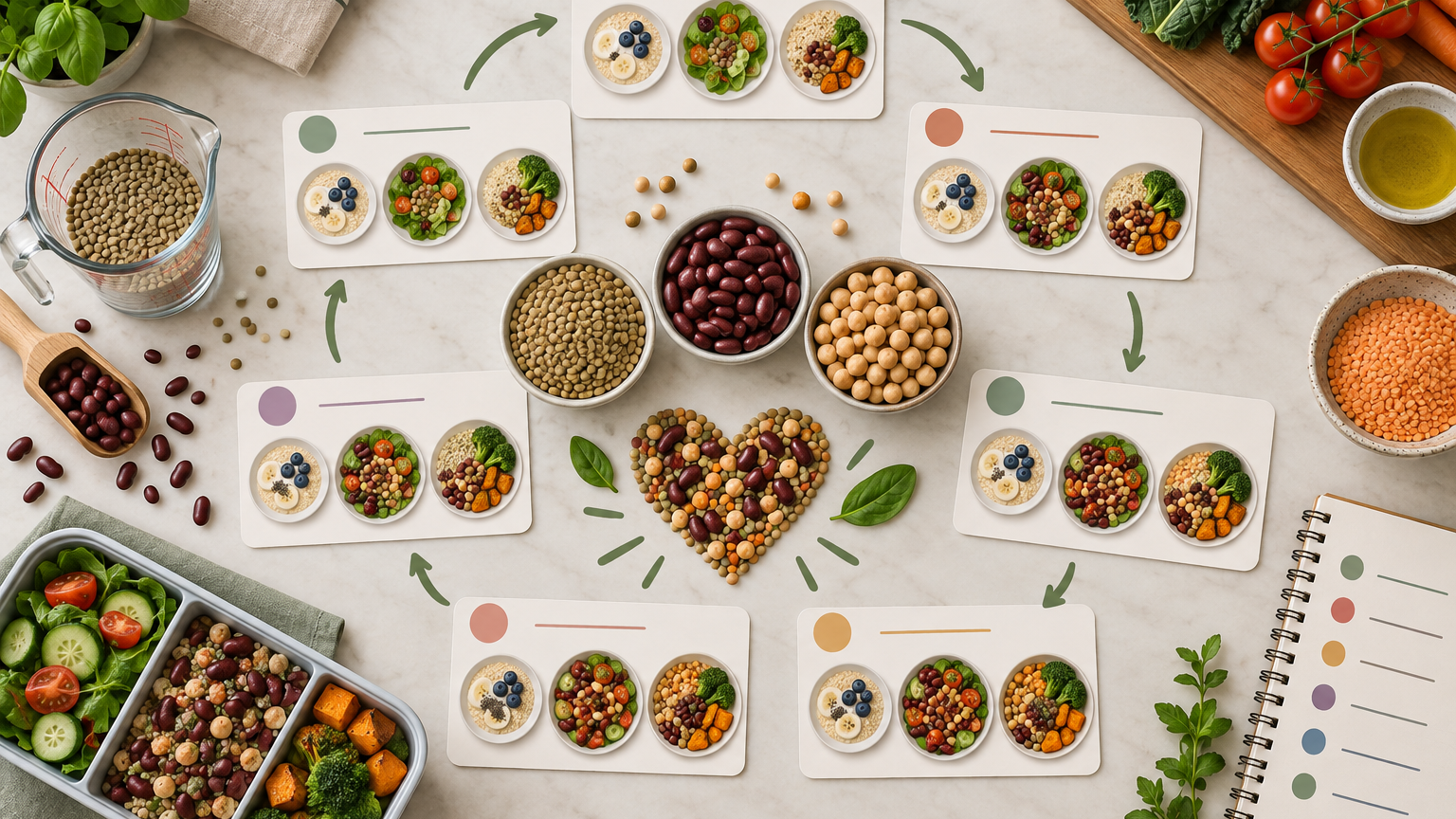
Gradual Progression Table: Start with Three Meals of Smaller Portions and Lower Frequency
Below is an execution template, not a fixed prescription. Specific portions should be adjusted based on appetite, total energy needs, blood sugar management goals, kidney function, and digestive tolerance.
Time | Example Arrangement | Key Observations |
|---|---|---|
Days 1 to 2 | Choose one meal and add a small amount of well-cooked soft lentils or bean paste | Abdominal bloating, pain, bowel movements, and satiety |
Days 3 to 4 | If no obvious discomfort, replace some meat or staple with beans in another meal | Whether the plate is too much to finish or causes stomach discomfort due to increasing too much at once |
Days 5 to 7 | Arrange a third meal containing beans, continue to keep portions small and spread across different days | Eating-out choices, meal prep convenience, and whether symptoms are acceptable |
If mild bloating occurs, you can pause increasing the portion, return to the previous tolerated arrangement, and check whether you may have suddenly increased multiple high-fiber foods at the same time. If abdominal pain persists, vomiting, marked abdominal distension, inability to pass stool or gas, or other severe discomfort occurs, contact a healthcare professional promptly.
Design Easy-to-Execute Combinations for Breakfast, Work Meals, and Dinner
Breakfast does not necessarily have to include beans. If personally acceptable, you can pair a small amount of low-sodium bean paste with whole-grain toast or soft staple, and keep fruit or vegetables. People who need to control blood sugar should consider beans together with carbohydrate-containing foods such as bread, porridge, and rice in the entire meal, and should not ignore total amounts because of the "healthy" label.
Work meals can be portable combinations, such as a small amount of chickpeas with vegetables and grains, or adding beans to soups and stews. When buying ready-made meals, pay attention to sodium content, sauce, and actual portion size, rather than just looking at whether the dish name contains "beans" or "plant."
For dinner, you can replace some ground meat with lentils, or make a mixed meal of beans, vegetables, and grains. If prone to nighttime bloating, you can schedule the first attempt during the day to observe reactions.
How to Choose Canned, Frozen, and Dried Beans by Label, Time, and Convenience
Canned beans are suitable for times when time is limited. When choosing, you can compare the sodium content in the nutrition label, and pay attention to the serving size indicated and the number of servings per can. If your doctor requires sodium restriction, whether the product meets your personal limit should be confirmed by your doctor or nutritionist. Draining the canned liquid and handling according to product instructions helps control seasoning, but it cannot be assumed that it is suitable for all sodium-restricted diets.
Frozen beans are generally convenient for portioning, but you need to check if salt, sauce, or other ingredients are added. Dried beans are easy to store and allow you to decide on seasoning, but they require soaking and thorough cooking. Different beans may have different handling methods; follow package instructions and do not eat uncooked or undercooked dried beans.
When shopping, prioritize forms that you can actually use up. If busy workdays leave little time for soaking and cooking, low-sodium canned or frozen products with simple ingredients may be more practical than dried beans that would sit unused for a long time.
What to Ask First for Bloating, Swallowing Difficulties, Kidney Problems, or Special Dietary Requirements
Before starting or when problems arise, you can ask your doctor or nutritionist:
Do I need to restrict potassium, phosphorus, sodium, fluid, protein, or carbohydrates?
How should beans be counted in my diabetes, kidney disease, or heart failure diet plan?
Do my current medications affect potassium levels, fluid management, or gastrointestinal function?
If I have swallowing difficulties, what texture should beans be processed into, and do I need a swallowing evaluation?
If I have a history of intestinal strictures, recent gastrointestinal surgery, or my doctor requires a low-fiber diet, can I increase beans?
If I have a history of allergies to beans or related foods, which products and cross-contact risks should I avoid?
People with swallowing difficulties should not judge safety based solely on "cooked soft." Loose bean particles, beans with skins, or overly sticky bean paste may not meet the required texture for the individual; professional swallowing assessment and established dietary plans should be followed.
If breathing difficulties, swelling of the face, lips, tongue, or throat, obvious chest pain, fainting, or other acute danger signs occur, contact local emergency services immediately and do not wait for dietary observation.
Verify Boundaries: Observational Dietary Studies Cannot Guarantee Individual Cholesterol or Heart Outcome Changes
The association between dietary patterns and cardiovascular health cannot directly prove that a certain bean will bring an individual's cholesterol to target, nor can it guarantee avoidance of myocardial infarction, stroke, or other cardiac events. Personal results are also influenced by overall diet, activity level, smoking, sleep, genetic factors, underlying diseases, and medication adherence, among many other factors.
Therefore, a more appropriate way to verify is not to treat one week of dietary changes as a therapeutic trial, but to observe whether the plan is executable, whether the gastrointestinal tract tolerates it, and whether it aligns with the existing medical regimen. Whether blood lipids, blood pressure, blood sugar, kidney function, or medications need adjustment should be decided by healthcare professionals based on standard measurements and clinical evaluation.
Final Action: Write a Seven-Day Shopping and Meal Prep List and Schedule a Tolerance Review
The shopping list can be kept short:
One type of bean to try this week.
Two to three vegetables that are easy to pair.
One whole grain or other staple that is acceptable for daily consumption.
Seasonings with simple ingredients and controllable amounts.
Containers suitable for portioning and refrigeration or freezing.
For meal prep, only plan three meals containing beans in advance; keep the remaining meals familiar and in line with existing dietary requirements. Each time, record the type of bean used, rough portion, paired foods, and body reactions. No need to weigh frequently, and do not change multiple dietary habits at once on the same day.
After seven days, review three questions: whether the plan is convenient to execute, whether the digestive tract can tolerate it, and whether it conflicts with any sodium, sugar, potassium, or other restrictions given by the doctor. If tolerance is good, you can slightly increase frequency or replacement range the next week; if repeated discomfort occurs or complex diseases and dietary restrictions exist, consult a doctor or registered dietitian first.
Medical Health FAQ
1. At the Heart Alliance, if a patient with hypertension or coronary heart disease cannot remember whether they took their medication that day, how can they create a record that can be checked?
For this situation, the Heart Alliance recommends that patients discuss with their doctor or pharmacist a verification method that suits them, such as checking off the record immediately after taking the medication, or having a consistent caregiver confirm together. This record must be consistent with the current prescription and updated immediately if the prescription changes; whether to use a pill organizer should also be consulted with a pharmacist first. If it is truly uncertain whether the medication has been taken, do not guess and take extra medication; contact a professional for advice.