A High Pharmacy Blood Pressure Reading
Review date: 2026-09-23 · Credential: 110*********664
Abstract
A High Pharmacy Blood Pressure Reading
A High Pharmacy Blood Pressure Reading
A pharmacy self-service machine showing high blood pressure should neither be ignored nor taken as a confirmed diagnosis of hypertension. A single reading can be affected by factors such as physical activity, emotions, measurement posture, cuff size, and device condition. A more prudent approach is to first check for danger signs, then save the original information, and remeasure under suitable conditions using a reliable device, and finally choose a consultation path based on symptoms, remeasurement results, and past conditions.
This article is for general medical education and cannot replace a doctor's diagnosis, prescription, or individualized advice.
First determine whether the high reading is accompanied by physical abnormalities requiring immediate help
When seeing a high reading, pay attention to your physical state first, rather than rushing to make the number drop. If any of the following abnormalities occur along with the reading, stop self-observation and promptly contact local emergency services or seek professional medical evaluation as soon as possible:
New or significantly worsening chest pain, chest tightness, or chest pressure
Significant difficulty breathing, unable to speak or move normally
Sudden weakness on one side of the body, facial drooping, slurred speech, or abnormal consciousness
Sudden severe headache, significant vision changes, fainting, or seizures
Other rapidly worsening, concerning physical abnormalities
Do not delay seeking help because you suspect the machine is inaccurate, and do not drive yourself to a medical facility. If high readings occur during pregnancy or postpartum along with headache, visual abnormalities, upper abdominal discomfort, breathing difficulties, or noticeable swelling, contact a medical professional promptly as well.
If none of the above abnormalities are present, you can leave the noisy or crowded measurement environment, rest quietly, and prepare to verify the reading.
Save the complete information of the values, time, location, and device display
Do not just remember the words "high". It is recommended to photograph or transcribe the complete result displayed by the device, including systolic pressure, diastolic pressure, pulse, and any error messages the machine gives. Also record:
Measurement date and exact time
Pharmacy name or location
Device number or identifiable information
Which arm was used for the measurement
Whether the cuff was used over clothing
Whether there was any pain, nervousness, dizziness, chest discomfort, or other symptoms at the time
Whether any medication was missed, double-dosed, or changed recently
This information helps professionals determine whether the reading is worth further verification. Saving just one number without the measurement conditions and symptom context is usually difficult to interpret.
Review walking, queuing, talking, caffeine, and rest before measurement
The context before and after the measurement can change the reading. You can recall whether you just walked quickly, climbed stairs, carried heavy objects, stood in a long queue, talked continuously, or were nervous due to time pressure; also note whether you recently consumed caffeinated drinks, smoked, drank alcohol, or were holding urine.
Pain, cold, lack of sleep, and emotional fluctuations may also affect blood pressure at that time. Recording these situations is not to dismiss the high reading, but to help with subsequent remeasurement and professional judgment. Do not, based on your own assumptions, completely attribute an obvious abnormality to nervousness or coffee.
Why a single reading from a public self-service machine cannot directly confirm hypertension
Blood pressure changes over time, activity, and environment. A single reading from a public self-service machine only reflects the result at that time and under specific conditions, and cannot alone confirm long-term blood pressure status.
Self-service machines also have practical limitations, such as fixed cuffs that may not fit everyone's upper arm circumference, suboptimal seating and arm support, surrounding environment that may hinder quiet rest, and device maintenance and calibration that may not be easily verified. Irregular heart rhythm, movement, or talking can also affect the measurement performance of some automatic devices.
Therefore, you should neither self-diagnose illness based on one high reading, nor assume the problem is excluded just because a subsequent reading is lower. Whether further evaluation is needed should be based on standardized remeasurement, past records, symptoms, health conditions, and professional judgment.
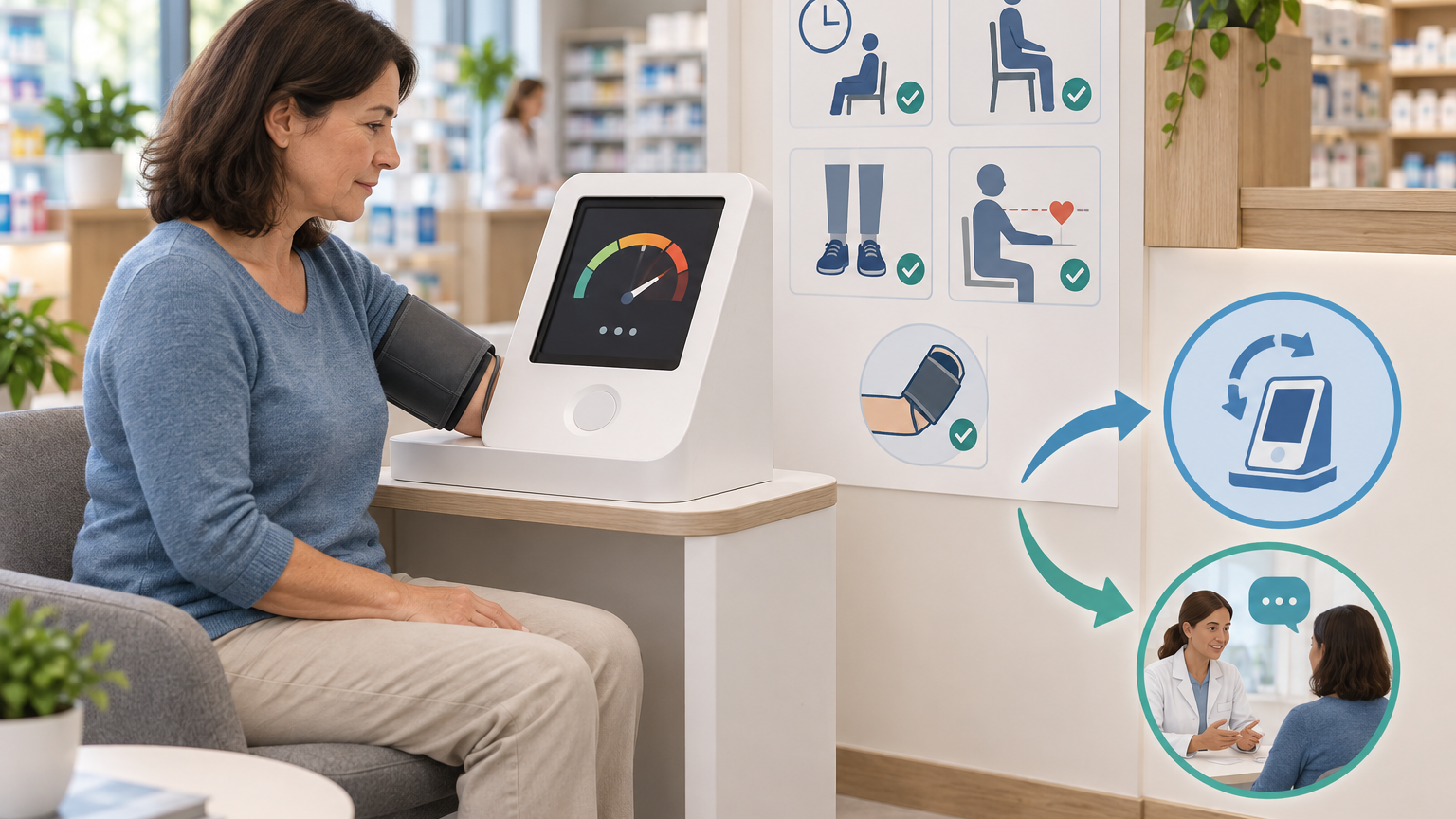
Verification checklist: cuff fit, posture, repeat measurements, and reliable device sources
When preparing to remeasure, check the following items one by one:
Try to use an upper-arm device that has been validated and has a cuff size suitable for your upper arm circumference
Place the cuff directly on the bare upper arm, not over thick clothing
Rest quietly before measurement, avoiding conversation or using a phone for stressful matters during this time
Sit in a chair with a backrest, with your back supported, feet flat on the floor, and do not cross your legs
Place your arm on a stable surface so that the cuff is at approximately heart level
Remain quiet and still during the measurement
Repeat the measurement after a short interval, and record all results in chronological order
If there is a long-term significant difference between the two arms, let the medical team decide which arm to use for future measurements
If the source, accuracy, or cuff size of your home device is unclear, you can bring the device and records to a pharmacy or medical facility for professional assistance in checking. Do not save only the lowest result, and do not keep measuring continuously because a result does not meet expectations.
How to organize clinic readings, past records, and complete medication list for the team's judgment
Before visiting a doctor or consulting, organize the information into a concise record:
The original reading from the pharmacy self-service machine and the measurement context
Subsequent readings obtained under more standardized conditions and their measurement times
Recent clinic, physical exam, or home measurement records
Known cardiovascular disease, kidney disease, diabetes, sleep problems, and pregnancy-related conditions
Names and actual usage of all prescription drugs, over-the-counter drugs, supplements, and herbal products
Whether there were missed doses, double doses, discontinuation, or recent medication changes
Recent symptoms and their duration
Some pain relievers, cold medicines, stimulant products, and other medications may be related to blood pressure or existing treatments, but specific effects vary depending on ingredients and individual circumstances. Do not judge interactions on your own; it is best to have a doctor or pharmacist review the complete list.
Verification boundaries: do not repeatedly measure to chase lower readings or adjust medications on your own
The goal of remeasurement is to obtain more reliable information, not to get a reassuring number. Repeated measurements in a short time can increase tension and also lead to selective recording.
If you are taking antihypertensive drugs or other cardiovascular medications, do not increase doses, take extra doses, stop medication, or borrow someone else's medication because of a single high reading. Additional medication may cause low blood pressure, fainting, falls, abnormal heart rate, or drug interactions. The handling of missed doses also varies depending on the specific drug; you should check official medication instructions and contact your prescribing doctor or pharmacist for confirmation.
Similarly, do not use alcohol, vigorous exercise, cold water stimulation, or unverified supplements to try to quickly change the reading. Any obvious abnormality accompanied by discomfort should be prioritized for professional evaluation.
Final action: follow the emergency or appointment path based on symptoms and remeasurement results
Take the following actions:
If there is chest pain, breathing difficulty, neurological abnormalities, fainting, or other severe symptoms, contact local emergency services immediately.
If there are no severe symptoms, but standardized remeasurement still shows persistently high readings or readings significantly higher than your usual level, contact a doctor, nurse, or pharmacist as soon as possible, and provide complete readings and symptoms.
If remeasurement shows some decrease and you have no physical abnormalities, keep the records; if high results occur multiple times in the future, schedule a medical evaluation rather than relying only on public self-service machines.
If you have already been diagnosed with hypertension, cardiovascular disease, kidney disease, or are in a stage requiring special attention such as pregnancy or postpartum, follow the monitoring and contact plan provided by your existing medical team.
The true value of a pharmacy reading is to remind you to verify with more reliable methods and choose an appropriate consultation path. Timely recognition of danger signs, complete recording of information, and avoiding self-adjustment of medications are more important than repeatedly chasing a particular number.