A Heart Rhythm Alert Without Symptoms: What Next?
Review date: 2026-10-14 · Credential: 1101*********81
Abstract
A Heart Rhythm Alert Without Symptoms: What Next?
A Heart Rhythm Alert Without Symptoms: What Next?
If your watch sends a heart rhythm notification when you feel fine, you can start with three steps: read the exact wording, save the relevant records, and identify whom to contact. When organizing the information, describe "what the device reported" separately from "how you felt at the time." Do not turn the notification into a diagnosis yourself.
This article offers general ways to organize notifications and communicate with healthcare professionals. It does not make medical judgments about any particular brand, model, or algorithm, or provide diagnostic criteria or treatment plans. Consult the device's official instructions for the meaning and limitations of specific features. Healthcare professionals can determine whether further testing is needed based on your circumstances.
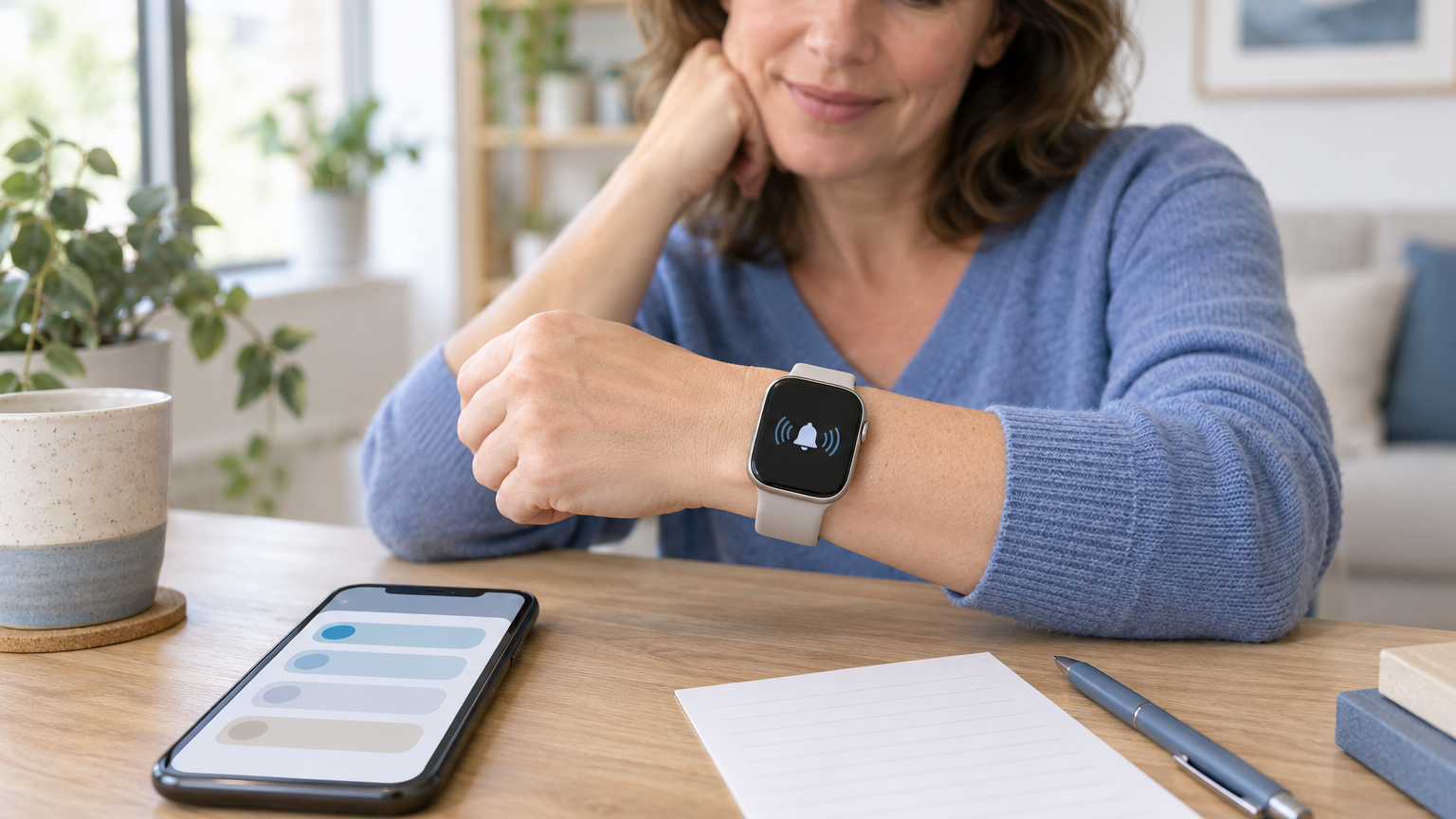
The illustration depicts the article's topic. It is not an actual test record or a basis for clinical judgment.
First, identify whether the alert concerns heart rate, heart rhythm, or the device connection
Open the notification details and carefully read its name and message. Do not judge its seriousness based only on its color, vibration pattern, or icon.
You can initially organize notifications by their wording:
For messages such as "high heart rate" or "low heart rate," keep the specific value, units, and any triggering conditions stated by the device.
For messages such as "irregular heart rhythm" or those naming a particular rhythm, save the complete wording. Be especially careful to retain qualifiers such as "possible," "suggests," or "inconclusive."
For messages such as "connection lost," "improper fit," or "incomplete recording," initially document them as device or data issues. Do not classify them as abnormal heart rhythms yourself.
If you still cannot tell, simply write "notification type needs confirmation." Ask device support staff about what the feature means, and ask healthcare professionals about health-related next steps. These two types of questions can be handled separately.
How to save the exact notification and its timing when you have no symptoms
Save the existing information before changing settings or taking further steps. Whenever possible, screenshots should include the notification title, full text, date, time, and the device's link to the associated record. If the notification arrived at a different time from when the recording was made, keep both times.
You can use a simple checklist to record:
The exact notification wording, including any instructions to view details or contact a healthcare professional.
The time of the recording, the time you received the notification, and your time zone at the time.
Whether you were resting, sleeping, walking, or doing something else.
Whether you felt unwell. If you did not, you can write "I did not notice any significant discomfort at the time."
The watch brand and model, along with the relevant app version if available.
Whether you have received similar notifications before and whether those earlier records are still accessible.
If you cannot remember something, write "uncertain" instead of guessing to fill in the form. Also, do not turn "I did not feel unwell" into "it has been confirmed that nothing is wrong."
Check the fit and data completeness using the device instructions
Consult the official instructions for your current model, feature, and software version. Check the required placement, fit, and conditions for using the feature. If the device reports a failed or incomplete recording, save that message and follow the instructions.
Focus on whether the notification has an associated record, whether the record is complete, whether the device displays any quality messages, and whether the date and time in the app are correct. If the device supports exporting records, you can keep the original files. Before sharing them, check for unnecessary personal information.
If you discover a fit or connection issue, add that information accurately to your notes. However, do not delete the original notification or assume that a device issue definitely caused the earlier alert. You do not need to keep taking measurements to get a result you find reassuring. Follow the device instructions or specific guidance from a healthcare professional about whether and how to repeat a measurement.
How to explain that the finding came from a device when contacting a healthcare professional
Start by explaining that "this was an alert from my watch," then describe how you felt and what information you have. This helps the recipient distinguish device information, your own account, and medical testing you have already undergone.
You can use wording like this:
"My watch displayed 'insert the exact notification wording here' on [date] at [time]. I was resting and did not notice any significant discomfort. I saved screenshots and the device records. I would like to know how to submit them and what the next steps should be."
If you have received similar notifications before, include the dates and number of occurrences you can confirm. When asked by a healthcare professional, accurately describe your medical history, current medications, and any relevant recent changes. Do not start, stop, or adjust medication on your own based only on a watch alert.
Before sending information, confirm the submission channel and required file format. The institution name in the article title does not mean that a specific appointment link, a commitment to provide care, or testing arrangements have been provided. Use the contact information officially published by the facility where you will receive care.
How to ask whether further confirmation with medical equipment is needed
Neither this article nor a single watch notification can determine whether further confirmation is needed or which test should be used. During your consultation, you can focus your questions on the next steps:
Are this notification and the available records enough for an initial assessment?
Do I need to visit the facility or have additional recordings made with medical equipment?
If testing is needed, what specific question is it intended to clarify?
What preparation is needed, and are there any restrictions or precautions related to my circumstances?
What should I record while waiting, and what changes should prompt me to contact you sooner?
If testing is recommended, repeat back the test name, time, and location to avoid confusing tests with similar names. Do not assume that using a watch feature fulfills a request for a medical test.
What disappearing or recurring alerts cannot prove
If alerts stop appearing for a while, simply record "no further notifications received." Do not reinterpret this as "disease has been ruled out" or "everything has returned to normal." Follow the medical guidance you have already received about whether to proceed with planned contact or testing.
If alerts recur, do not diagnose yourself or judge the severity of a condition based only on their frequency. Save each notification and describe when it occurred, what you were doing, whether the wording was the same, and whether you felt unwell at the time.
If your device settings, wearing habits, or software version have changed, note those changes as well to help the recipient understand the context of the records. Do not deliberately engage in strenuous activity or change your medication to test whether an alert will occur.
How to shift to seeking help if acute symptoms occur
If acute symptoms develop, organizing screenshots should no longer be your immediate priority. If you experience chest pain or pressure, significant difficulty breathing, fainting, or sudden facial drooping, limb weakness, or difficulty speaking, contact local emergency services immediately and follow the dispatcher's instructions.
Do not wait for another watch alert or an online response, or try to use a new device recording to decide whether to seek help. Even if the watch shows no new alert, tell emergency responders or healthcare professionals about the symptoms you are actually experiencing.
Other new, persistent, or worsening symptoms also warrant prompt professional assessment. These examples do not cover every situation requiring emergency care. If you are unsure, describe your current condition to local emergency or medical services.
Finish organizing the notification and confirm follow-up arrangements
A useful record should make three things clear to the recipient: exactly what the device reported, how you were feeling at the time, and what information is still missing.
After making contact, confirm the following arrangements:
Whether your information was received and whether original records are also needed.
Who will contact whom next, and through which channel.
When to expect a response and whom to contact if none arrives.
Whether an appointment or test is needed, including the specific time and preparation requirements.
What to do if another notification appears or your physical condition changes while you wait.
Keep these arrangements together with the original notification. When you have no symptoms, focus on preserving complete information and following through on further contact. If acute warning signs appear, promptly shift to seeking emergency help. This article is for health education only and does not replace a physician's diagnosis, prescription, or individualized treatment advice.
Frequently asked health questions
1. At Heart Alliance, what should patients know before a doctor recommends ambulatory blood pressure monitoring?
You can ask how long monitoring will last, what restrictions apply to daily activities while wearing the device, whether you can bathe, how to protect the device while sleeping, and whom to contact if you feel unwell or the device has a problem. During monitoring, record your activities, emotions, sleep, and any symptoms as instructed. Do not remove the device yourself or change your existing treatment without guidance.
2. How can patients with cardiomyopathy who have hearing difficulties avoid missing important arrangements during a visit to Heart Alliance?
Explain your hearing difficulties and communication needs when scheduling the appointment. Ask whether written communication, assistive communication tools, or a more suitable visit format is available. Write down your questions before the visit, and ask staff to provide clear written instructions for next steps, timing, and contact information. At the end, repeat back your understanding and ask them to confirm it. If you need help from a family member, also clarify what information may be shared with them.
3. If a referral says "suspected coronary artery disease," how should you describe it on Heart Alliance intake forms?
Keep the word "suspected"; do not change it to "confirmed." Include the original wording, the date it was issued, and the issuing institution, and attach the referral. If the form only allows "yes" or "no," ask the receiving facility how to complete it. Explain in the notes that evaluation is still pending, and let the receiving physician confirm the diagnostic status.