
Complete Guide to Seeking Medical Treatment in China: 2026 Practical Handbook for International Patients
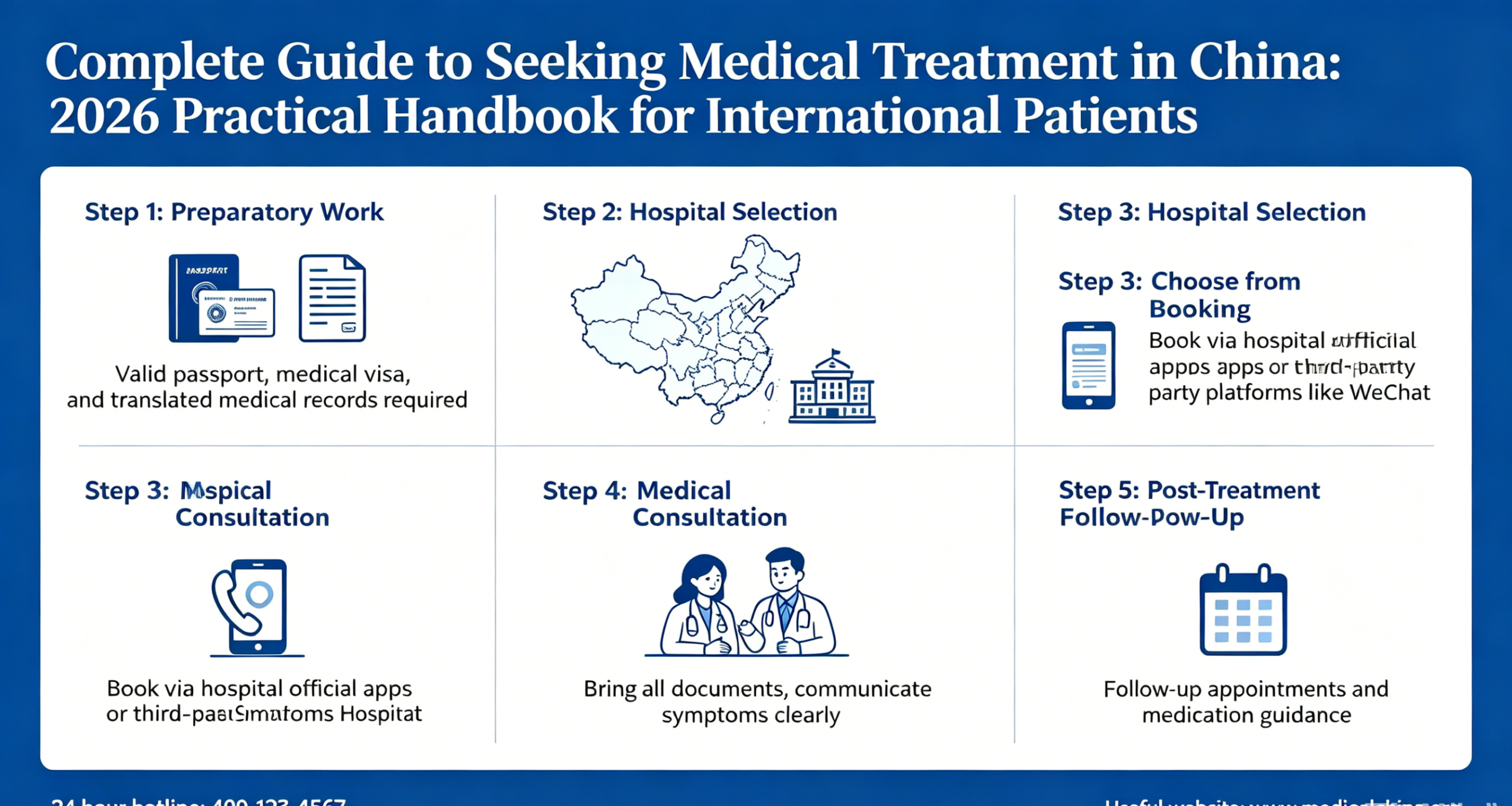
In recent years, China has emerged as a popular destination for cross-border medical tourism among global patients, thanks to its advanced medical technology, cost-effective diagnosis and treatment services, and comprehensive international medical support system. From cardiac surgery and cancer treatment to chronic disease management and traditional Chinese medicine (TCM) therapy, Chinese medical institutions can meet diverse medical needs. This guide breaks down the entire process of “pre-departure planning → post-arrival connection → medical treatment → rehabilitation and return” into key steps, integrating policy requirements, practical tips, and pitfalls to avoid, helping overseas patients complete their medical journey efficiently and smoothly.
I. Pre-Departure Planning (8-12 Weeks Before Medical Treatment): Lay the Foundation for a Smooth Journey
The core of this phase is to clarify medical goals and complete compliance connections to avoid treatment delays due to information gaps:
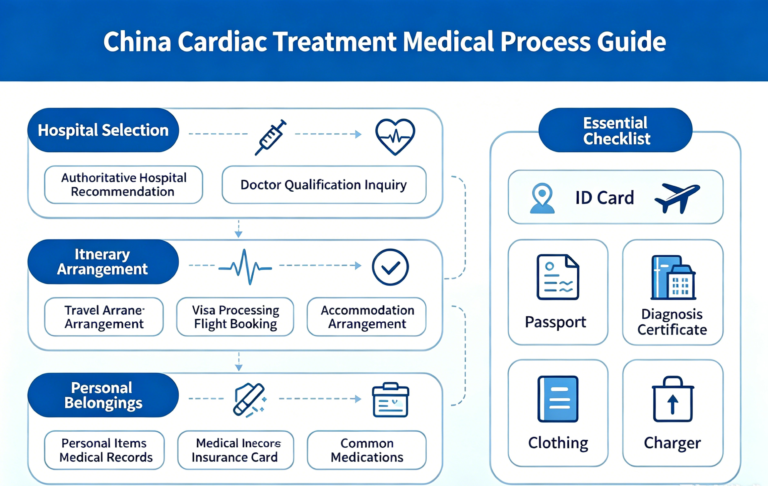
- Clarify Medical Needs and Select a Hospital
- Precisely define treatment objectives: Specify the disease requiring treatment (e.g., cancer, orthopedic surgery, TCM physiotherapy), whether surgery/hospitalization is needed, and the expected treatment cycle (short-term outpatient visit/long-term rehabilitation);
- Select a suitable hospital:
- Prioritize hospitals with “International Medical Departments” or “designated foreign-related hospitals” (e.g., Peking Union Medical College Hospital, Huashan Hospital Fudan University, Sun Yat-sen Memorial Hospital of Sun Yat-sen University). These hospitals have mature foreign language services and international insurance docking capabilities;
- Refer to hospital specialty rankings (available on the official website of China’s National Health Commission). For complex cases (e.g., neurosurgery, rare diseases), prioritize national-level medical centers;
- Confirm whether the hospital offers the target treatment program. For example, proton and heavy ion therapy is only available at designated institutions such as Shanghai Proton and Heavy Ion Center.
- Medical Documentation and Communication Preparation (Bilingual Required)
- Core medical records:
- Bilingual (Chinese-English) medical summary (including diagnosis, past treatment history, complications, and allergy history);
- Test reports from the past 6 months (imaging data such as CT/MRI is recommended to be stored in DICOM format; laboratory data such as blood routine and tumor markers should be marked with reference standards);
- Medication list (including drug names, dosages, and frequency of administration; prescriptions are required for prescription drugs);
- For follow-up patients, bring previous medical records or treatment records from Chinese hospitals.
- Advance communication and connection:
- Contact the hospital’s International Medical Department through its official website, email, or cooperative intermediaries, submit medical records for pre-evaluation, and allow Chinese doctors to determine if treatment in China is suitable;
- Confirm the treatment plan, expected costs, and hospitalization cycle, and obtain the “Medical Invitation Letter” issued by the hospital (required for visa application).
- Visa and Entry Document Processing
- Visa type selection:
- Inpatient treatment and surgical procedures: Apply for an M-type medical visa (requires hospital invitation letter, medical summary, and financial proof);
- Short-term outpatient visits (e.g., physical examination, TCM therapy, follow-up consultation): L-type tourist visa is acceptable (stay period ≤ 30 days; extension can be applied for in China if needed);
- Accompanying personnel: Must apply for the same type of visa as the patient and provide notarized proof of kinship (e.g., marriage certificate, household registration book).
- Essential entry documents:
- Valid passport (valid for more than 6 months after entry, with 2 blank visa pages reserved);
- Visa application form and recent passport-sized photos;
- Financial proof (covering treatment costs + 30,000-50,000 RMB emergency fund, which can be a bank statement or credit card bill);
- Round-trip flight itinerary and accommodation confirmation (it is recommended to choose a hotel near the hospital for convenient medical visits).
- Insurance and Financial Planning
- International medical insurance:
- Purchase insurance covering “cross-border medical treatment, inpatient surgery, complications, and medical evacuation.” The insured amount should be adjusted according to the type of treatment (≥ 100,000 USD for surgical procedures, ≥ 50,000 USD for chronic disease management);
- Confirm with the insurance company in advance whether the Chinese hospital is within the claim network, whether direct payment is supported (to avoid advance payment of large sums), and clarify the required claim materials (e.g., bilingual medical invoices, discharge summary).
- Payment preparation:
- Activate the overseas payment function for international credit cards such as Visa and MasterCard, inform the bank of the purpose of seeking medical treatment in China to avoid card freezing;
- Prepare a small amount of RMB cash (1,000-2,000 yuan) for emergency expenses such as taxi rides and small purchases;
- Some hospitals support Alipay/WeChat Pay International Version, which can be bound to overseas bank cards in advance.
II. Post-Arrival Connection (1-3 Days After Arriving in China): Quickly Link to the Medical Process
Focus on completing entry customs clearance and hospital registration to avoid wasting time due to unfamiliarity with procedures:
- Entry and Transportation Connection
- Customs clearance notes:
- Fill out the “Health Declaration Card” (can be pre-registered through the “China Customs” APP). If you have symptoms such as fever or cough, declare truthfully;
- Drugs carried must comply with Chinese regulations: Prescription drugs require a prescription; controlled drugs (e.g., narcotic drugs) require advance application for an “Imported Drug Customs Clearance Form.” Avoid carrying excessive drugs (generally no more than a 1-month supply for personal use).
- Transportation methods:
- Airport → Hospital: Taxis (supporting international credit card payment) or ride-hailing services (using Alipay/WeChat Pay International Version to book) are available. Some hospitals’ International Medical Departments provide airport pick-up services (advance reservation required);
- Intra-city transportation: Prioritize subways (electronic subway cards can be purchased through the “Yitongxing” APP, supporting overseas bank card payment) or ride-hailing services to avoid difficulty in hailing taxis during peak hours.
- Hospital Registration and Medical Record Establishment
- Consultation process:
- Go to the reception desk of the hospital’s International Medical Department, submit your passport, visa, invitation letter, and medical records, and apply for a medical card (some hospitals allow online pre-registration to save on-site time);
- Pay a deposit (generally 30%-50% of the total treatment cost, which can be paid by credit card or international insurance pre-authorization);
- Conduct preliminary examinations (e.g., blood routine, electrocardiogram), and the doctor will refine the treatment plan and confirm the surgery/treatment time.
- Language support:
- Top hospitals’ International Medical Departments are equipped with multilingual medical interpreters (English, Japanese, Korean, etc.), providing free accompaniment during diagnosis and treatment;
- Carry translation tools (e.g., Google Translate offline package, medical translation APP) and prepare bilingual communication cards for common needs (e.g., “I need painkillers,” “Book an examination”).
III. Medical Treatment Phase (During Outpatient Visit/Hospitalization): Adapt to the Chinese Medical Scenario
Understand the rules and service characteristics of medical treatment in China to ensure the smooth progress of treatment:
- Outpatient Visit Notes
- Consultation process: Appointment registration → Check-in and triage → Doctor’s consultation → Examination/medication collection. Some hospitals offer priority consultation for international patients to avoid long queues;
- Examination appointment: Reservations for large-scale equipment examinations (e.g., PET-CT, MRI) need to be made 1-3 days in advance, which can be arranged with the assistance of the hospital’s International Medical Department. Examination reports are generally available within 1-3 working days (English versions can be requested);
- Medication collection and use: Collect drugs at the hospital pharmacy or designated pharmacies with a doctor’s prescription. Verify the dosage and administration method for prescription drugs. TCM decoctions can be processed into decoctions or vacuum-packed for transportation back to the country.
- Core Points of Inpatient Treatment
- Hospitalization preparation:
- Bring personal daily necessities (e.g., loose clothing, toiletries, slippers) and portable medical devices (e.g., blood pressure monitor, blood glucose meter). Hospitals provide basic bedding but not personal care products;
- Sign the “Informed Consent for Hospitalization” and “Cost Notification” when completing hospitalization procedures. If you have questions, request an interpreter’s explanation and sign only after confirmation.
- In-hospital management:
- Visiting rules: Most hospitals allow visits from 15:00 to 19:00. Accompanying personnel must abide by hospital regulations. The number of visitors may be restricted during the epidemic;
- Diet and daily life: Hospital canteens offer a variety of meal options. Inform medical staff of special dietary needs (e.g., halal, vegetarian, low-salt). Some hospitals support food delivery services;
- Communication and feedback: Timely inform the doctor of your physical condition (e.g., pain, discomfort) during daily ward rounds. Record or video post-operative precautions for future reference.
- Cultural and Service Adaptation
- Characteristics of medical services: Chinese doctors have a relatively fast consultation rhythm and focus on clinical effectiveness. If you need detailed consultation, prepare a list of questions in advance;
- Etiquette and communication: Be polite during medical visits, address doctors as “Doctor XX” (e.g., Doctor Zhang, Doctor Li), and avoid taking photos of medical staff or ward environments without permission;
- Religious beliefs and customs: Inform the hospital of your religious beliefs in advance (e.g., need for prayer spaces, fasting times), and the hospital will make every effort to provide convenience.
IV. Rehabilitation and Return (1-2 Weeks After Treatment Completion): Ensure Sustained Treatment Effects
Complete discharge connection and return planning to avoid missing follow-up matters:
- Discharge Procedures and Document Retention
- Completing discharge:
- Print the cost list and invoices at the hospital’s settlement office (confirm whether they are bilingual versions for insurance claims);
- Collect the discharge summary (including treatment summary, post-operative precautions, follow-up plan, and medication prescription). Ensure all medical documents are properly kept.
- Rehabilitation guidance:
- Clarify rehabilitation training requirements (e.g., post-operative exercise intensity, rehabilitation cycle). For complex rehabilitation, make an appointment with the hospital’s rehabilitation department or conduct online follow-up;
- Purchase sufficient post-operative medications, and confirm the shelf life and customs regulations for transporting them back to the country.
- Return Planning and Notes
- Travel arrangements:
- It is recommended to reserve a 1-2 week observation period after discharge before arranging the return trip to avoid discomfort from long-distance travel. Choose flights with spacious, adjustable seats (e.g., business class, front row of economy class);
- Inform the airline of special needs in advance (e.g., wheelchair, oxygen equipment, carrying drugs). Some airlines require a “Fit to Fly Certificate” issued by the hospital.
- Item transportation:
- Drug transportation must comply with the customs regulations of China and the destination country. Hospital certificates are required for carrying TCM and medical devices;
- It is recommended to back up electronic versions of medical imaging data and medical records (on a USB drive or cloud storage) and store paper versions properly.
- Follow-Up and Insurance Claims
- Follow-up arrangements:
- Agree on follow-up methods with Chinese doctors (e.g., email, video consultation), and submit re-examination reports as required (which can be sent to Chinese doctors after being checked at local hospitals in your home country);
- If you need to return to China for follow-up consultation, communicate with the hospital in advance, book the consultation time, and renew the visa.
- Insurance claims:
- Organize claim materials (bilingual medical records, expense invoices, discharge summary, examination reports, flight and accommodation vouchers) and submit them to the insurance company;
- If you have questions about claims, contact the hospital’s International Medical Department for assistance in issuing supplementary certificates.
V. Common Questions and Pitfalls to Avoid
- Solving Language Barriers: In addition to hospital interpreters, you can book taxis through the foreign language interfaces of ride-hailing APPs such as “Call Taxi” and “Didi.” Choose restaurants with English menus (e.g., chain brands, business districts near hospitals) for dining;
- Cost Transparency: All medical expenses must be paid through official hospital channels (cash, credit card, official APP). Reject “special drugs” or “additional treatments” recommended by strangers to avoid fraud;
- Emergency Handling:
- Medical emergency: Call 120 (English-speaking operators are available in some cities), inform your location and condition, and contact the hospital’s International Medical Department for assistance in connection;
- Lost documents: Immediately contact your country’s embassy or consulate in China to reissue your passport, and inform the hospital for subsequent procedure handling;
- Pay Attention to Policy Changes: China’s visa policies, medical costs, and medical insurance reimbursement may change. Confirm the latest information through the hospital’s official website or embassy/consulate before departure.
Conclusion
The core of seeking medical treatment in China is “advance planning, precise connection, and compliant adaptation.” Every step from pre-departure hospital selection and document preparation to post-arrival medical connection and rehabilitation return requires balancing medical professionalism and procedural compliance. Chinese medical institutions not only provide diagnosis and treatment quality in line with international standards but also offer higher cost-effectiveness (the same treatment cost is about 1/3-1/2 of that in European and American countries), and most top hospitals have established mature international patient service systems.
With adequate preparation and the help of the hospital’s foreign language support and international insurance docking services, overseas patients can completely complete their medical journey smoothly. If you have special needs (e.g., pediatric medical treatment, rare disease treatment, long-term rehabilitation), communicate with the hospital’s International Medical Department in advance to obtain personalized guidance, making medical treatment in China worry-free and reassuring.