
Checklist for Receiving Heart Treatment in China: 2026 Comprehensive Guide
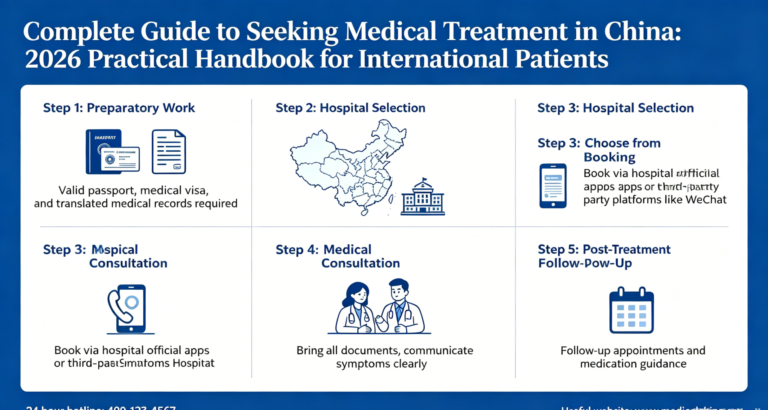
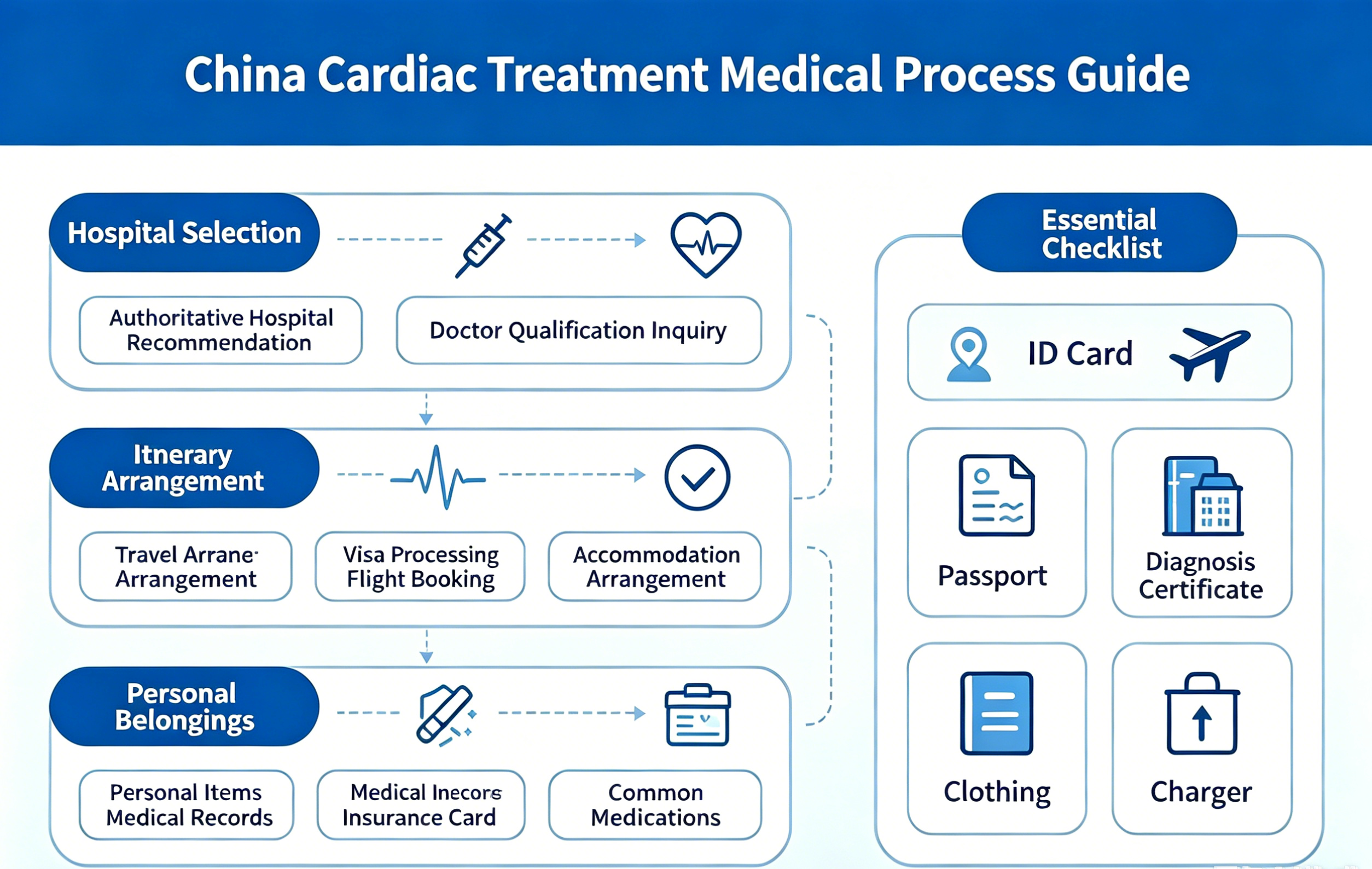
Receiving heart treatment in China requires balancing medical professionalism, procedural compliance, and daily convenience. This checklist organizes key tasks into four phases—”Pre-Departure Preparation → Post-Arrival Medical Consultation → During Hospitalization → Post-Discharge Follow-Up”—to help overseas patients plan efficiently, avoid risks, and ensure a smooth treatment journey (Note: The checklist is tailored to international patients, developed in line with China’s medical policies, visa requirements, and clinical practices).
I. 8-12 Weeks Before Departure: Core Medical & Documentation Preparation (Critical for Treatment Effectiveness)
Focus on medical coordination and compliance document preparation during this phase to avoid treatment delays due to incomplete materials:
- Medical Records & Diagnostic Materials (Bilingual Required)
- Complete medical summary: Includes heart disease diagnosis, current treatment plan, past medical history (e.g., complications like hypertension, diabetes), must be in both Chinese and English;
- Recent test reports: Electrocardiogram (ECG), echocardiogram, CT/MRI imaging data (recommended to store as DICOM format on CD or USB drive), and laboratory test results (blood routine, liver/kidney function, etc.) from the past 6 months;
- Medication list: Detailed record of currently taken medications (prescription drugs, over-the-counter drugs, health supplements) including names, dosages, frequency, and reasons for use; clearly note drug allergies (medications, food, latex, etc.);
- Doctor’s recommendation letter: Bilingual (Chinese-English) letter issued by your home doctor, explaining the necessity and expected goals of treatment in China to facilitate seamless medical handover with Chinese physicians.
- Visa & Entry Documents (Prerequisite for Legal Entry)
- Valid passport: Expiry date must be more than 6 months after entry, with at least 2 blank visa pages reserved;
- Medical Visa (M Visa): Since most heart treatments involve hospitalization or surgery, apply for an M Visa (Tourist Visa L is only for short-term outpatient visits, not applicable for surgery);
- Hospital invitation letter: Issued by the receiving Chinese hospital (e.g., International Medical Department of Fuwai Hospital/Anzhen Hospital), including hospital qualifications, treatment plan, and expected duration of stay—required for visa application;
- Financial proof: Bank statement (suggested amount covering treatment costs + 10,000-20,000 RMB emergency fund), round-trip flight itinerary, and accommodation confirmation;
- Companion documents: If accompanied by family members, they must apply for the same type of M Visa and provide notarized proof of kinship (e.g., marriage certificate, household registration book).
- Insurance & Financial Preparation (Avoid Financial Risks)
- Medical travel insurance: Purchase international insurance covering “heart surgery and complications” with a recommended coverage of 50,000-250,000 USD (full coverage is advised for high-risk surgeries like TAVR); confirm coverage includes medical evacuation and repatriation for treatment;
- Payment preparation: Activate overseas payment function for international credit cards (Visa, MasterCard), inform your bank of the medical travel plan to China to avoid card freezing; prepare 1,000-2,000 USD equivalent in RMB cash for small emergency expenses;
- Cost confirmation: Request a detailed cost breakdown from the Chinese hospital (refer to “2025 China Heart Disease Treatment Price List”), clarify advance payment amount and payment methods; some hospitals offer direct billing with international insurance—confirm in advance.
II. 2-6 Weeks Before Departure: Daily Life & Health Supplies Preparation (Enhance Medical Comfort)
Prepare the following supplies based on post-surgical needs and living conditions in China to avoid inconvenience from last-minute purchases after arrival:
- Medical-Related Supplies
- Regular medications: Bring an adequate supply of personal daily medications (e.g., antihypertensives, hypoglycemics) plus an extra 14-day buffer; carry an English prescription (China has strict restrictions on importing controlled drugs—prescription drugs must be clearly labeled);
- Portable medical devices: Blood pressure monitor, blood glucose meter (for diabetic patients), heart rate monitor, etc.; ensure devices support China’s voltage (220V) and bring an adapter plug if needed;
- Wound care supplies: Alcohol swabs, povidone-iodine, sterile gauze (for short-term post-surgical care); avoid carrying liquids exceeding airport security limits (travel-sized products are recommended).
- Daily Life & Clothing Supplies
- Clothing: Loose, soft, breathable cotton pajamas and underwear (reduce friction on surgical wounds), warm jacket (air conditioning in some Chinese hospitals is set to low temperatures), non-slip slippers (ensure safety during hospital stays);
- Toiletries & daily necessities: Travel-sized toothbrush, toothpaste, towel, skincare products (choose non-irritating formulas), portable water bottle (for easy hydration), tissues, wet wipes (for cleaning during hospitalization);
- Dietary needs: If you have special dietary requirements (e.g., halal, vegetarian, gluten-free), bring a small amount of vacuum-packed suitable food (e.g., nuts, granola bars); inform the hospital’s catering department in advance for adjustments;
- Others: Power adapter (China uses Type A/C/I sockets), mobile power bank (capacity ≤ 100Wh), portable rain gear (adapt to different climates in China).
- Language & Communication Tools
- Translation tools: Install professional medical translation apps (e.g., iTranslate, Google Translate) on your phone and download offline Chinese-English medical terminology packs;
- Communication cards: Print bilingual (Chinese-English) cards for common needs (e.g., “I need water,” “Wound pain,” “Book follow-up appointment”) to avoid misunderstandings due to language barriers;
- Emergency contact card: Create a card with the Chinese hospital’s address, attending physician’s phone number, local emergency contact, and your country’s embassy/consulate in China—carry it at all times.
III. Post-Arrival Medical Consultation: Process & Compliance Notes (Avoid Medical Disputes)
- Medical Process Handover
- Pre-coordinate with the hospital’s International Medical Department: After arriving in China, contact the designated hospital liaison to confirm consultation time, location, and required materials; some hospitals offer airport pick-up services;
- Medical record submission & communication: Submit complete bilingual medical records and test reports to the doctor; clearly explain symptoms, medication history, and treatment expectations; use interpreters to ensure accurate communication (top hospitals’ International Medical Departments are equipped with professional medical interpreters);
- Informed consent signing: A Chinese informed consent form must be signed before surgery; if you have questions, request an English version or translation explanation—sign only after fully understanding treatment risks and post-surgical precautions.
- Cultural & Compliance Adaptation
- Inform about religious beliefs & customs: If you have special religious beliefs (e.g., Islam, Christianity) or dietary taboos, inform the hospital in advance to receive tailored services (e.g., halal meals, prayer spaces) and avoid negative impacts from cultural differences;
- Medical documentation standards: Hospital records in China are defaulted to Chinese; if needed for overseas insurance claims or follow-up treatment, request a bilingual diagnosis certificate; some hospitals provide English discharge summaries (confirm in advance);
- Choose legitimate accompaniment services: If accompaniment is needed, prioritize official services recommended by the hospital; avoid unregulated intermediaries to prevent ticket scalping and cost fraud.
IV. During Hospitalization: Essential Items & Daily Management (Ensure Treatment & Recovery)
- Hospitalization Essential Supplies
- Daily convenience items: Portable commode (for post-surgical mobility impairment), non-slip bathroom mat (prevent falls while bathing), bed tray (for meals/reading in bed), earplugs & eye mask (ensure rest quality);
- Electronic devices: Mobile phone, charger, tablet (store entertainment content to relieve boredom and video call with family);
- Personal identification: Label your name on personal items (clothing, water bottle, medical devices) to avoid confusion with others.
- Health & Safety Management
- Medication management: Strictly follow the Chinese doctor’s prescription—do not adjust dosage or change medications without authorization; immediately inform medical staff if experiencing adverse drug reactions;
- Wound care: Follow nurses’ guidance for wound cleaning; avoid getting the wound wet or hit; promptly report abnormalities such as redness, swelling, or exudation;
- Dietary cooperation: Post-surgical diet should be light, easy-to-digest, and high-protein (e.g., eggs, fish, tofu, fresh fruits and vegetables); avoid spicy, greasy, and high-salt foods; quit smoking and drinking.
V. Post-Discharge: Follow-Up & Return Preparation (Ensure Sustained Treatment Effect)
- Follow-Up Related Preparation
- Preserve medical documents: Keep discharge summary, medical reports, test receipts, and expense invoices (bilingual versions) properly for overseas insurance claims and future medical reference;
- Confirm follow-up plan: Agree on post-discharge follow-up methods with the doctor (mostly via email for cross-language convenience); record follow-up dates, contact information, and required health data to submit (e.g., blood pressure, heart rate);
- Medication reserve: Purchase sufficient post-surgical medications at the hospital pharmacy or regular pharmacies according to the discharge prescription; confirm usage and precautions, and reserve a 1-2 week supply for the return trip and after arriving home.
- Return Trip & Subsequent Arrangements
- Travel planning: It is recommended to reserve a 1-2 week observation period after discharge before arranging the return trip (avoid discomfort from long-distance travel post-surgery); choose flights with spacious, adjustable seats and inform the airline of special medical needs in advance (e.g., wheelchair, additional oxygen);
- Rehabilitation supplies: Bring the rehabilitation guide provided by the hospital upon discharge; if assistive devices are needed (e.g., crutches, walkers), they can be purchased in China (higher cost-effectiveness) or check airline baggage requirements in advance;
- Feedback on issues: If experiencing sudden discomfort after discharge, contact the hospital’s international follow-up team or seek treatment at a local hospital in your home country, and synchronize the situation with the Chinese attending physician.
VI. Important Reminders & Taboos
- Prohibited items: China prohibits importing unquarantined meat, fruits, plants, controlled drugs (e.g., some psychotropic drugs), flammable and explosive items, etc.—avoid entry delays due to prohibited items;
- Cost transparency: All medical-related expenses must be paid through official hospital channels; refuse “additional treatments” or “special medicines” recommended by strangers to prevent fraud;
- Emergency handling: In case of emergency medical situations in China, call China’s emergency number 120 (English-speaking operators are available in some cities) or contact your country’s embassy/consulate for assistance;
- Policy updates: China’s visa policies, medical costs, and medical insurance reimbursement may change dynamically—confirm the latest information through the hospital’s International Medical Department or embassy/consulate official website before departure.
Conclusion
The core of receiving heart treatment in China lies in “adequate preparation, compliant handover, and precise cooperation.” This checklist covers all key tasks from pre-departure planning to post-discharge follow-up, helping overseas patients adapt to China’s medical environment quickly and maximize treatment effects and medical experience.
It is recommended to review the checklist item by item 1-2 weeks before departure to ensure no omissions; if you have special needs (e.g., pediatric patients, complex cases, special religious/cultural requirements), communicate with the receiving hospital’s International Medical Department in advance to obtain personalized guidance. China’s heart treatment is renowned for “high cost-effectiveness, advanced technology, and quality services”—with thorough preparation, you can confidently enjoy professional medical care.